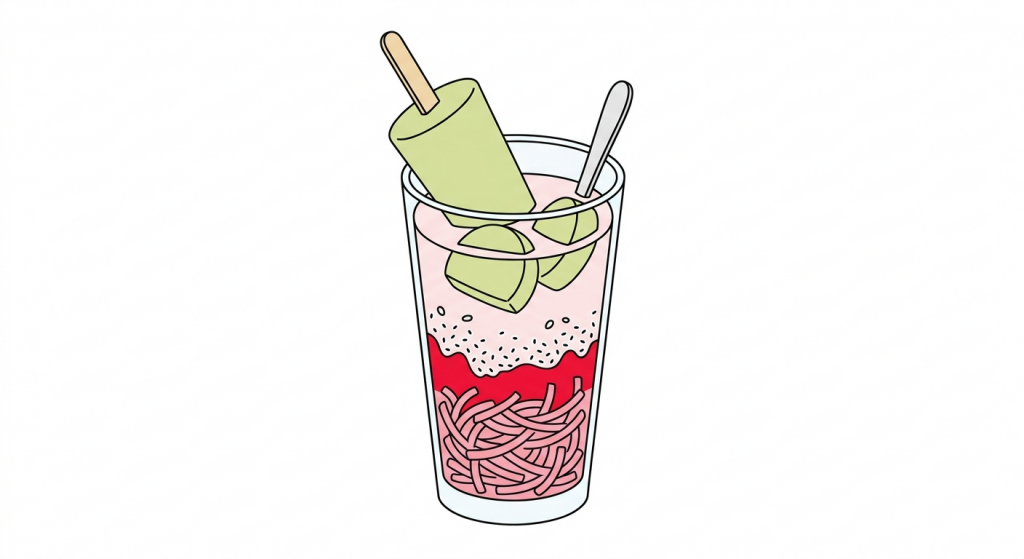
Pakistani dessert culture is rooted in the Mughal culinary tradition, Islamic dietary practice, and the agricultural systems of the Indus Valley — one of the oldest continuously farmed regions on earth. Milk, ghee, sugar, semolina, and wheat form the primary building blocks. The result is a mithai tradition — a broad category of sweetmeats made from reduced milk, nut pastes, semolina, and sugar — that is among the most technically developed in South Asia.
Barfi is the most versatile Pakistani mithai — a dense, fudge-like sweet made from reduced milk solids and sugar, flavored with cardamom, pistachio, coconut, or mango, cut into diamonds and finished with edible silver leaf. Ladoo, spherical sweets made from besan (chickpea flour) or semolina, are made for celebrations and distributed at weddings, births, and Eid. Halwa in its many forms — semolina halwa, carrot halwa, moong dal halwa — appears at religious gatherings, funerals, and festivals, functioning as both offering and communal food.
Sheer khurma is the most significant Pakistani dessert in the Islamic calendar — a vermicelli pudding made with whole milk, dates, and dried fruits, prepared on Eid al-Fitr morning and served to family and guests before the day’s celebrations begin. It is not an everyday sweet. It is specifically and deliberately an Eid food, and its preparation marks the end of Ramadan in Pakistani households across the country and diaspora.
Jalebi — deep-fried fermented batter spirals soaked in saffron syrup — are eaten for breakfast with milk or yogurt across Pakistan, particularly in Punjab. They are one of the few Pakistani sweets consumed daily rather than reserved for occasion. Gulab jamun, soft milk solid dumplings soaked in rose-scented syrup, are another everyday mithai sold at shops and made at home for guests.
Regional variation runs along provincial lines. Sindh has a strong tradition of sugar-based sweets influenced by its Hindu minority community’s food practices before and after Partition. Khyber Pakhtunkhwa uses more dried fruit, nuts, and honey in its sweets, reflecting the agricultural output of the northwest. Punjab, the most populous province, is the center of the mithai shop culture that defines Pakistani urban confectionery.
Partition in 1947 is a defining event in Pakistani food history — the displacement of millions of people across the India-Pakistan border reshuffled culinary traditions on both sides, and many Pakistani sweets share direct lineage with the mithai traditions of Lahore, Delhi, and Lucknow that predate the border entirely.
Pakistani sweetness is milk-forward, occasion-specific, and inseparable from the Islamic calendar and the Mughal culinary inheritance that preceded it.
This content was created with the assistance of AI. Sources are currently being reviewed.