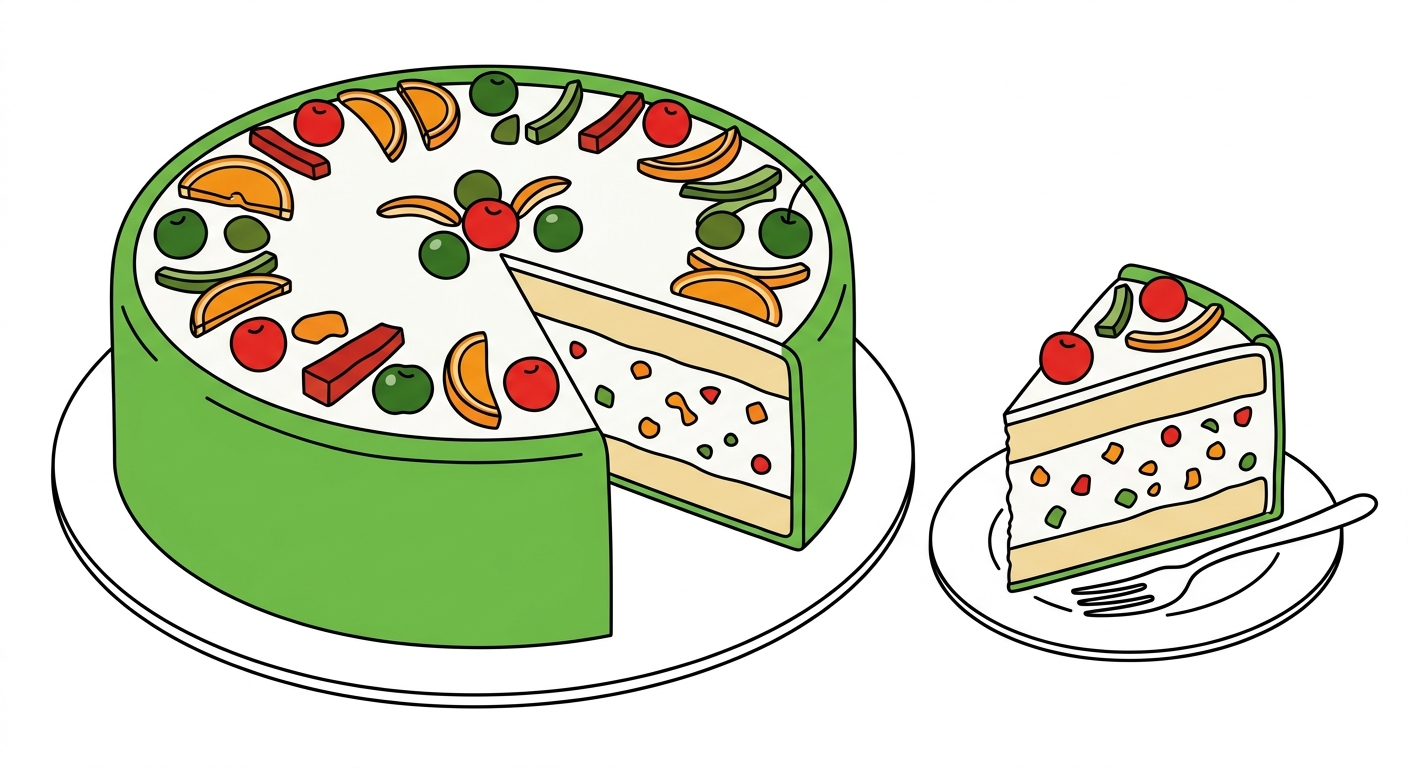
Cassata is a Sicilian celebration cake built from layers of sponge cake soaked in liqueur, filled with sweetened ricotta studded with chocolate chips and candied fruit, encased in marzipan, and finished with a smooth coating of white royal icing decorated with an extravagant arrangement of candied fruit — whole cherries, sliced citron, fig, pear, and orange peel — arranged in patterns that are less garnish than statement. It is an unapologetically ornate dessert, one that announces itself before it is tasted, and the visual excess is intentional. Cassata is a cake for feast days, for Easter, for weddings — occasions that call for something that looks like it took days to make, because it did.
The history of cassata is as layered as the cake itself, and it maps almost perfectly onto the succession of cultures that ruled Sicily over a thousand years. The name derives from the Arabic word for bowl — qas’at — a reference to the rounded mold the cake was originally shaped in. Arab rule of Sicily from the 9th to 11th centuries introduced sugarcane cultivation, citrus, almonds, and pistachios to the island, transforming Sicilian cooking and providing the foundational ingredients of the cassata. The ricotta filling is thought to have been developed by Arab confectioners who combined the cheese with sugar — then a luxury ingredient — to create something entirely new.
The marzipan casing was added during the Norman period that followed Arab rule, drawing on the almond paste tradition that the Arabs had also brought with them. The candied fruit decoration developed further under Spanish rule in the 16th and 17th centuries, when the convents of Palermo became the primary producers of elaborate sweets for the Sicilian aristocracy. The nuns of the Martorana convent are credited with particular innovations in decorative confectionery, and the cassata as a formally decorated celebration cake is largely a product of that convent tradition. By the 18th century the cake had reached roughly its current form — though the specific arrangement of candied fruit and the precise composition of the icing continued to evolve.
In Palermo today cassata is taken seriously enough that there are pastry shops whose reputation rests almost entirely on the quality of their version. The ricotta must be fresh sheep’s milk ricotta, drained overnight. The candied fruit must be of good quality — the difference between supermarket mixed peel and properly candied Sicilian citron is not subtle. The marzipan must be made from Sicilian almonds. Every component is an argument for a specific ingredient, and the Sicilians making the best cassata are not interested in substitutions.
This content was created with the assistance of AI. Sources are currently being reviewed.