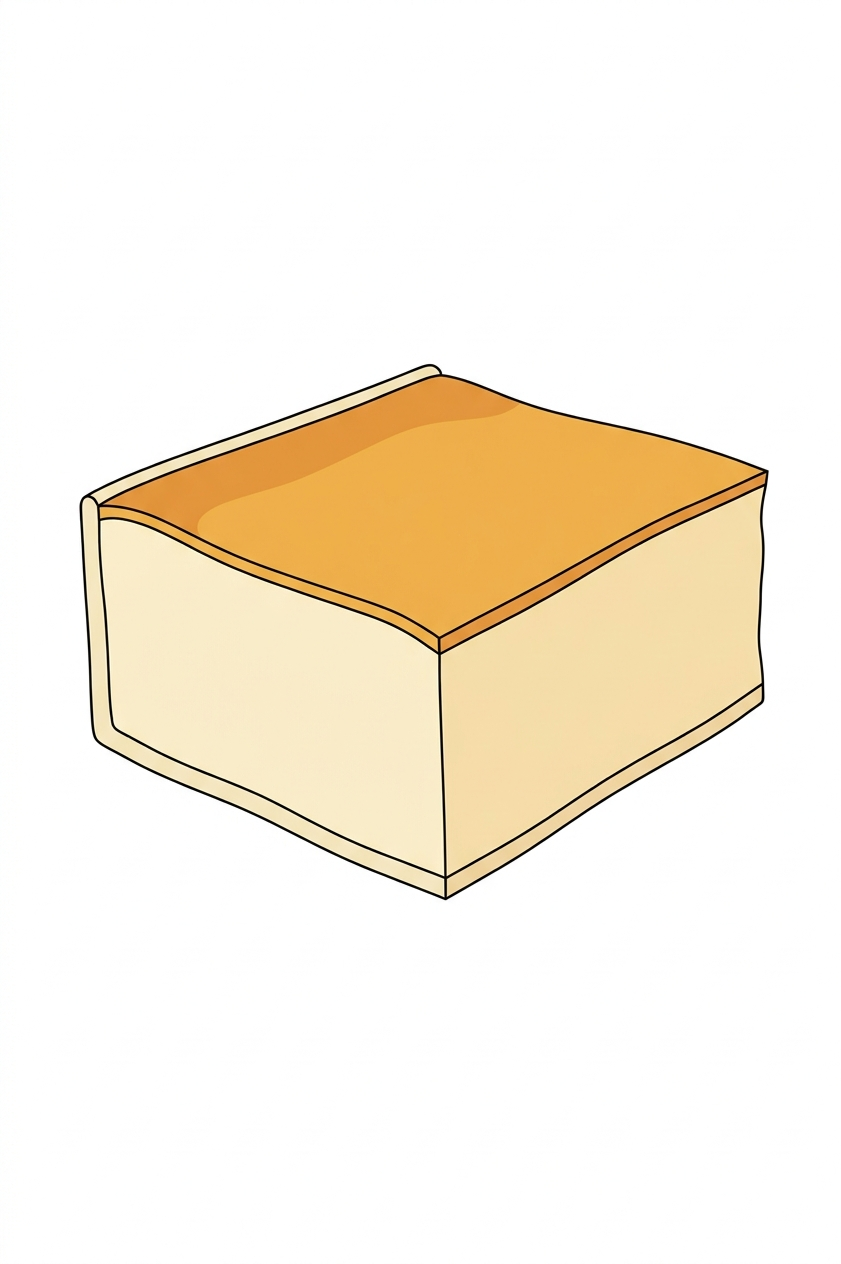
Galatopita is a Greek milk pie made from a custard of whole milk, eggs, semolina, sugar, and butter, baked in a pan until set and golden on top, and served cut into squares dusted with cinnamon and powdered sugar. It is sometimes made with phyllo — a layer on the bottom, one on top, the custard poured between them — and sometimes without, the custard baked directly in the pan and left to stand as its own thing. Both versions are legitimate and the argument about which is more traditional depends entirely on which region of Greece you are in and whose grandmother you are talking to. The phyllo version is more structured and slightly more festive; the phyllo-free version is softer, more yielding, and closer to a baked pudding than a pie.
The name breaks down simply — gala means milk, pita means pie — and the dessert is exactly what the name describes, without pretense or elaboration. It belongs to a family of Greek milk-based sweets that includes rizogalo, the rice pudding, and bougatsa, the semolina custard pastry eaten for breakfast in northern Greece, all of which share the same foundational combination of dairy, eggs, and a starch to provide body and texture. These are not sophisticated desserts in the formal pastry sense — they are home cooking elevated by good ingredients and careful attention, which in Greek food culture is its own category of excellence.
Galatopita is made across Greece but is particularly associated with rural and home cooking traditions rather than pastry shop culture. It is the kind of dessert that appears at the end of a Sunday family meal, or at a village festival, or in the context of a religious feast day when something sweet is called for and the ingredients on hand are the simple ones that have always been on hand. The semolina gives it a slightly grainy, satisfying texture that distinguishes it from a purely egg-and-cream custard, and the cinnamon on top is not optional — it is the note that pulls the whole thing into focus.
Regional variations are significant enough to constitute distinct preparations. In some parts of Greece the custard is flavored with lemon zest or orange blossom water; in others vanilla is the dominant note. Northern Greek versions tend toward the phyllo construction and a less sweet custard; island versions are sometimes richer, made with goat’s milk or sheep’s milk that carries its own flavor. The version you encounter depends entirely on where you are and who made it, which is true of the best traditional foods everywhere.
This content was created with the assistance of AI. Sources are currently being reviewed.