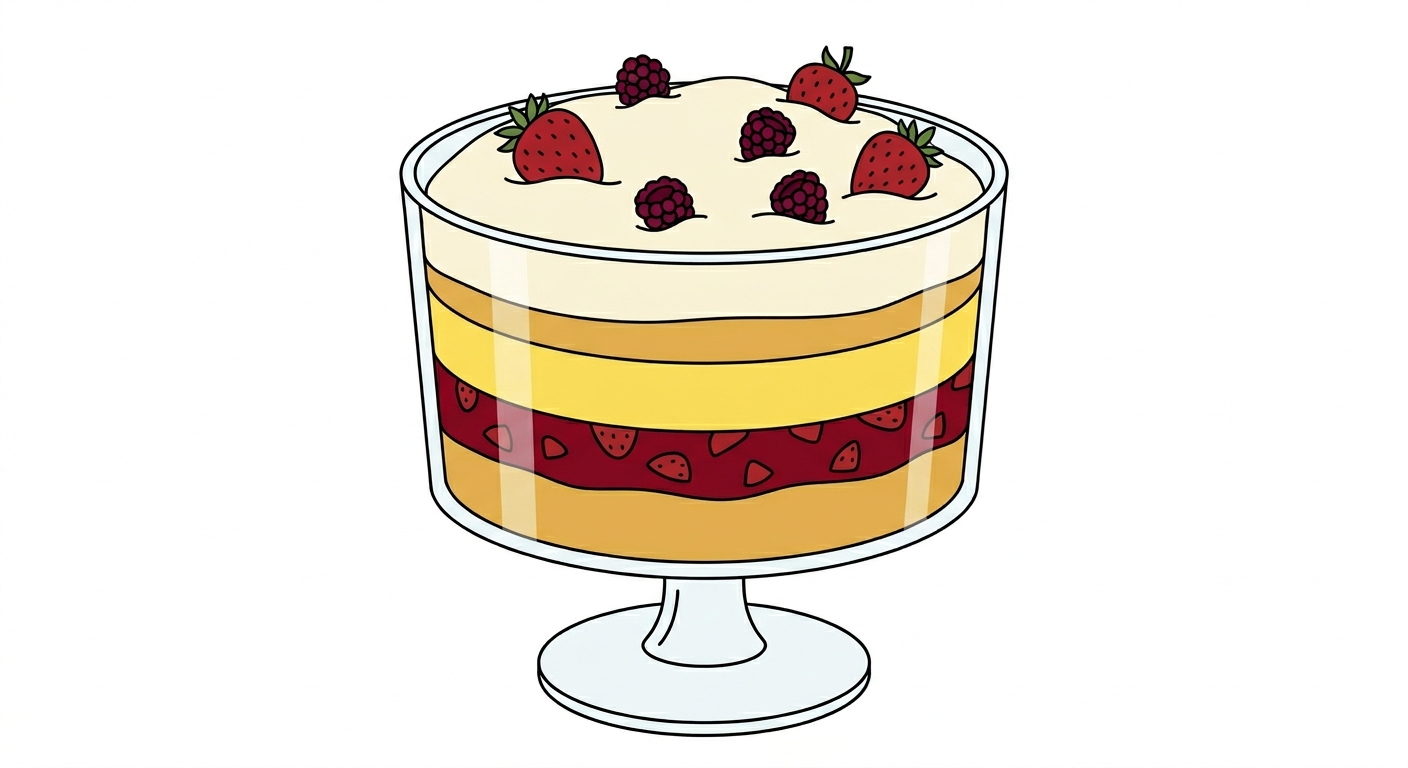
Trifle is a layered dessert assembled in a deep glass bowl so the cross-section is visible from the side: sponge cake or ladyfingers soaked in sherry or another fortified wine at the base, then fruit or jelly, then egg custard, then whipped cream on top. The layers are the point — both structurally and visually — and the glass bowl is not optional, it is how the dessert communicates. Trifle is finished with glacé cherries, toasted almonds, or angelica, and served cold after the layers have had time to settle into each other. The custard softens the sponge from above; the sherry works its way through from below. A trifle assembled and eaten immediately is a different, lesser thing.
The word appears in English as early as 1598, when translator John Florio referenced a “kinde of clouted creame called a foole or a trifle.” The name derives from the Old French trufe, meaning something whimsical or of little consequence — a characteristically understated name for a dessert that takes considerable effort to do well. Early versions were simpler than what the word now implies: cream thickened with sugar and ginger, layered with soaked bread. The recognizable modern form — wine-soaked sponge, custard, and syllabub or whipped cream — appears in mid-eighteenth century English cookbooks, including Hannah Glasse’s The Art of Cookery Made Plain and Easy, published in 1752. By the Victorian era trifle had become a centerpiece of English celebration tables, served in decorative glass bowls with pedestals and lids, elaborate enough to mark an occasion.
Trifle is also a thrift dessert at its core. It originated partly as a way to use stale sponge cake — soaking it in alcohol solved the texture problem and improved the flavor simultaneously. That practical origin sits underneath the elaborate Victorian presentation without contradicting it. The dessert traveled with British settlers to the American South and to Commonwealth countries, where it took root in holiday traditions. In the United Kingdom it remains the standard Christmas dessert for households that do not make Christmas pudding, and often appears alongside it. The sherry is traditional; the jelly layer is contested; the custard is non-negotiable.
This content was created with the assistance of AI. Sources are currently being reviewed.