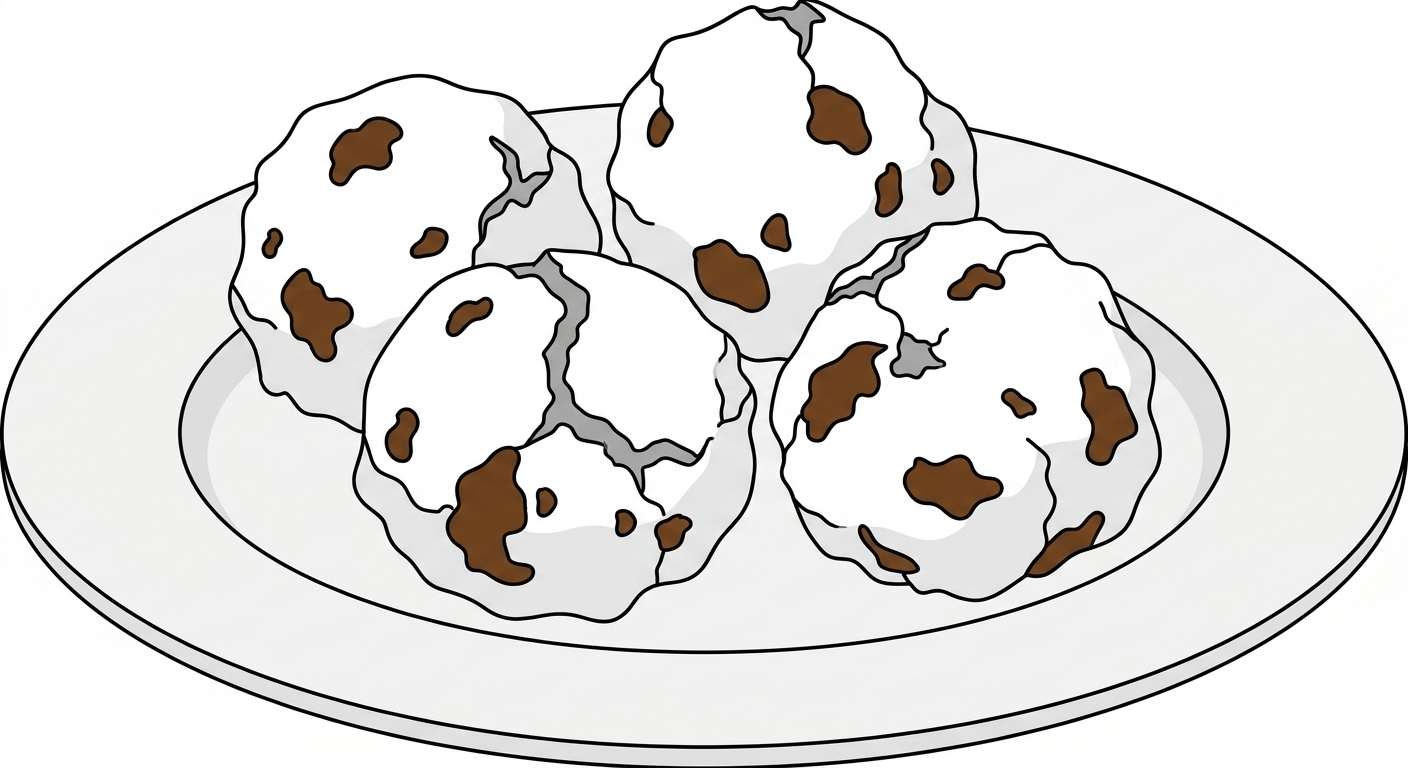
Sneeuwballen are round confections made from a core of whipped vanilla cream — butter and fondant sugar beaten until light — encased in a thin shell of dark Belgian chocolate and dusted generously with powdered sugar. The chocolate shell is deliberately thin: it cracks on the first bite and the vanilla cream dissolves quickly, the whole thing gone in two or three bites. The powdered sugar coating keeps the chocolate from melting in the hand and gives the snowball its white exterior. They are sold from September through March only, a seasonal restriction that is both practical — the chocolate shell is fragile in heat — and part of the product’s identity. A sneeuwbal in summer is not a thing.
The origin is documented and specific. In 1913, August Larmuseau, a pastry chef in Ghent, was selling chocolate to wealthy clients but wanted to make something people with less money could afford. His solution was a confection that used only a thin coating of expensive chocolate over a cheap filling of whipped margarine and vanilla — the taste of quality Belgian chocolate without the cost of a solid piece. He dusted the result with powdered sugar so the chocolate shell would not melt on contact with warm hands, and named it sneeuwballen — snowballs — for the white, round appearance. The Larmuseau name became the brand, and the recipe has been kept secret through every ownership change since. The business passed from the Larmuseau family to a young Ghent entrepreneur in 2013, exactly one hundred years after the first batch, who maintained the original recipe without alteration.
Sneeuwballen sit in an unusual category — not quite a chocolate, not quite a pastry, not quite a candy — which partly explains why they remain strongly associated with Ghent rather than spreading into the broader Belgian confectionery market the way pralines and speculoos have. They are a local institution sold from a round blue-and-white booth in the city center each winter, carried home in recognizable packaging, and given as gifts. Outside of Belgium they are largely unknown. The Larmuseau recipe has never been published.
This content was created with the assistance of AI. Sources are currently being reviewed.