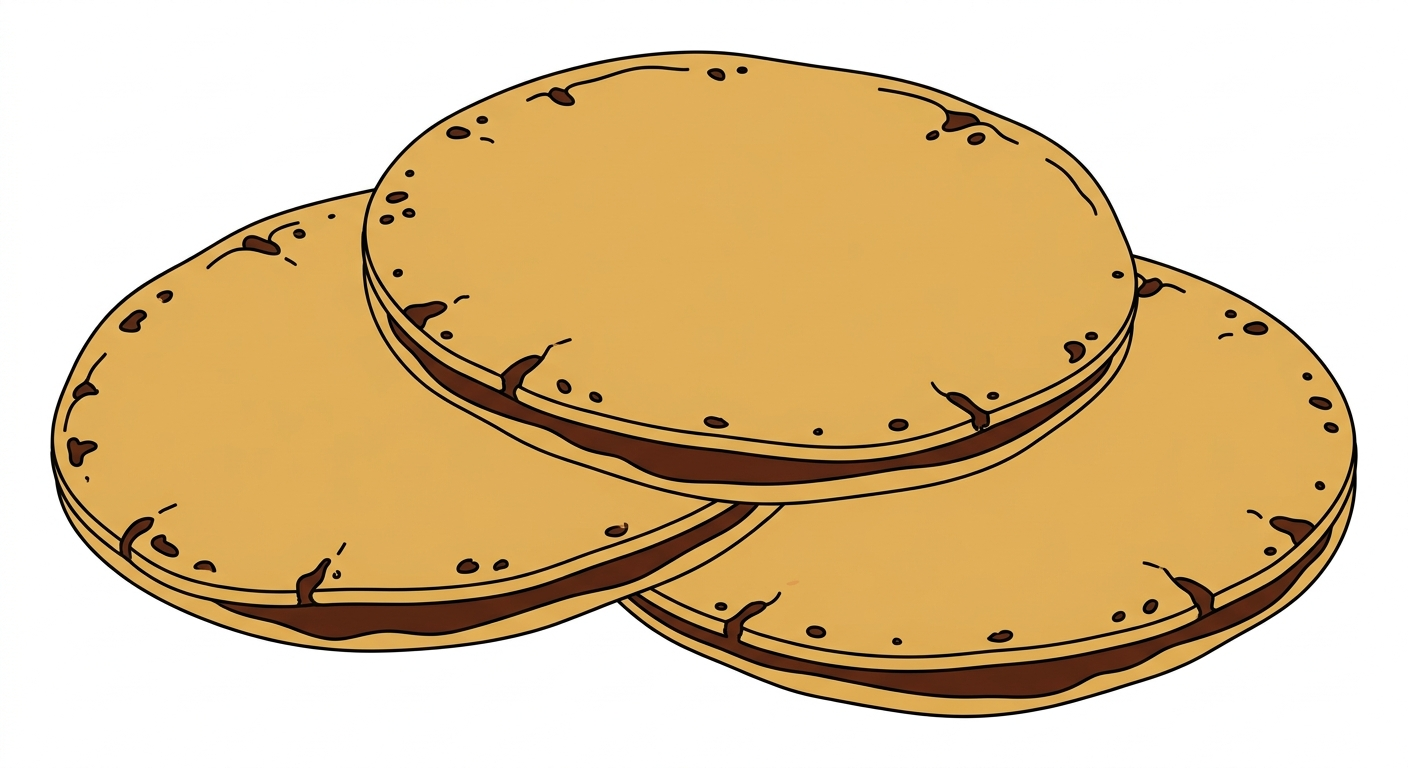
Coyotas are large, flat, round pastries made from two thin discs of flour dough pressed together around a filling of crushed piloncillo — raw, unrefined cane sugar with a deep caramel flavor — then baked until golden and slightly crisp. The diameter runs ten to fifteen centimeters, the thickness closer to a thick tortilla than a conventional pastry, and the texture is somewhere between a cookie and a pie shell: flaky enough to crumble at the edges, sturdy enough to hold together as a handheld snack. They are eaten warm, ideally toasted briefly on a dry comal until the dough crisps and the piloncillo filling melts and turns gooey at the center. The standard accompaniment is black coffee or hot chocolate. The piloncillo filling is the original and most traditional; cajeta, guava paste, coconut, date, jamoncillo, and dulce de leche are all current variations.
The pastry originates in Hermosillo, the capital of the northern Mexican state of Sonora, a desert region with a wheat culture shaped by Spanish colonial agriculture. Sonora produces some of Mexico’s finest wheat, and the coyota is built from that wheat tradition combined with piloncillo, a pre-Hispanic sweetener that survived colonization as the dominant rural sugar across Mexico. The name has two competing explanations, both rooted in the colonial casta system: coyota was a term for a person of mixed Spanish and Indigenous heritage, and the pastry is understood as a mestizo food — Spanish wheat dough meeting Indigenous piloncillo. The more specific account holds that the name came from the young mixed-race women who sold the pastries on the streets of the Seris neighborhood of Hermosillo, and that buyers would call out “the coyota is coming” when the sellers approached.
Coyotas are Sonora’s most recognized pastry and function as a regional emblem — the thing Sonorenses carry home to family abroad, the gift packed into luggage, the food that signals where someone is from. They keep for one to two weeks in an airtight container, which made them practical provisions in a desert climate and continues to make them ideal for travel. Commercial versions are widely sold across Sonora and Sinaloa and have reached Mexican diaspora communities in Los Angeles and elsewhere. The handmade version, baked fresh and eaten the same day, is considered the standard everything else is measured against.
This content was created with the assistance of AI. Sources are currently being reviewed.