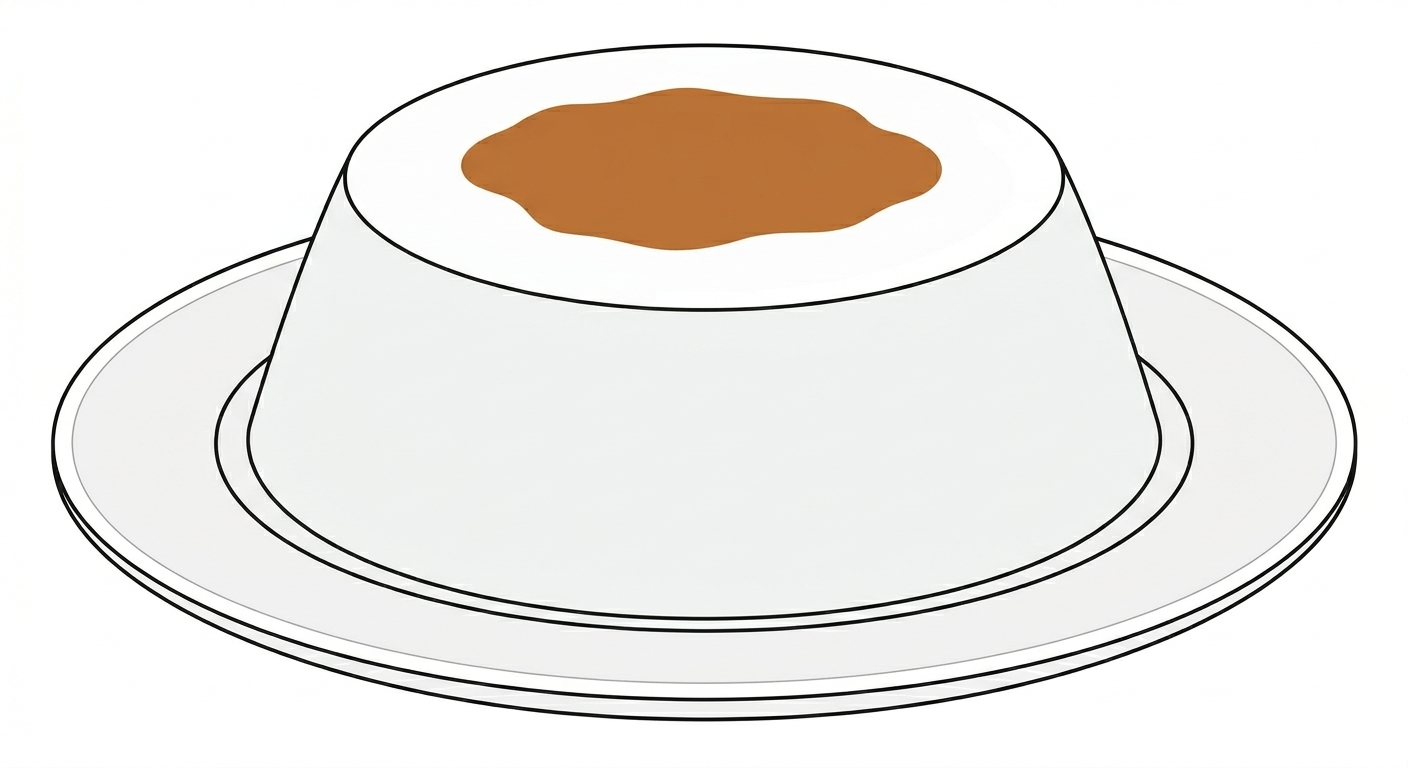
Tembleque is a coconut pudding made from coconut milk, sugar, cornstarch, and salt, cooked on the stovetop until thickened, poured into a mold, and chilled until set. It contains no eggs and requires no oven. When unmolded onto a plate it holds its shape but trembles visibly with any movement — the name comes from the Spanish temblar, to tremble or shake, and the jiggle is both the textural goal and the quality test. A tembleque that doesn’t shake has been overcooked. The surface is smooth and white, dusted with ground cinnamon before serving, sometimes finished with a curl of citrus zest. The flavor is clean and coconut-forward, mildly sweet, with cinnamon as the only warm note. It is lighter than flan, simpler than a custard, and sets firmly enough to slice but softly enough to melt quickly on the tongue.
Tembleque developed in Puerto Rico during the Spanish colonial period, when coconuts were abundant across the Caribbean coast and Spanish sugar production had made sweetened desserts widely accessible. The form connects directly to the Spanish manjar blanco — a medieval white pudding made from almond milk, sugar, and starch, brought to the Americas by colonizers — which was adapted throughout the Spanish colonial world using whatever local milk source was available. In Puerto Rico, coconut milk replaced almond milk, producing a distinctly Caribbean version of the same starch-thickened pudding structure. The same lineage connects it to the Filipino maja blanca and the French blancmange, all descendants of the same medieval European white pudding tradition carried by Spanish and French colonial networks across different parts of the world.
Tembleque is a Christmas dessert in Puerto Rico, appearing on the holiday table alongside arroz con dulce, coquito, pasteles, and lechón as part of a celebration season that runs from late November through Three Kings Day on January 6th. It is also made year-round and available in restaurants and home kitchens throughout the island and across the Puerto Rican diaspora. The recipe is among the simplest in Puerto Rican cooking — five ingredients, one pot, a mold, and a refrigerator — which has kept it consistent across generations and households without significant drift from the original form.
This content was created with the assistance of AI. Sources are currently being reviewed.