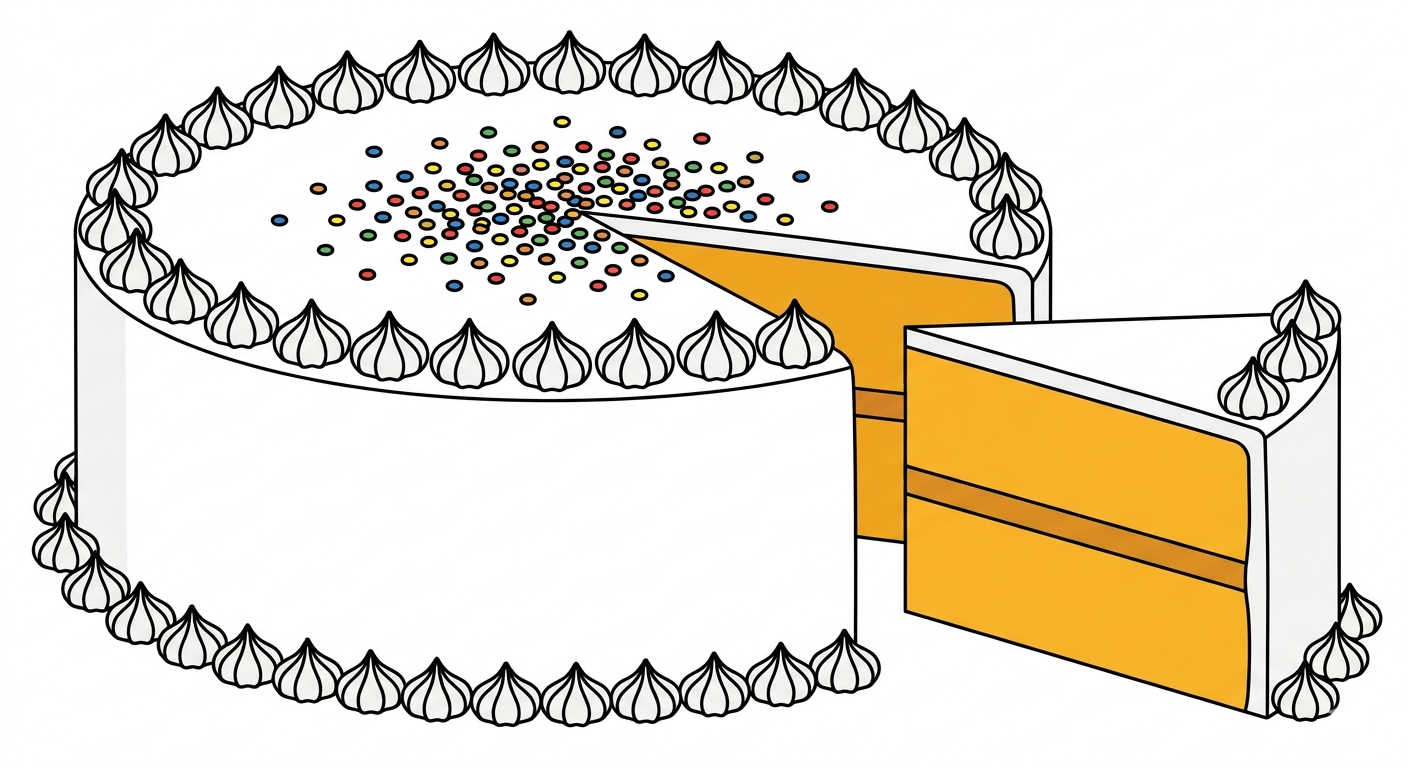
Bizcocho dominicano is a layered butter cake distinguished by three elements that set it apart from a generic white cake: orange juice used in place of milk or water in the batter, a tropical fruit filling — traditionally pineapple jam or guava paste — spread between the layers, and a frosting of Italian meringue called suspiro, meaning sigh. The batter is beaten extensively — butter and sugar creamed until pale and voluminous, eggs added one at a time — producing a crumb that is exceptionally light and airy, almost dissolving on the tongue rather than requiring chewing. The orange juice and citrus zest woven through the batter give it a brightness that keeps the sweetness from becoming heavy. The suspiro is cooked meringue — egg whites and hot sugar syrup beaten to a glossy, stable foam — applied in thick, swooping peaks and valleys across the exterior. It does not behave like buttercream. It stays light, slightly marshmallowy, and does not refrigerate well; the cake is eaten at room temperature, which is the only temperature at which all three elements perform correctly.
The word bizcocho is Spanish and refers broadly to sponge cake or biscuit across the Spanish-speaking world, arriving in the Dominican Republic through Spanish colonial baking traditions. The specifically Dominican form — the combination of Italian meringue frosting, tropical fruit filling, and orange-scented butter cake — developed within Dominican bakery culture over the twentieth century, shaped by the ingredients available on the island and by the baking conventions that took root there. The Italian meringue technique, which requires cooking the sugar syrup to a precise temperature before combining it with the egg whites, is technically demanding and was historically the province of professional bakers rather than home kitchens. Dominican cake is still primarily a bakery product — ordered from a master baker for specific occasions rather than made at home — and the recipes are guarded accordingly.
Bizcocho dominicano is the cake of record for Dominican celebrations: birthdays, baby showers, first communions, quinceañeras, anniversaries, and weddings. It is not an everyday food. Its presence signals a gathering of consequence, and the quality of the cake is a reflection on the host. The suspiro’s appearance — how it is piped, swirled, and decorated — is part of what is being evaluated. Dominican-American bakeries in New York, New Jersey, and Florida produce it for the diaspora with the same occasion-specific logic: you order it ahead, you pick it up the day of, you do not substitute another cake.
This content was created with the assistance of AI. Sources are currently being reviewed.