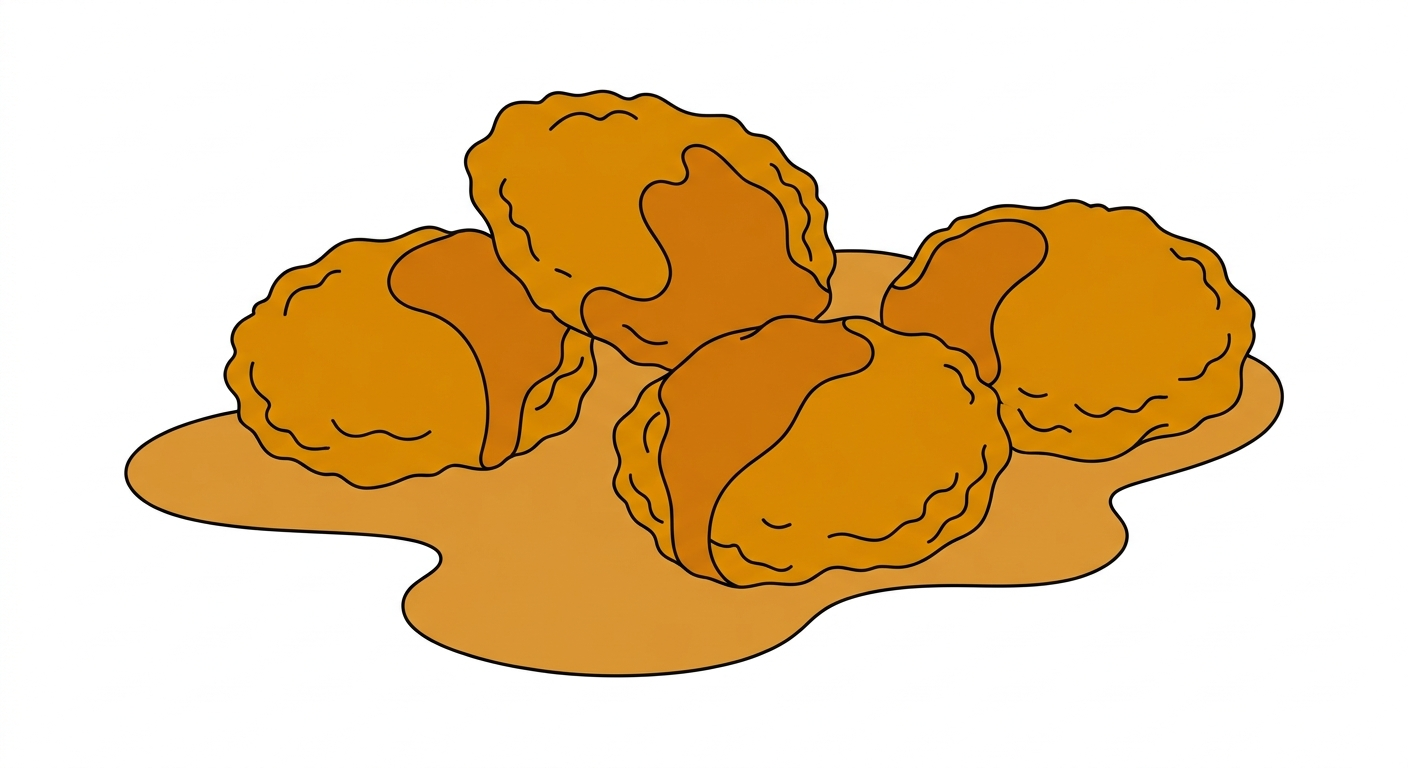
Buñuelos de Yuca are made from grated or mashed yuca — cassava — combined with egg yolks, sugar, and baking powder, rolled into balls, and deep fried until golden and slightly puffed. They are served submerged in a warm syrup made from panela or brown sugar, water, cinnamon, and cloves, sometimes with lime zest, which soaks into the fritters and flavors them from the outside in. The texture is lighter and creamier than a wheat flour fritter — yuca produces a softer, less dense interior — and the syrup is the dominant flavor experience, the fritter functioning as a vehicle for the spiced sweetness rather than asserting much on its own. They are eaten warm, in the syrup, with a spoon.
The yuca base is the defining Dominican adaptation of the broader buñuelo tradition. Spanish colonizers brought wheat flour fritters to Hispaniola, but cassava was the starchy staple already growing across the island and the Caribbean, cultivated by the Taíno people long before European contact. The substitution of yuca for wheat produced a distinct fritter — different texture, different flavor, different structural behavior in the oil — that developed its own identity within Dominican cooking. The same logic that drove the Cuban adaptation, the Colombian adaptation, and the Nicaraguan adaptation applies: each Caribbean buñuelo reflects what the local land offered when Spanish wheat was unavailable, expensive, or simply less familiar than the indigenous staple.
Buñuelos de yuca are Lenten food in the Dominican Republic — most strongly associated with the forty days before Easter rather than Christmas, though they appear at Christmas as well. During Lent they share the table with habichuelas con dulce, the distinctly Dominican sweet cream of beans that is the season’s dominant dessert, and with chacá, a corn porridge eaten in some households. The Lenten association gives buñuelos de yuca a specific seasonal identity — a food people wait for, made in batches, eaten communally — that separates them from an everyday fritter.
This content was created with the assistance of AI. Sources are currently being reviewed.