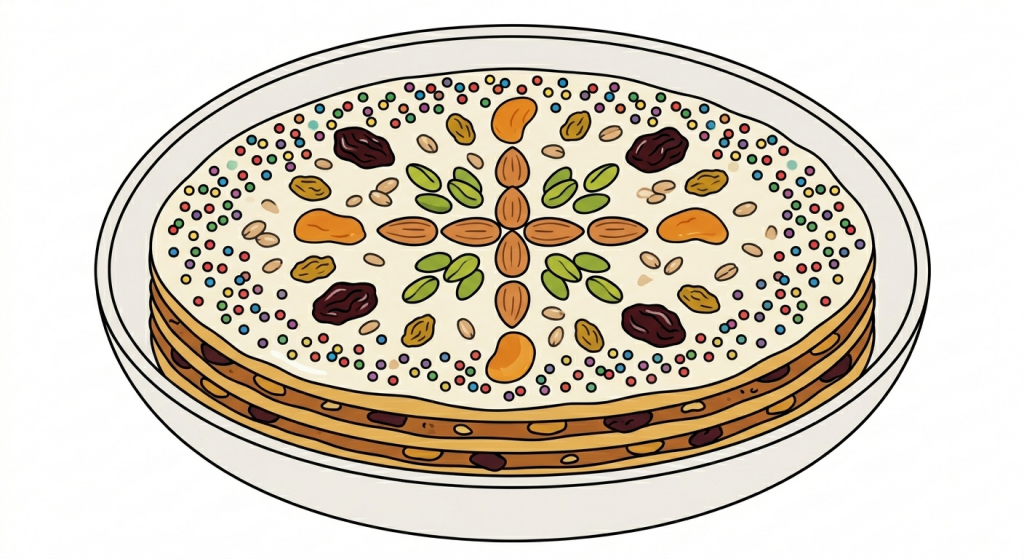
Armenian baking has a documented history stretching back thousands of years, shaped by the country’s position along Silk Road trade routes that brought spices, dried fruits, and techniques from Persia, the Arab world, and the Byzantine Empire. Honey, walnuts, sesame, almonds, and dried apricots are foundational ingredients, appearing across a wide range of traditional sweets.
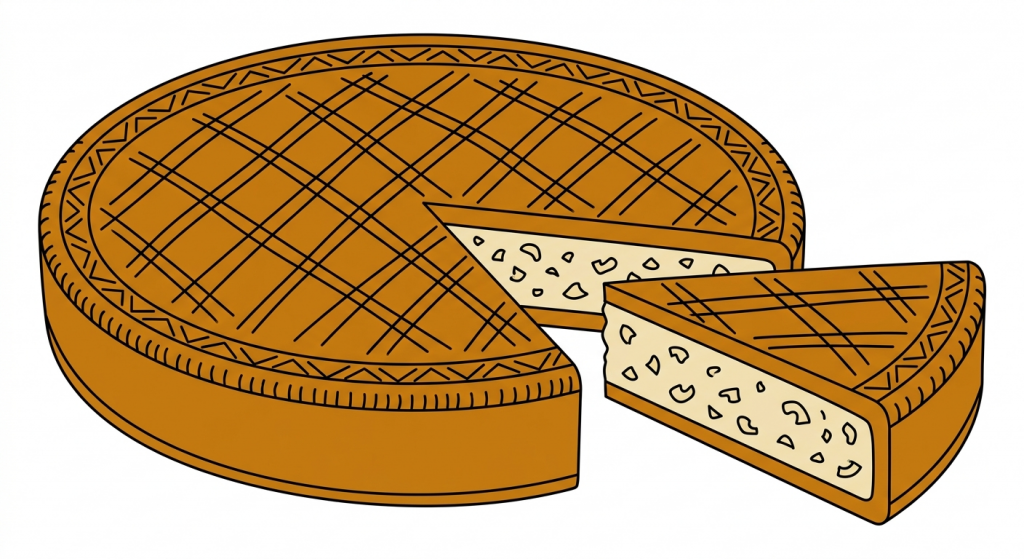
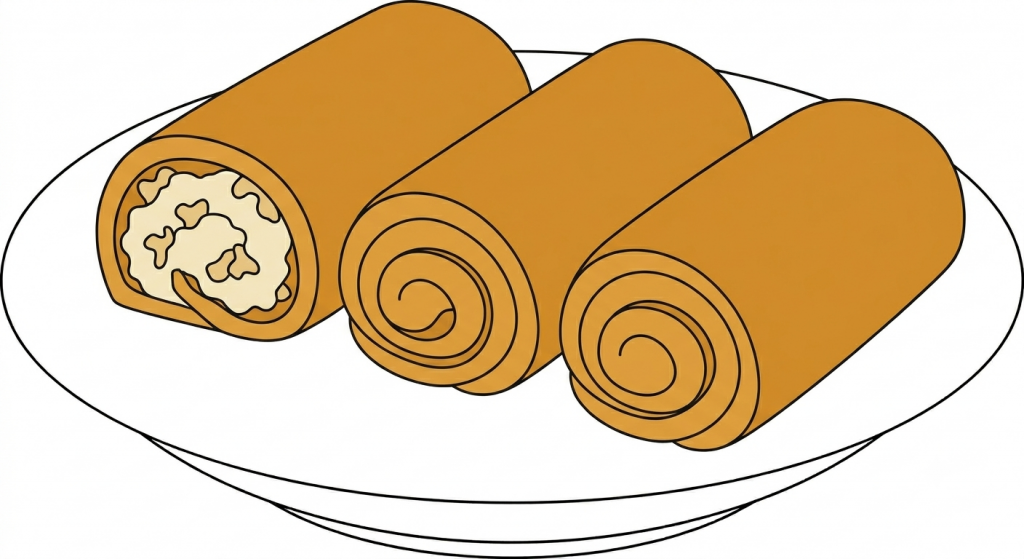
Gata is one of the most recognized Armenian pastries — a yeasted or unleavened dough filled with a sweetened flour and butter mixture called khoriz, baked until golden. Regional variations exist across Armenia and the Armenian diaspora, with different shapes, dough textures, and filling ratios by community. Nazook is a related flaky pastry, also filled with a sweetened mixture, common in both Armenia and among Armenian diaspora communities in the United States.
Sujuk — not to be confused with the sausage of the same name — is a traditional confection made by repeatedly dipping a walnut string into thickened grape juice, then drying it into a dense, chewy candy. It is made during grape harvest season and has equivalents in Georgian and other Caucasian food traditions under different names.
The Armenian Genocide of 1915 and the subsequent diaspora dispersed Armenian food traditions across Lebanon, Syria, France, the United States, and beyond. Many traditional recipes were preserved within diaspora communities and have been documented and revived in recent decades, particularly in Armenian-American communities in California.
This content was created with the assistance of AI. Sources are currently being reviewed.