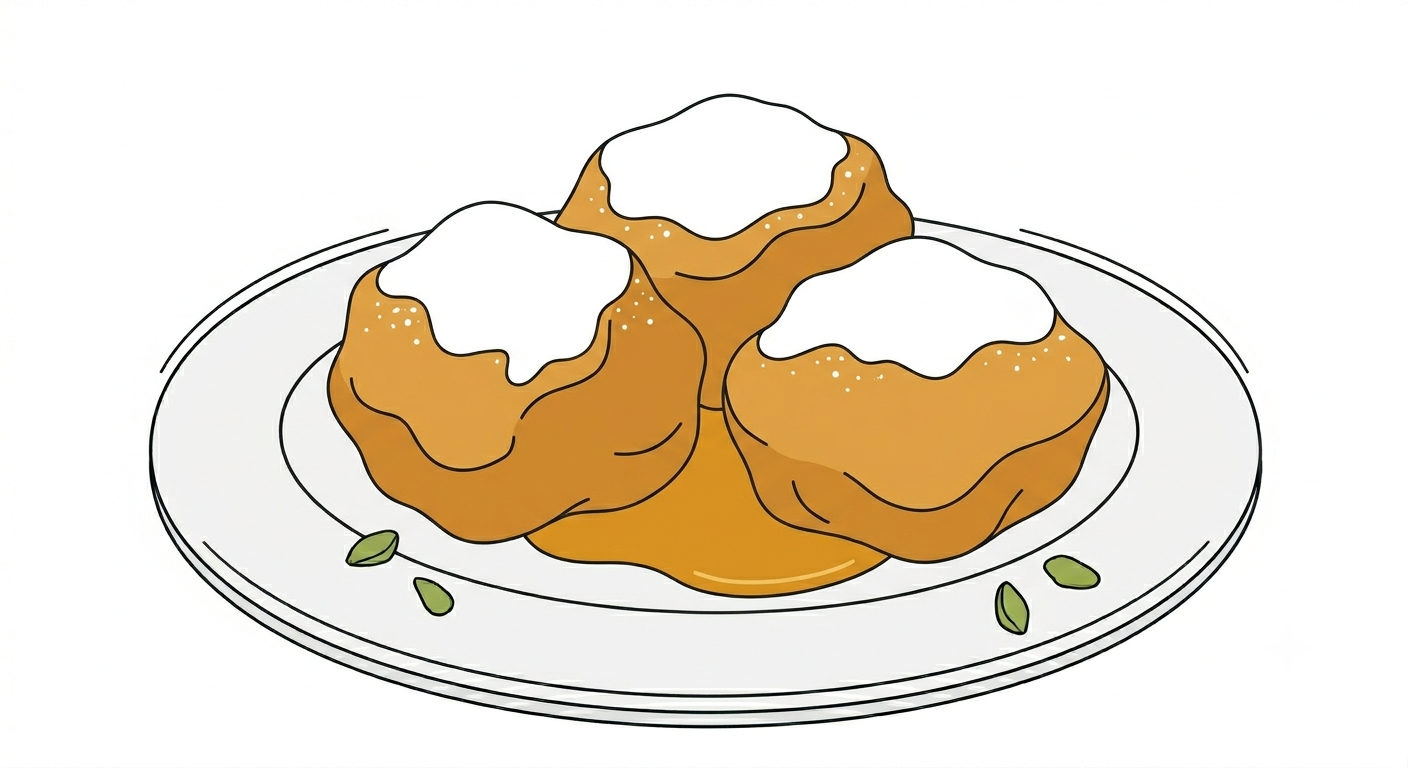
Petulla are fried dough — a simple batter of flour, yeast or yogurt, eggs, milk, and salt, dropped by the spoonful into hot oil and fried until puffed and golden. The exterior is lightly crisp. The interior is soft and airy, with a slight tang when yogurt is used as the leavening agent. They are irregular in shape, which is not a mistake but a characteristic — petulla are hand-dropped, not molded, and each one comes out slightly different from the last. They are served immediately, while hot, with whatever the household or the vendor has on hand: honey, powdered sugar, jam, feta cheese, or some combination of sweet and salty that reflects the Albanian approach to the meal they belong to.
That meal is breakfast, primarily, though petulla appear at any point in the day when something quick and filling is called for. They are street food and home food simultaneously — sold by vendors at markets and festivals, made by mothers and grandmothers in quantities large enough to feed whoever shows up. The dipping options are the point of personalization. A table with petulla on it will also have honey and feta and jam, and each person composes their own version, which is a form of hospitality that requires very little effort and produces a great deal of satisfaction.
The origins of petulla are not well documented, which is consistent with a food that has always lived in the domestic sphere rather than in recipe books or court records. Albanian families describe it as something passed down through generations without a fixed origin point — the kind of food that has simply always been there, made by the women of the household from ingredients that were always available. Flour, yeast, eggs, oil. The equipment required is a bowl and a pan. The technique is straightforward enough that children learn it young and remember it for the rest of their lives, which is part of how foods like this persist without needing to be written down.
Petulla exist across the Western Balkans in similar forms under different names — the Serbian and Macedonian mekici, the Croatian fritule in a related but distinct tradition, the Italian pettole of Puglia and Calabria. Whether these are parallel developments from a shared regional food culture or evidence of transmission in one direction or another is not clearly established. What is established is that petulla are Albanian in the specific sense that matters — the way they are served, the combination of sweet and savory accompaniments, the occasions they mark, and the memories they carry for the people who grew up eating them are particular to Albania, regardless of where the fried dough technique itself originated.
Petulla are eaten at Bajram — the Albanian name for Eid — at New Year, at family gatherings, and on ordinary weekday mornings when someone wakes up early enough to make them before the rest of the household is out of bed. They require no special occasion. They improve any occasion they attend. The feta and honey combination — salty, creamy, sweet, warm — is the one worth trying first, and the one most people come back to.
This content was created with the assistance of AI. Sources are currently being reviewed.