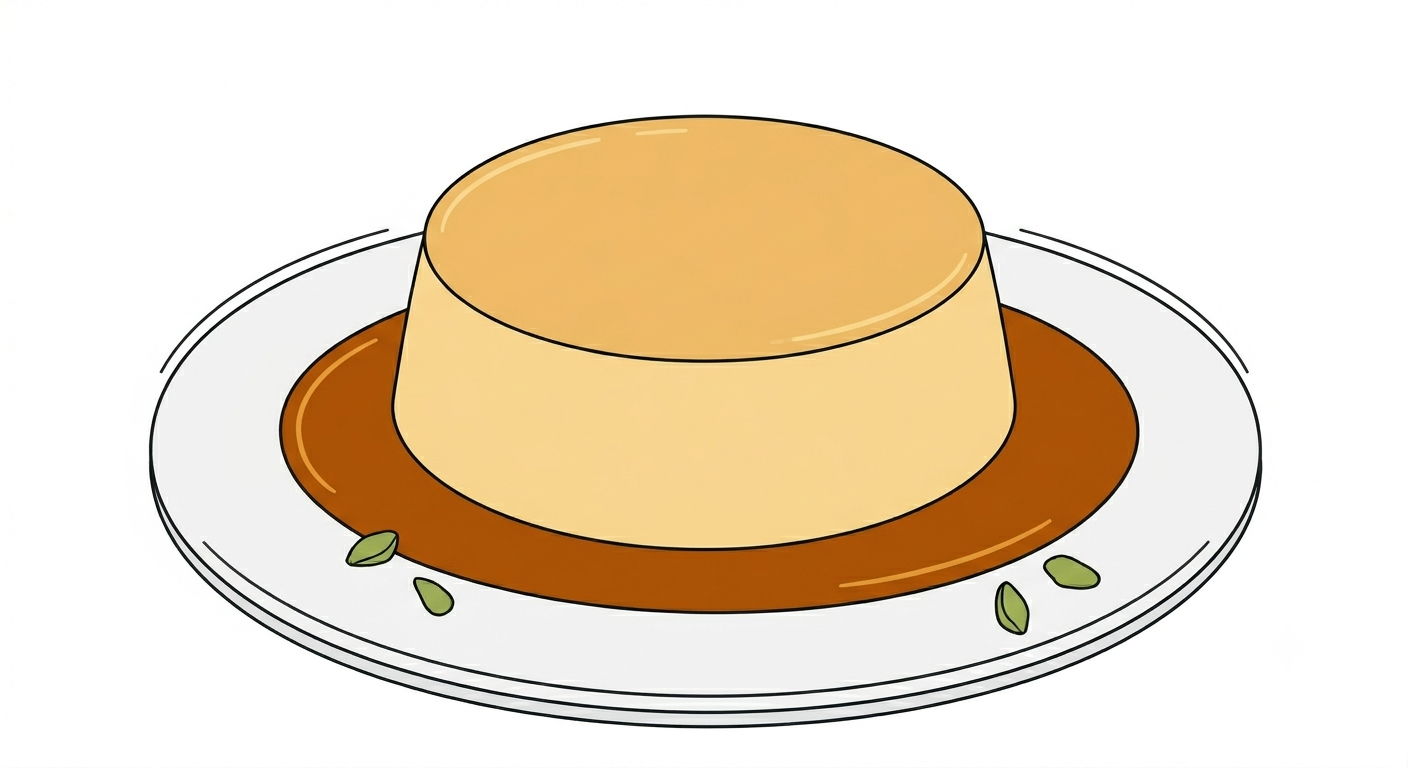
Rožata is a baked custard — eggs, milk, and sugar whisked together, flavored with rozalin, a local Dubrovnik liqueur distilled from rose petals, then poured into ramekins lined with dark caramel and baked slowly in a bain-marie until just set. When unmolded, the caramel runs over the pale custard in amber rivulets. The texture is silky and dense without being heavy, the rose liqueur present as a floral undertone that distinguishes it from every other caramel custard in the European tradition. Every Dubrovnik resident will tell you it is incomparable to French crème caramel or Spanish flan. They are not entirely wrong — the rozalin makes it specific to this city and nowhere else.
The name comes from the liqueur — rozalin, from the Croatian word for rose — and that naming convention is the most honest thing about the dessert’s identity. Rožata is not defined by its technique, which is shared with custards across the Mediterranean, or by its ingredients, which are common to dozens of similar preparations. It is defined by the rose liqueur, which is made only in Dubrovnik from a local rose variety, and which gives the dessert a flavor that cannot be replicated elsewhere without importing the ingredient. A rožata made without rozalin is a caramel custard. With it, it is rožata.
The first documented records of rožata date to the Venetian period — the 14th century, when it was known as the friar’s pudding, a name that suggests monastic or convent production in the pattern of other Mediterranean custard desserts made from surplus eggs and dairy. Dubrovnik spent centuries under Venetian influence before becoming an independent republic, and the custard preparation technique almost certainly arrived through that contact. What Dubrovnik did was keep the technique and add the rose liqueur, transforming a shared Mediterranean form into something locally specific.
The independent Republic of Ragusa — Dubrovnik’s formal status from 1358 to 1808 — was one of the most sophisticated maritime republics in the Adriatic, trading extensively with both Venice and the Ottoman Empire while maintaining its independence from both. That political position produced a food culture that absorbed influences from multiple directions without being fully claimed by any of them. Rožata sits in that tradition — a custard with Venetian origins and a Ragusan identity, unchanged in its essential form since the Middle Ages because the essential form was correct from the beginning.
Today rožata appears on every restaurant menu in Dubrovnik and is sold in bakeries throughout the city during summer, when the tourist season intersects with the warm weather that makes a cold, silky custard exactly the right thing. It is served chilled, unmolded onto a plate, the caramel pooling around the base. Some versions add lemon zest, rum, or raisins. The traditional version adds none of these things — only the rozalin, the eggs, the milk, and the caramel. In a city as architecturally specific and historically self-conscious as Dubrovnik, the restraint of the recipe feels appropriate. The city has always known what it was. So has the custard.
This content was created with the assistance of AI. Sources are currently being reviewed.