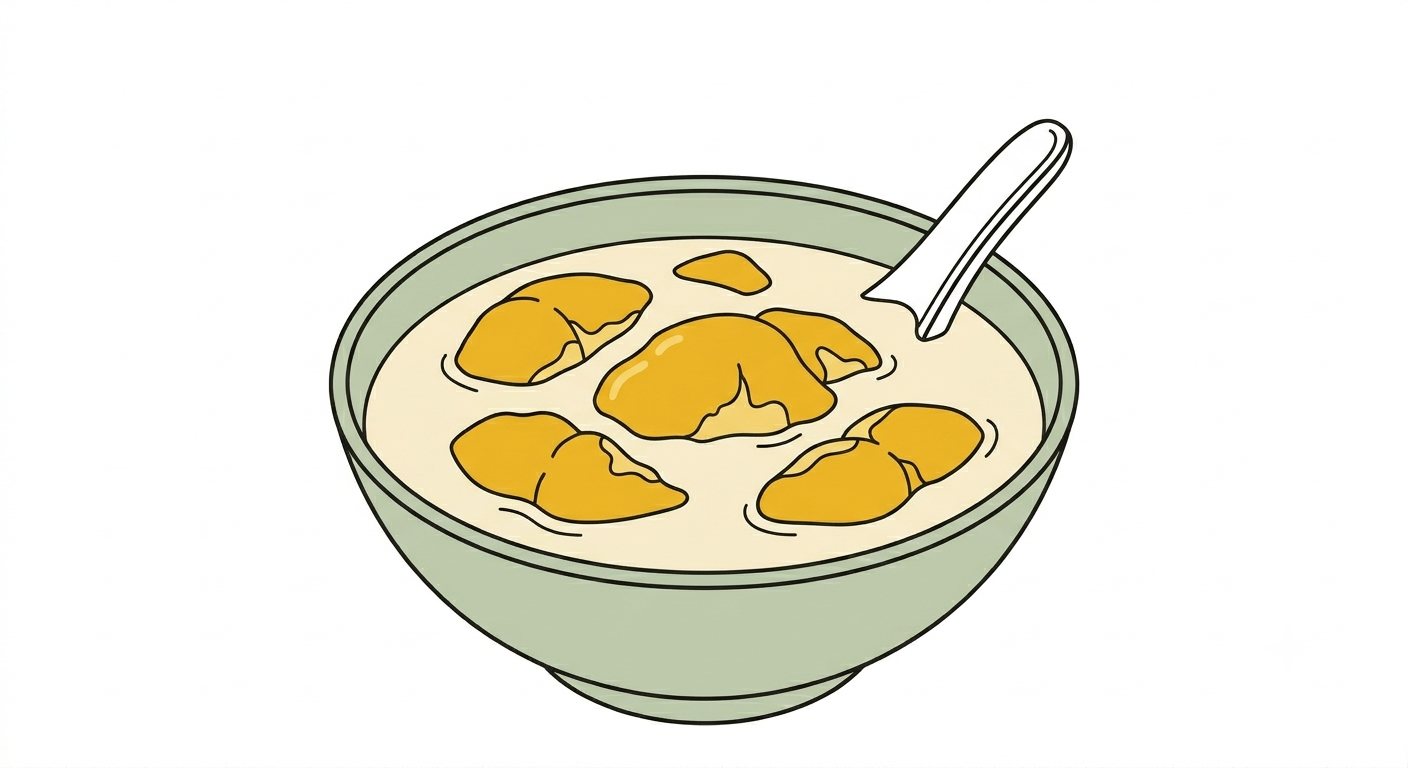
Durian pengat is durian cooked in coconut milk — the flesh scooped from ripe durians, mashed until smooth, then simmered with coconut milk, palm sugar, pandan leaves, and sometimes a little salt until the mixture thickens into a warm, intensely fragrant custard. It is served in small bowls, sometimes with additional fresh durian flesh on top, sometimes with a drizzle of palm sugar syrup, sometimes with nothing at all because the durian itself is already the most assertive thing in the room. The smell arrives before the bowl does. That is not a complaint. For anyone who loves durian, the smell is the announcement that something exceptional is about to happen.
Pengat is a cooking style rather than a single dish — the word describes the method of simmering fruit or root vegetables in coconut milk and sugar until they soften and the liquid reduces into something thick and sweet. Pengat appears across the Malay Archipelago in various forms: sweet potato, banana, jackfruit, and pumpkin are all made this way in different communities and different seasons. The durian version is the most celebrated, and also the most divisive, because durian itself is the most celebrated and most divisive fruit in Southeast Asia.
The durian — Durio zibethinus — is native to the rainforests of Borneo and Sumatra and has been cultivated across Malaysia, Indonesia, and Thailand for centuries. Ancient Malay texts from the 15th century document it as already established and beloved, particularly among royalty. The name comes from the Malay duri, meaning thorn, a reference to the armored exterior that must be navigated before any of the flesh inside can be reached. The flesh is creamy, yellow, and extraordinary — sweet and savory simultaneously, with a flavor that contains notes of custard, almond, vanilla, and something more difficult to name that is simply durian and nothing else. The smell, which clings to everything in the vicinity and has been banned from hotels and public transit across the region, is the price of entry. Most people who love durian consider it a very low price.
In pengat, that flavor intensifies. The heat concentrates the durian, the coconut milk adds richness, and the palm sugar deepens the sweetness without masking anything. The result is a dessert that contains essentially two ingredients — durian and coconut milk — but produces something more complex than either of them alone suggests. Peranakan cooking, the Chinese-Malay culinary tradition of the Straits Settlements, elevated pengat durian into a restaurant and festive context, and the dish remains a fixture at Peranakan tables and at the dedicated durian dessert shops that operate seasonally across Singapore and Malaysia when the fruit is at its peak.
The season matters. Durian pengat made from mediocre out-of-season fruit is a different and considerably lesser experience than the version made during peak season from Musang King or D24 varieties, when the flesh is at its richest and most complex. Dedicated durian sellers in Malaysia and Singapore sell pengat alongside fresh durian, the cooked version drawing on whatever grade of fruit is too ripe to sell whole. Nothing is wasted. The ripest, most pungent durian makes the best pengat, which is a satisfying piece of culinary logic.
This content was created with the assistance of AI. Sources are currently being reviewed.