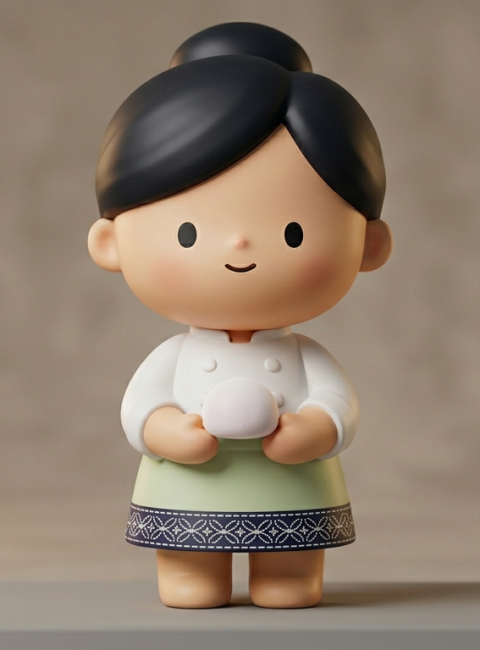
Chef Hana Daifuku grew up in Kyoto where wagashi was not background decoration — it was the centerpiece of the tea ceremony, made to reflect the current season, changed monthly, and crafted with the understanding that a sweet seen in March should look nothing like one made in October. Kyoto is the historical center of wagashi culture in Japan, and the standards there are specific and exacting.
Her work centers on traditional wagashi — daifuku with a thin mochi shell and anko filling made from carefully cooked azuki beans, nerikiri hand-shaped seasonal confections made from white bean paste and rice flour, and dorayaki filled with smooth tsubu-an. Hana understands that wagashi is not primarily about flavor — it is about appearance, seasonality, and the relationship between the sweet and the tea it accompanies. Each piece is made to be looked at before it is eaten.
In Universo da Doçura, Chef Hana represents a confectionery tradition that is one of the most technically demanding and culturally specific in the world. Her daifuku shell is always the right thickness. Her nerikiri always reflects the correct season. Nothing is made out of its time.
This content was created with the assistance of AI. Sources are currently being reviewed.