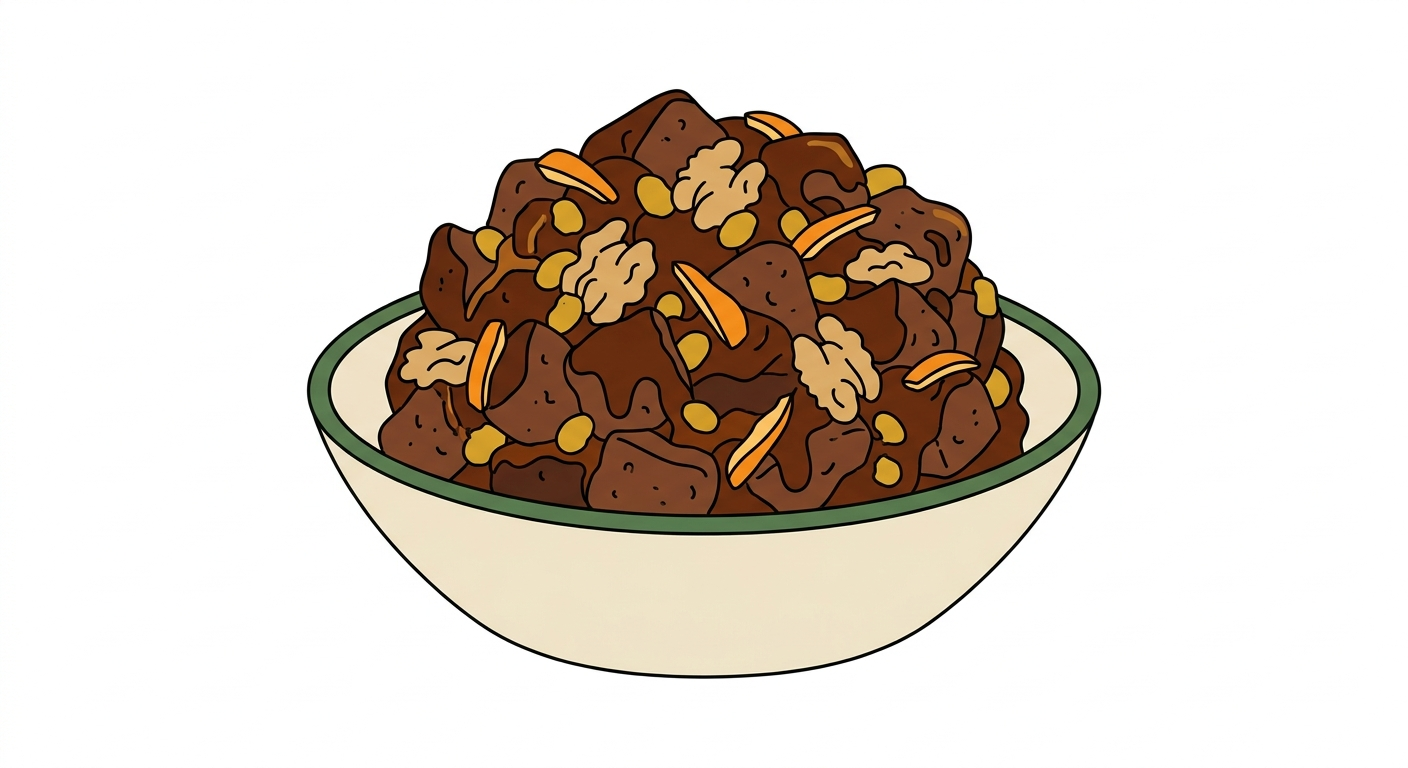
Ranfañote is a Lima dessert with documented Afro-Peruvian roots — a product of the same colonial-era criolla kitchen that produced suspiro limeño and turrón de Doña Pepa, where enslaved African cooks worked with available ingredients and Spanish technique to create a distinct Limeño food tradition. It is made from day-old or toasted bread pieces soaked and cooked in chancaca syrup — a dark, unrefined cane sugar syrup made from dissolved chancaca blocks, spiced with cinnamon and clove — then combined with shredded coconut and chopped nuts, typically pecans or walnuts.
Chancaca is raw cane sugar sold in solid blocks, darker and more complex in flavor than refined sugar, with a molasses undertone that gives ranfañote its characteristic depth. The bread absorbs the syrup during cooking and the mixture is served warm or at room temperature, closer in texture to a bread pudding than to a candy or cake.
Ranfañote is a Holy Week food — specifically associated with the period between Palm Sunday and Easter in Lima, when it appears at family tables and is made from the bread left over from the preceding days. The use of stale bread as a primary ingredient reflects the practical logic of colonial-era Lima kitchens where waste was not an option, and the transformation of leftover bread into a celebration sweet through chancaca syrup and spice is a technique that appears across multiple colonial food cultures simultaneously.
The recipe has been transmitted largely through oral tradition within Lima’s Afro-Peruvian communities, which is why it is less standardized than other Peruvian desserts — proportions and specific additions vary by family and neighborhood. It is one of the less internationally known Peruvian sweets despite being one of the oldest continuously made desserts in Lima.
This content was created with the assistance of AI. Sources are currently being reviewed.