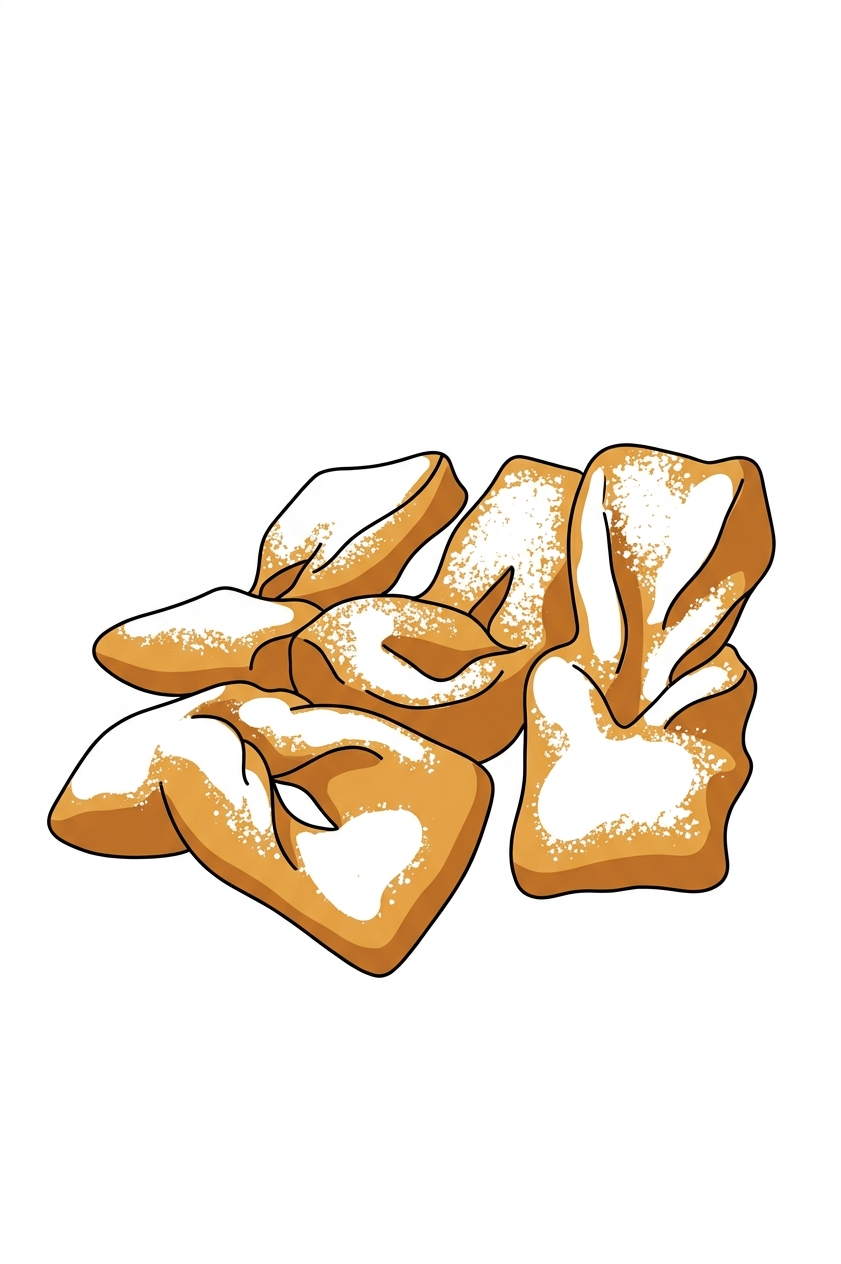
Calzones rotos are a traditional Chilean fried pastry. The name translates to torn underwear and refers to the unique shape: rectangles of dough with a center slit, with one end pulled through to create a twisted form with ragged edges. Unlike yeasted doughs, calzones rotos use baking powder to achieve a slight puff and are dusted with a heavy coating of azucar flor—powdered sugar—immediately after frying.
The dough is a simple mixture of flour, eggs, butter, and zest from lemon or orange. A small amount of pisco or brandy is a critical technical addition; the alcohol inhibits gluten formation and evaporates rapidly during frying, which creates a crispier texture and prevents the pastry from becoming greasy. The dough does not need to rise, making it a quick preparation suitable for home kitchens.
The most widely repeated origin story traces the name to colonial Santiago, where a woman selling pastries in the Plaza de Armas reportedly had her skirt blown up by the wind, exposing torn underwear. A separate account suggests the recipe was developed in colonial convents, where nuns used available pantry staples to create a wide array of fried sweets. Both stories are part of the local lore that has kept the name and the recipe in circulation for generations.
Calzones rotos are primarily a winter food and a staple of the Chilean afternoon tea known as once. They are famously associated with rainy days; in Chilean culture, the sound of rain is often the traditional signal to begin frying dough. Regional variations exist: the northern part of Chile often finishes them with palm honey instead of sugar, while the south may use aromatic ulmo or maqui honey. They also appear during the Fiestas Patrias celebrations in September, where they are sold as a classic street food.
This content was created with the assistance of AI. Sources are currently being reviewed.