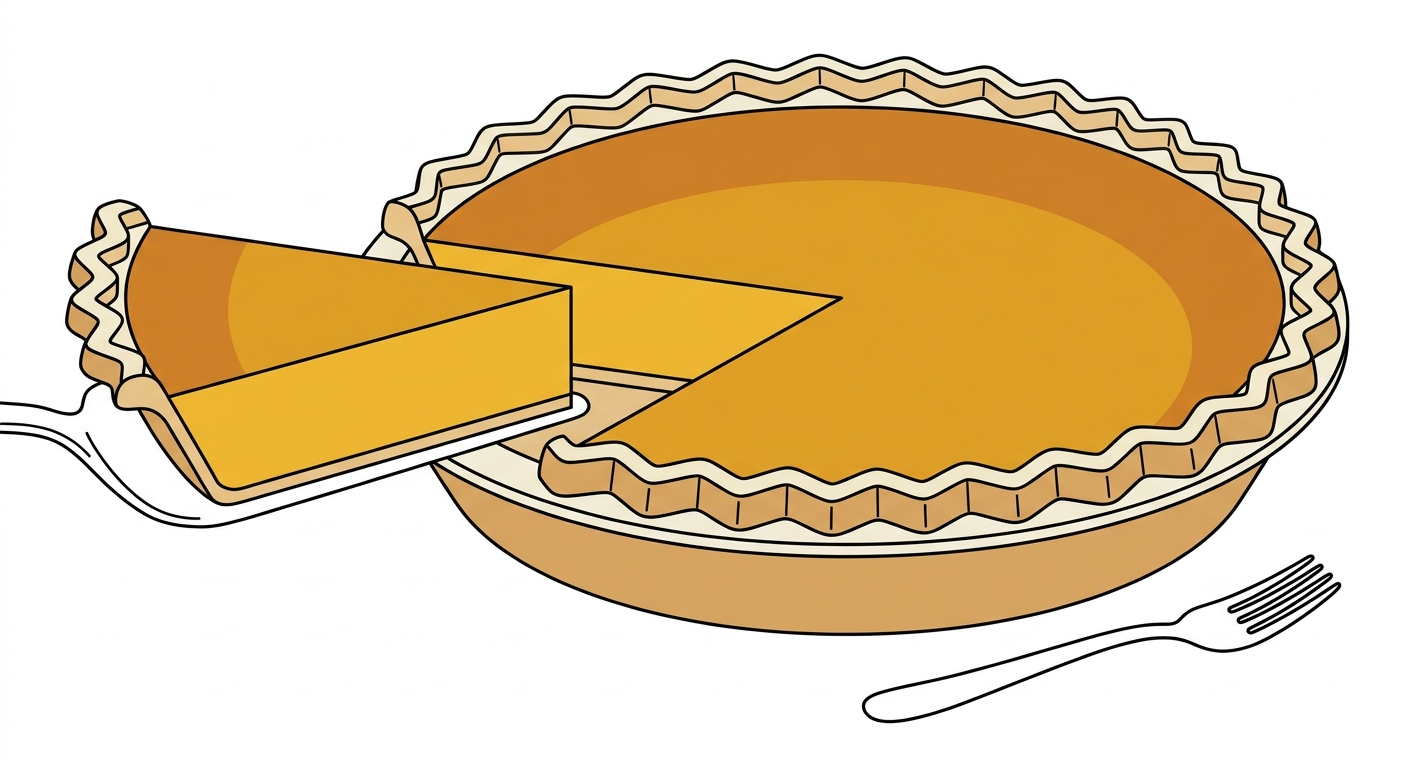
Chess pie is a Southern American custard pie made from eggs, butter, sugar, and a small amount of cornmeal or flour, often balanced with a splash of vinegar or buttermilk to cut the intense sweetness. It is baked until the filling sets firm with a crackled, slightly glossy top. The cornmeal is not incidental. It creates the characteristic surface texture and gives chess pie its structural density, distinguishing it from the softer set of a standard egg custard pie. The ratio of cornmeal to filling determines the final texture, and Southern bakers are specific about this.
The name’s origin is disputed and has never been definitively settled. The most frequently repeated explanation is a phonetic corruption of cheese pie—the filling’s texture resembles a lemon curd—but this is not confirmed. Another version claims a cook answered it’s jes’ pie when asked what kind it was, and the name stuck. A third theory suggests the name is a shortening of chest pie, referring to the pie chests where these high-sugar cakes and pies were kept, as they could be stored safely without refrigeration.
The recipe traces to English settler baking—the combination of eggs, butter, and sugar in a pastry shell is structurally identical to the British transparent pudding and sugar pie traditions brought to the American South in the seventeenth and eighteenth centuries. Cornmeal replaced or supplemented the thickening agents available in England, adapting the recipe to what Southern pantries reliably contained. The result is a pie that requires no seasonal fruit, no specialty ingredients, and no refrigeration to make—which explains its longevity as a church potluck and funeral reception staple across the rural South.
Lemon chess pie adds lemon juice and zest to the base filling, producing a sharper, more complex version that is arguably more popular today than the plain version. Chocolate chess pie is a further variation. Both are considered correct regional adaptations rather than departures from the original.
Chess pie is served at church events, funerals, and family gatherings across the South with a consistency that reflects its function as a practical, dependable food rather than a showpiece—made because it can always be made, from what is always on hand.
This content was created with the assistance of AI. Sources are currently being reviewed.