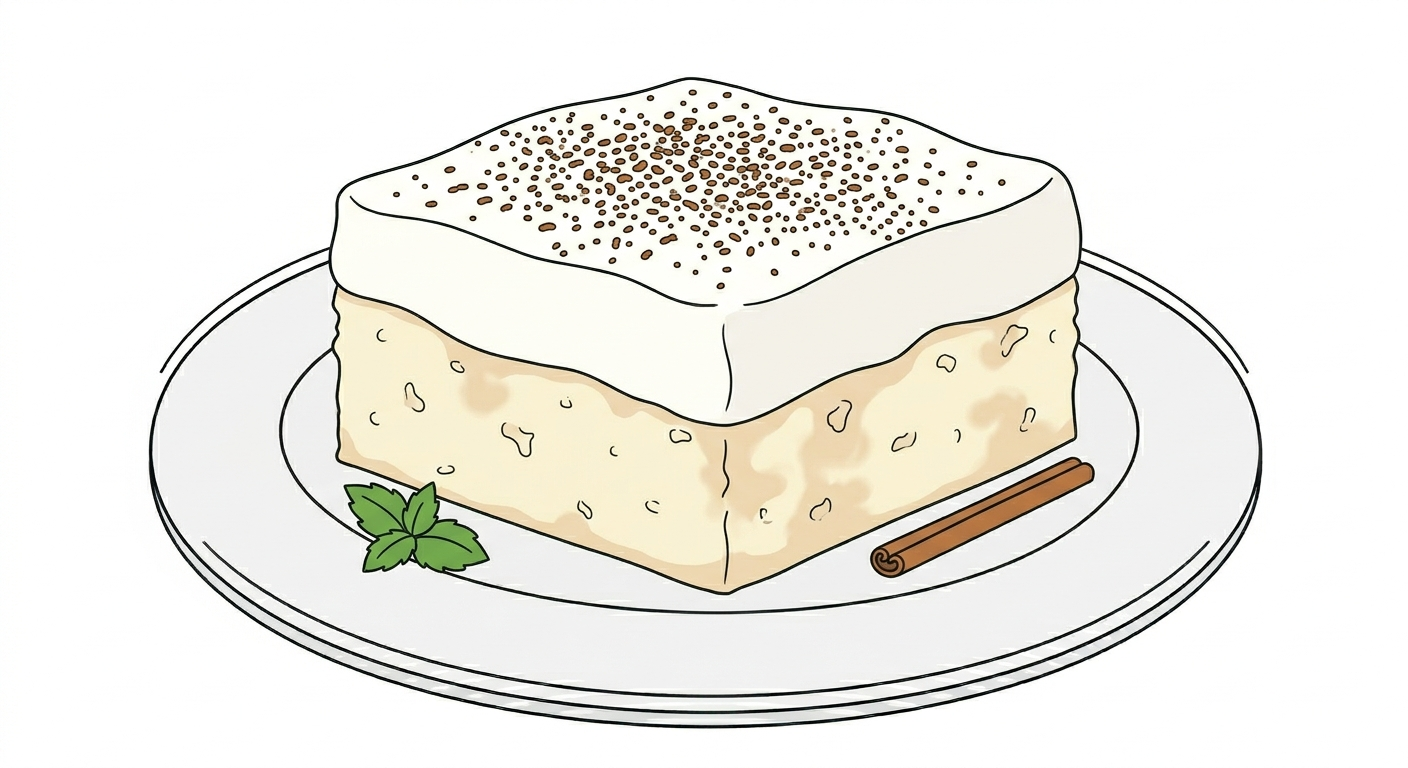
Tres leches is a light sponge cake that is traditionally made without butter or oil. It earns its name by being drenched, slowly and deliberately, in a mixture of evaporated milk, condensed milk, and heavy cream, until every crumb is saturated and the whole thing trembles on the plate. The result is dense with liquid but structurally intact, the porous cake topped with a thick layer of whipped cream or meringue that keeps it cool and stable. Claimed by Mexico, Nicaragua, Cuba, and nearly every country in between, tres leches is less a recipe than a regional argument—every family has a version, and every version is the correct one.
The most documented explanation for how the same cake appeared across so many Latin American countries simultaneously points to Nestlé. The company distributed canned evaporated milk and condensed milk—sold under the La Lechera brand—across Latin America throughout the mid-twentieth century and printed recipes on the cans. Tres leches was among them. A recipe that required two out of three of its core ingredients to come from a can was well suited to wide distribution, and it spread accordingly. It is a modern adaptation of the European “soaked cake” tradition reimagined through the lens of industrial convenience.
Nicaragua claims the cake most loudly and with the most historical documentation, and many food historians credit it as the point of origin before the Nestlé distribution accelerated its spread regionwide. In Nicaragua, tres leches is the default celebration cake—birthdays, quinceañeras, graduations—distinguished by a billowy Italian meringue topping dusted with cinnamon and served cold from the refrigerator.
Mexico, Cuba, Puerto Rico, Colombia, and Venezuela all have their own versions. The milk mixture proportions shift. Some versions use dulce de leche as a layer. Some add rum. The argument about which version is correct is ongoing and unresolvable, which is part of what makes it a genuinely Latin American cake—contested, regional, and everywhere at once.
This content was created with the assistance of AI. Sources are currently being reviewed.