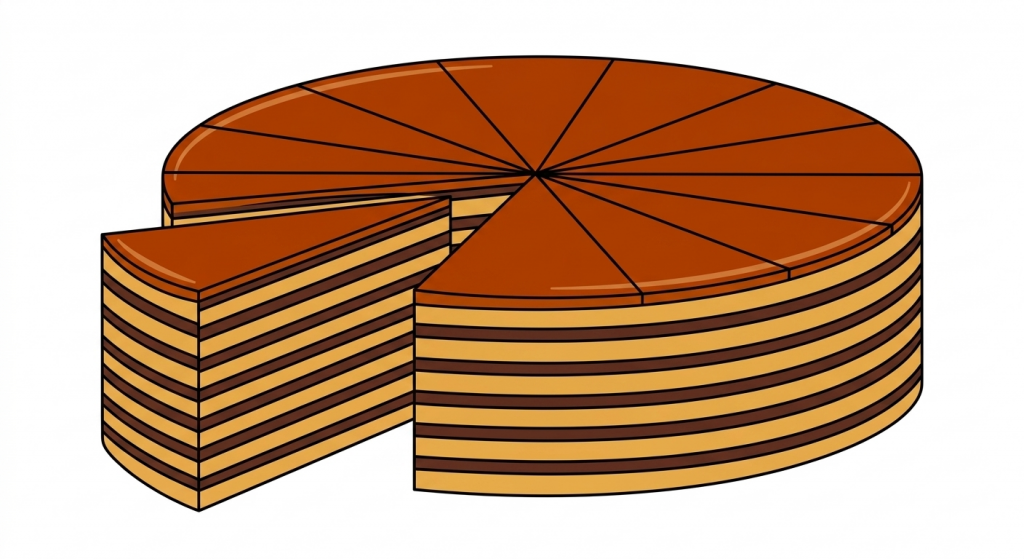
Hungarian desserts are decadent, layered, and deeply tied to the Austro-Hungarian tradition of grand cafés and masterful pastry. Walnut, poppy seed, honey, and chocolate dominate sweets that reflect the Austro-Hungarian imperial café tradition and strong home baking culture.
Dobos torte, with its caramel-glazed top and delicate chocolate buttercream layers, reflects the precision and artistry of Hungarian patisserie. Kürtőskalács (chimney cake), baked over open coals and rolled in sugar, is coated in cinnamon sugar and sold at markets and festivals. Its origin is disputed between Hungary and Romania, where it is associated with the Hungarian-speaking Székely community of Transylvania. Poppy seed rolls, walnut pastries, and fruit-filled strudels carry the comfort of home kitchens, shaped by centuries of Eastern European culinary lineage.
The Hungarian Jewish community, centered in Budapest, had a significant pastry tradition before the Holocaust — flódni, a layered cake with poppy seed, walnut, apple, and plum jam fillings, is one of the most documented Hungarian Jewish pastries and has seen revival in Budapest in recent decades. The Gerbeaud café in Budapest, established in 1858, remains one of the most historically significant café-pastry institutions in Central Europe and is a direct continuation of the Austro-Hungarian café culture that shaped Hungarian dessert tradition.
This content was created with the assistance of AI. Sources are currently being reviewed.