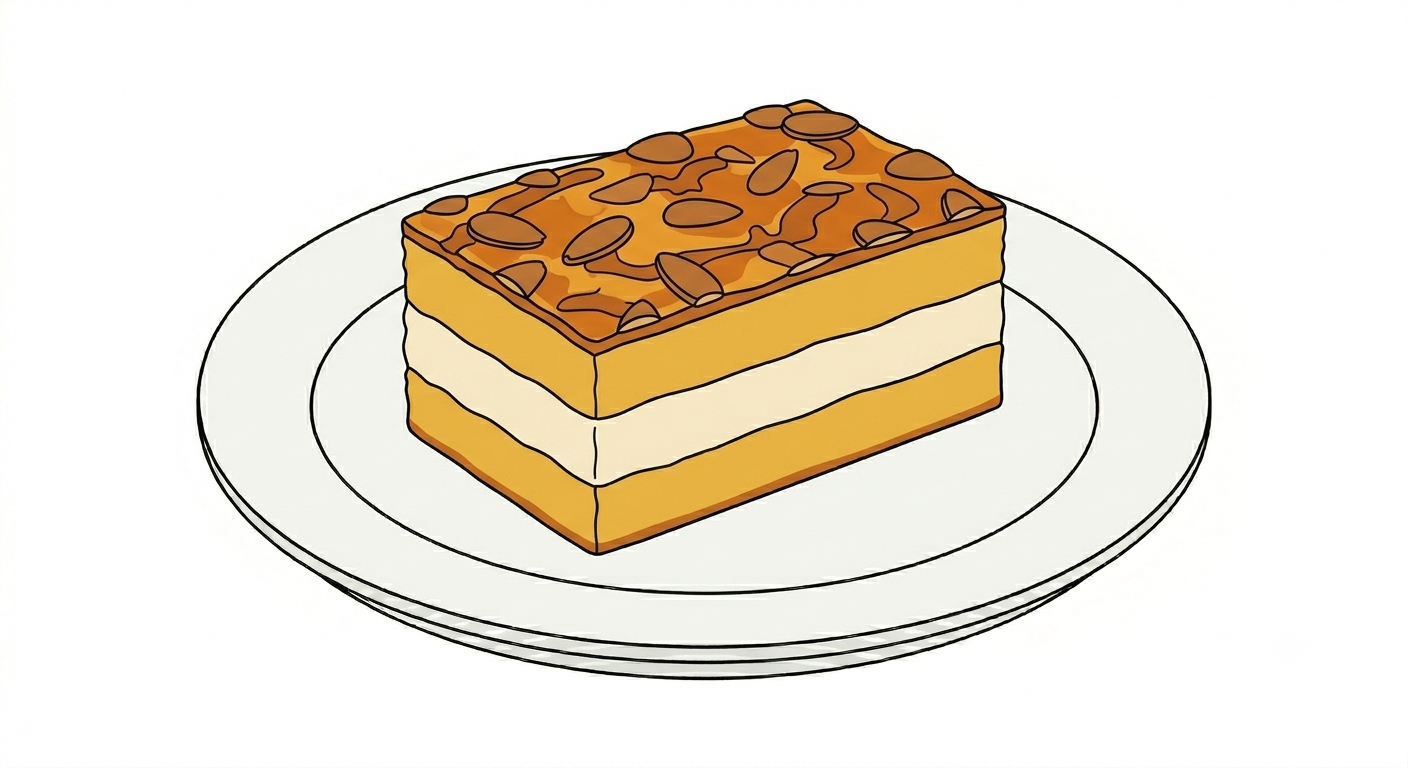
Bienenstich — “bee sting cake” in German — is a yeasted cake topped with a caramelized honey and almond crust, split horizontally and filled with a thick vanilla custard or pastry cream. The top is the thing that defines it: the honey-almond mixture bakes into a brittle, amber-colored layer that shatters when you cut through it, contrasting with the soft, pillowy dough beneath and the cool cream inside. It is a cake of textures as much as flavors, and it rewards a slow bite.
The name has generated its share of folklore. The most popular story credits a group of 15th-century German bakers from Andernach who allegedly pelted raiders from a neighboring town with beehives, driving them off and celebrating their victory by baking a honey cake in honor of the bees. It is an excellent story and almost certainly not true. A more prosaic explanation is that the honey topping attracts bees during baking — plausible, if less dramatic. The first documented recipe appears in the early 20th century, though versions of honey-topped yeasted cakes existed in German baking well before that.
Bienenstich belongs to a tradition of German café cakes — Kaffeekuchen — that are less about elegance than about satisfaction. These are cakes built for midmorning with coffee, unpretentious in presentation but carefully constructed in texture and flavor. The yeasted base sets Bienenstich apart from most cream-filled cakes; it gives the whole thing a faint breadiness that grounds the sweetness of the topping and keeps it from being cloying.
Regional variations exist across Germany, with some bakers using a buttercream filling instead of custard, others adding a layer of jam, and a few incorporating rum into the cream. The custard version remains the most traditional and, arguably, the most satisfying — the slight eggy richness of a well-made vanilla cream against the crunch of the honey almond top is the combination the cake was built around.
This content was created with the assistance of AI. Sources are currently being reviewed.