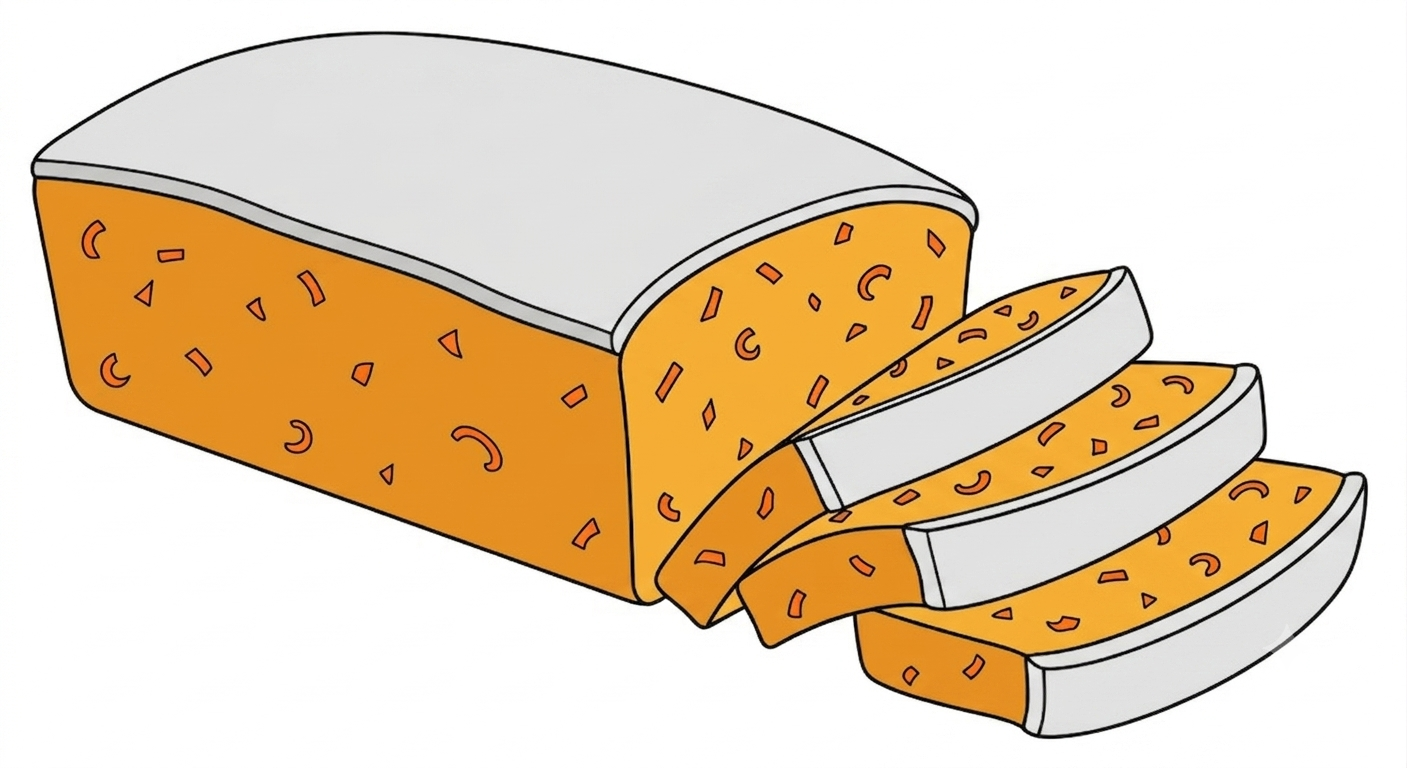
Bolo di wortel is Papiamentu for carrot cake — Papiamentu being the creole language of Curaçao, Aruba, and Bonaire, developed from a mixture of Portuguese, Spanish, Dutch, African languages, and Arawak. The name immediately signals the cake’s place in local food culture — it is known by its Papiamentu name rather than its Dutch equivalent, which reflects how thoroughly it has been absorbed into Curaçaoan domestic life.
The cake is denser and moister than the North American version, closer in texture to a pudding cake than a crumbly layer cake. Grated carrots are folded into a batter spiced with nutmeg, cinnamon, and sometimes clove — the spice profile reflects the Dutch colonial spice trade influence on Caribbean baking. It is served plain or with a light glaze rather than the thick cream cheese frosting associated with American and British carrot cake. The restraint is deliberate — the cake’s moisture comes from the carrots themselves and the density of the batter, not from frosting.
Dutch colonial rule in Curaçao from the seventeenth century onward established a European baking infrastructure on the island — flour, butter, sugar, and spices were available through Dutch trade networks, and Dutch baking traditions mixed with African, Sephardic Jewish, and South American culinary influences to produce the specific hybrid food culture of the Dutch Caribbean islands. Bolo di wortel sits within that hybrid tradition — a European cake format adapted to local spicing and local taste preferences.
It is made for birthdays, family visits, and everyday occasions rather than formal celebrations. It travels well, keeps well, and requires no special equipment — which makes it a reliable home kitchen cake across generations of Curaçaoan households.
This content was created with the assistance of AI. Sources are currently being reviewed.