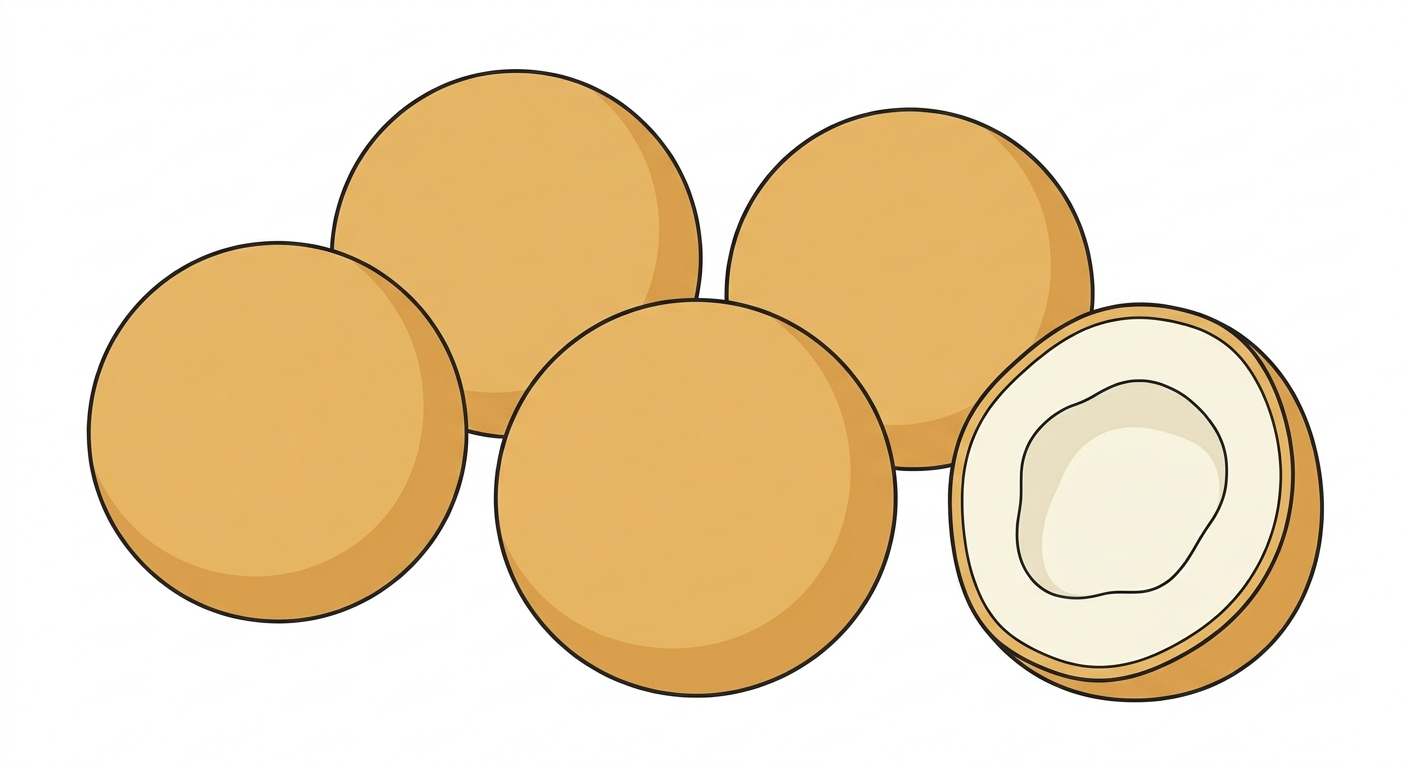
Colombian buñuelos are small, round fried balls made from finely grated queso costeño — a firm, salty white coastal cheese — combined with cassava starch, cornstarch, eggs, a small amount of sugar, and baking powder. The dough is rolled into golf ball-sized spheres and lowered into oil at a controlled low temperature, where they puff and expand into hollow, airy rounds before the heat is raised to finish them golden. The result is crisp and blistered on the outside, soft and nearly empty inside, with a savory-sweet balance that leans salty from the cheese. They are eaten hot, immediately, before the crust softens. The traditional pairing is natilla — a thick Colombian custard made from milk, panela, and cornstarch — served alongside on the same plate, one sweet and one savory, eaten together throughout the Christmas season.
The buñuelo form arrived in Colombia through Spanish colonization, descended from the Morisco fried dough tradition of Moorish Spain. The Colombian version diverged significantly from the Spanish original by replacing wheat flour with cassava starch and cornstarch — both indigenous to South America — and by centering the recipe on queso costeño, a cheese specific to Colombia’s Caribbean coast. This substitution of local starches for wheat is the defining adaptation: it produces a lighter, more hollow interior than a wheat-based dough would allow and gives the Colombian buñuelo a texture found nowhere else in the broader buñuelo family. The cheese is not a filling added after frying — it is worked into the dough itself, which is why the interior tastes faintly of dairy without containing a visible cheese center.
The Colombian Christmas season officially begins on December 7th with La Noche de las Velitas — the Night of the Candles — when households light candles and lanterns outside their doors. Buñuelos are made and eaten that night and continue through the season to January 6th. They are sold at street stands, made at home in large batches, and appear at every holiday gathering alongside natilla. Outside of the Christmas season they are eaten year-round as a breakfast food with coffee or hot chocolate, but the holiday association is strong enough that the smell of buñuelos frying is widely understood in Colombia as the unofficial announcement that Christmas has begun.
This content was created with the assistance of AI. Sources are currently being reviewed.