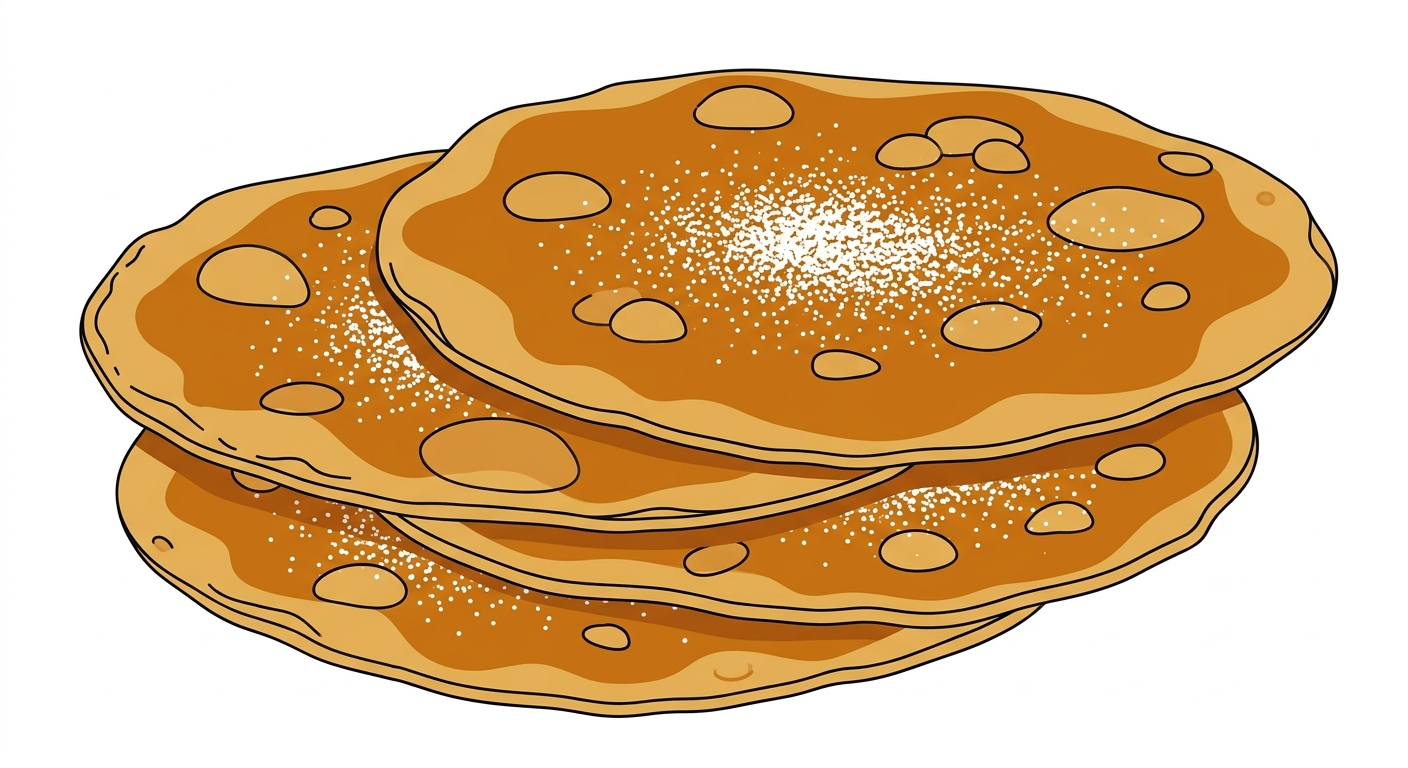
Mexican buñuelos are large, round discs of dough — flour, eggs, lard, anise-infused water — stretched until nearly translucent, then dropped into hot oil and fried until crisp and blistered. The finished buñuelo is flat, golden, and shatteringly crisp, closer to a fried tortilla in texture than a conventional fritter. It is either dusted with cinnamon sugar or broken into rough shards and submerged in warm piloncillo syrup — raw cane sugar dissolved with cinnamon, cloves, and sometimes guava or tejocote — where the pieces soften slightly at the edges while staying crisp in the center. The anise water in the dough is the detail that makes a Mexican buñuelo taste specifically Mexican rather than generic fried dough. The stretching technique — pulling the dough over a cloth-covered bowl or the knee until it reaches full thinness — is where most of the skill lives.
Buñuelos originated in Moorish Spain, where they were consumed among the Morisco population — Muslims who remained in the Iberian Peninsula after the Reconquista and continued their own culinary traditions. The word buñuelo likely derives from the Spanish puño, meaning fist, describing how the dough was shaped. Spanish colonizers carried buñuelos to Mexico and across Latin America in the sixteenth century, where cooks adapted the recipe to local ingredients and conditions. In Mexico, wheat flour replaced any alternative grains, piloncillo replaced refined sugar, and anise became the characteristic flavoring. The result diverged significantly from the Spanish original and from the versions that developed simultaneously in Cuba, Nicaragua, Colombia, and elsewhere — each adapted to what the local pantry offered.
In Mexico buñuelos are inseparable from the Christmas season and Las Posadas — the nine-night celebration preceding Christmas — where they are sold at street stands and prepared at home in large batches. The Oaxacan tradition of eating buñuelos in clay bowls and smashing the bowl for luck afterward is the version most documented by outside observers, though the practice varies by region. Regional variation across Mexico is significant: Oaxaca uses a piloncillo and guava syrup; Jalisco makes a ring-shaped version from curd dough; Veracruz uses sweet potato or pumpkin; Chiapas adds orange. The thin, flat, crispy disc topped with cinnamon sugar or piloncillo syrup is the national baseline.
This content was created with the assistance of AI. Sources are currently being reviewed.