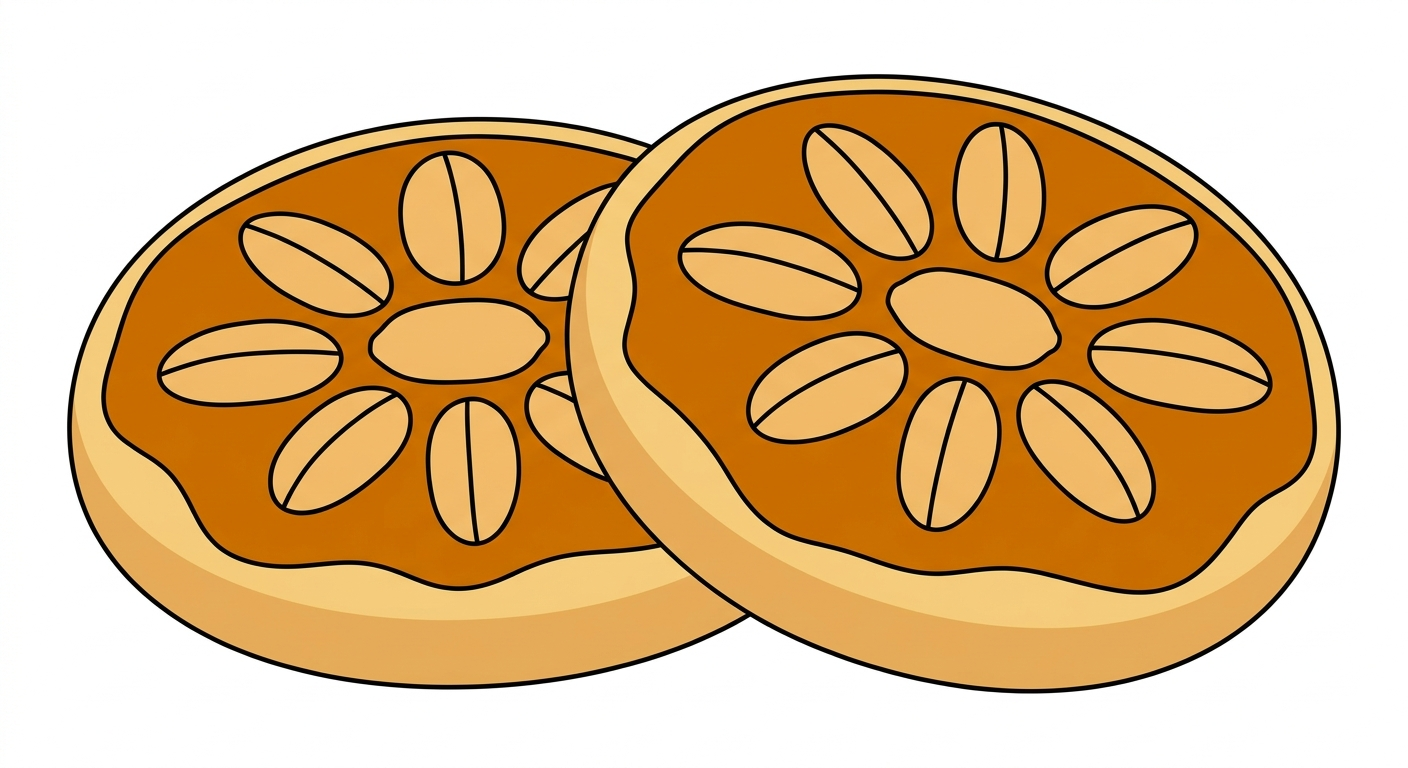
Cinq centimes are small butter cookies topped with peanut butter and chopped peanuts. The name means five cents in French — a reference to their original size, small as a centime coin, and their price, affordable enough that anyone passing through a Dakar market could buy one. The cookie is tender and slightly sweet. The peanut butter on top is the point. Together they are straightforward, which is not the same as simple — the ratio of buttery cookie to dense, savory-sweet peanut paste is the thing that makes them work, and that balance is easy to get wrong.
The cookie base is French in origin, or at least French in technique — a butter biscuit of the kind that French colonial presence introduced to Senegalese baking, absorbed into the local food economy and then made Senegalese by what got put on top of it. Senegal is one of the largest peanut producers in the world, and the groundnut has been central to the country’s agriculture and economy since the 19th century. The French colonial administration actively promoted peanut cultivation as a cash crop, which is its own complicated history, but one of the results was that peanuts became deeply embedded in Senegalese cooking at every level — from savory stews to street snacks. Cinq centimes are where that abundance meets a borrowed biscuit recipe.
The documentation on cinq centimes is thin. There is no recorded inventor, no founding bakery, no specific date. What exists is consistent testimony that they have been sold in Senegalese markets for generations — by street vendors, in kiosks, outside schools — in the same form and at the same accessible price point. They are not a special occasion food. They are an everyday market item, the kind of thing eaten while walking or handed to a child, produced by vendors who beat butter into flour and spread peanut paste by hand in quantities large enough to fill a display case by morning.
Outside Senegal, cinq centimes are largely unknown. Within it, they are one of those foods so familiar that they require no explanation and receive very little documentation — present everywhere, discussed almost nowhere, understood by everyone who grew up eating them in a way that requires no writing down. That invisibility is common to street foods that belong to a specific place and have not traveled. The centime coin the cookie was named for is no longer in circulation. The cookie is.
This content was created with the assistance of AI. Sources are currently being reviewed.