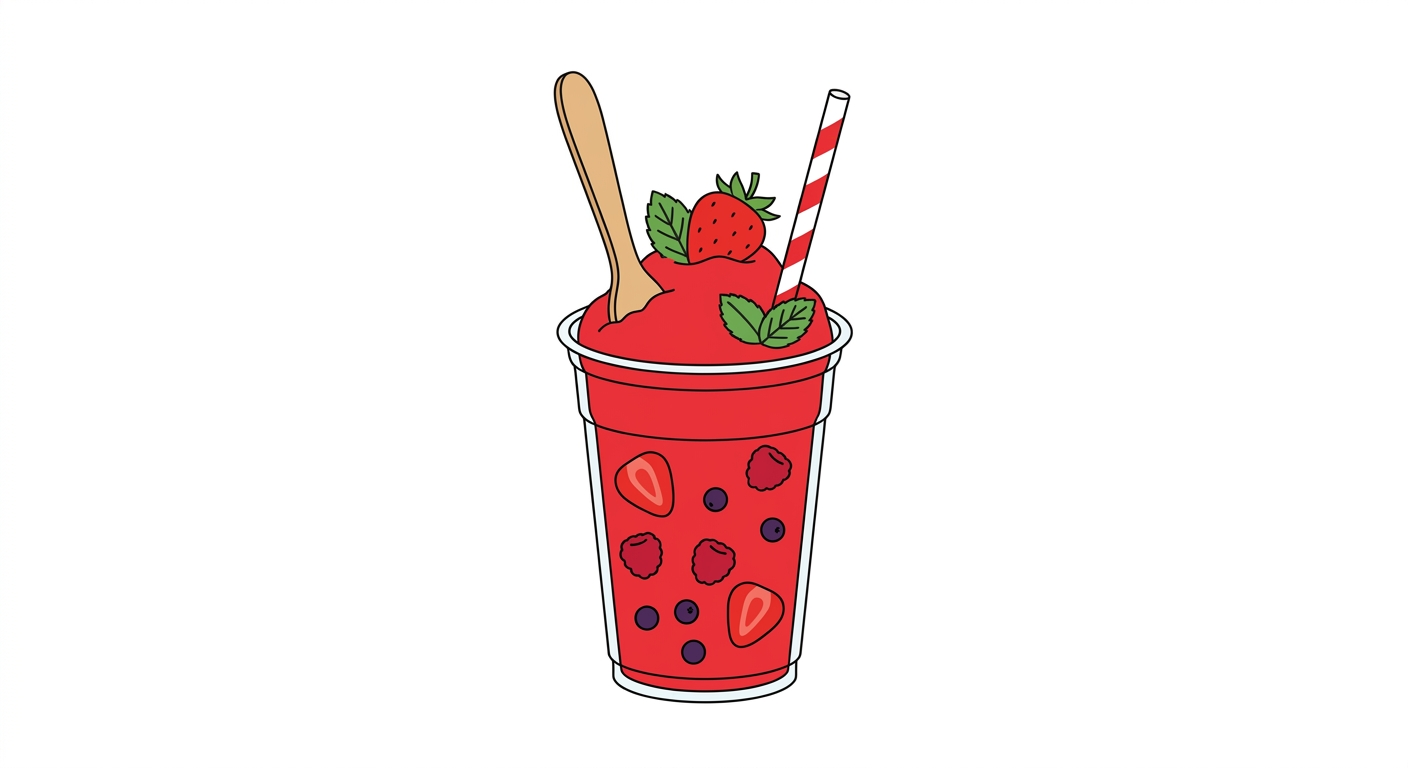
Cremolada is a Peruvian frozen street sweet made from fresh fruit pulp, water, and sugar — mixed and frozen without churning, which produces a coarser, icier texture than sorbet and a more concentrated fruit flavor than commercially processed frozen desserts. The absence of churning is the defining technical difference from sorbet. Sorbet incorporates air during freezing, which lightens the texture. Cremolada does not — it freezes as a solid block that is then scraped or broken into a granular slush for serving, closer in structure to a granita than to a sorbet.
The fruit selection reflects Peru’s exceptional biodiversity. Mango and maracuyá — passion fruit — are the most internationally familiar flavors. Lúcuma is the most distinctly Peruvian — a subtropical Andean fruit with dry, starchy flesh and a flavor often described as a combination of sweet potato and maple, used in ice cream, cakes, and frozen desserts throughout Peru and almost nowhere else in the world. Chirimoya, called custard apple in English, has white fibrous flesh with a flavor combining pineapple, banana, and vanilla — Mark Twain described it as the most delicious fruit known to men, which is frequently quoted in Peruvian food writing and not inaccurate.
Cremolada is a Lima street food primarily, sold from wheeled carts in residential neighborhoods and markets, scooped into plastic cups and eaten on the spot. The cart vendor scrapes the frozen block to order, adjusting the coarseness of the scrape to the customer’s preference — some want it finer, closer to slush, others coarser with more ice structure. It is afternoon food, bought between lunch and dinner, and its presence on a street corner is a reliable indicator of foot traffic and neighborhood density.
The preparation requires no specialized equipment beyond a freezer container and a scraping tool, which keeps cremolada accessible as a home preparation as well as a street product. It is one of the most direct expressions of Peruvian fruit culture — minimal processing, maximum fruit.
This content was created with the assistance of AI. Sources are currently being reviewed.