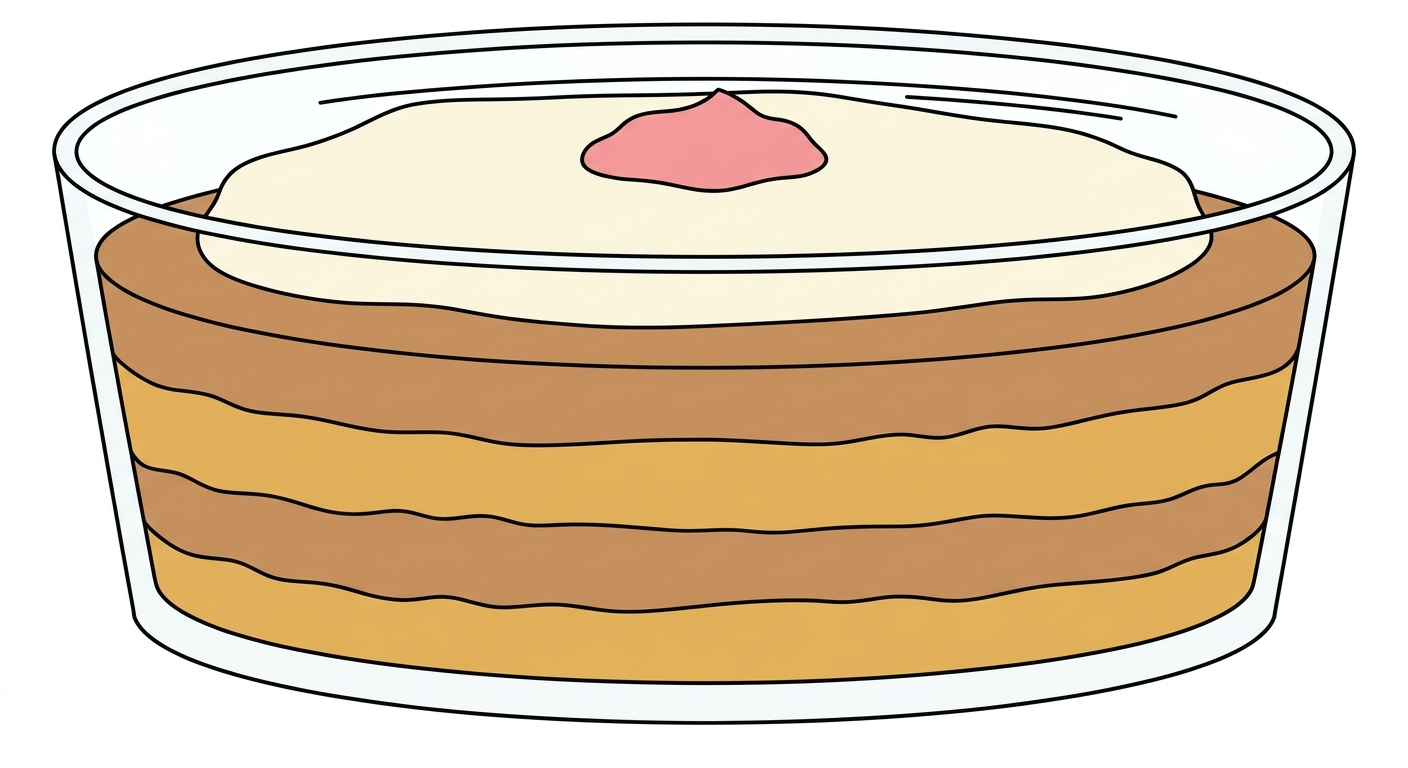
Æblekage is a layered dessert assembled rather than baked: sweetened applesauce alternated with buttered, toasted breadcrumbs, finished with a thick layer of whipped cream. The name translates as apple cake, which is misleading — there is no batter, no flour, no pan, no oven required. It is built cold in a serving dish and chilled before eating, and the layers are meant to stay distinct so each spoonful catches both the tart apple and the sweet, crunchy crumb. Some versions finish with a grating of dark chocolate on the cream; some add a thin layer of raspberry jam between the apple and the crumb. Both are considered traditional depending on the family. The dessert is served in autumn and winter, when apples are in season and the applesauce can be made from what the garden or the market offers.
The dish emerged in the nineteenth century as a practical, accessible dessert that required no specialized equipment — no oven, no molds, no technique beyond toasting breadcrumbs in butter and sugar and cooking down apples with vanilla. This made it possible in households that still cooked over a hearth rather than a stove, and it carried none of the expense or skill threshold of a formal cake. The breadcrumb layer is a form of waste-reduction logic common across European domestic cooking: stale bread, buttered and sweetened, becomes the structural and textural element of the dish. The applesauce does the rest. It is a dessert that exists in every Danish family in a slightly different version, the proportions and additions passed down without a fixed recipe.
Modern versions sometimes replace the breadcrumbs with crushed Danish macaroon cookies — makroner — which are almond-based and add a nuttier, chewier layer. The apple can be applesauce from a jar or made fresh from scratch with whatever variety is available. The dessert has traveled with Danish diaspora communities, appearing in Danish-American settlements in Texas, South Dakota, and the Midwest, where it remains a celebration food at Christmas and family gatherings. It is not visually elaborate. That is not the point.
This content was created with the assistance of AI. Sources are currently being reviewed.