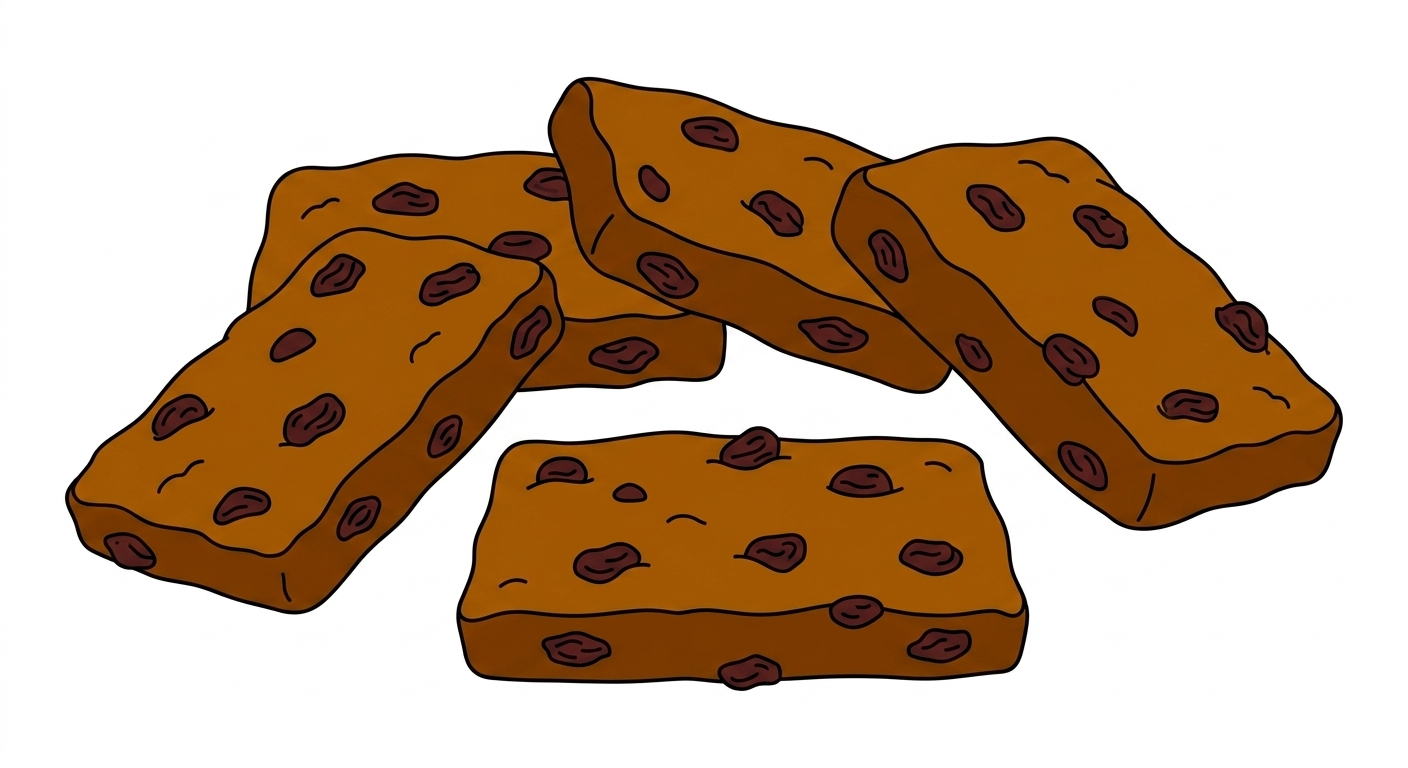
Hermit cookies are dense, chewy bar cookies made from molasses, brown sugar, warm spices — cinnamon, ginger, cloves, nutmeg — raisins, and sometimes nuts or dried fruit. The dough is shaped into logs on a baking sheet, baked until set but not crisp, then cut crosswise into rectangular bars while still warm. The result is soft and slightly sticky, closer in texture to a thick brownie than a crisp cookie, and the spice profile sits between gingerbread and a molasses drop cookie without being either. Some versions finish with a simple white glaze drizzled over the top; others are left plain. The molasses deepens in flavor over time, and hermits are one of the few cookies that are genuinely better two or three days after baking than they are fresh from the oven.
Published recipes appear in New England cookbooks as early as the 1880s — an 1880 New Cook Book contains a version, and Fannie Farmer’s 1896 cookbook includes one — but the cookie predates those references. The maritime connection is well-documented: hermits were baked for sailors on clipper ships because they kept for weeks in a tin without going stale, a quality that made them practical provisions for long voyages out of New England ports. An 1888 article in the Springfield Massachusetts Republican noted that hermits would keep for months if kept away from people, and suggested that longevity might be the source of the name. Other theories point to the brown color resembling a hermit’s robes, or a reference to a British book about a hermit who made bar cookies. None of these is definitive. The name predates any clear explanation for it.
The recipe shifted over time. Early versions used white sugar; molasses became standard in New England by the mid-twentieth century and is now the defining ingredient. The earliest hermit cookies were round drop cookies rather than bar-shaped logs, and the bar format — baked as a log and sliced — appears to have become the regional standard somewhere in the late nineteenth century. The cookie traveled north from New England into the Maritime provinces of Canada, where it took root as a similar regional tradition. It remains strongly associated with New England bakeries and home kitchens, sold by the bag at farm stands and tucked into lunchboxes, a fixture of the region’s baking calendar that has never become nationally famous and seems to prefer it that way.
This content was created with the assistance of AI. Sources are currently being reviewed.