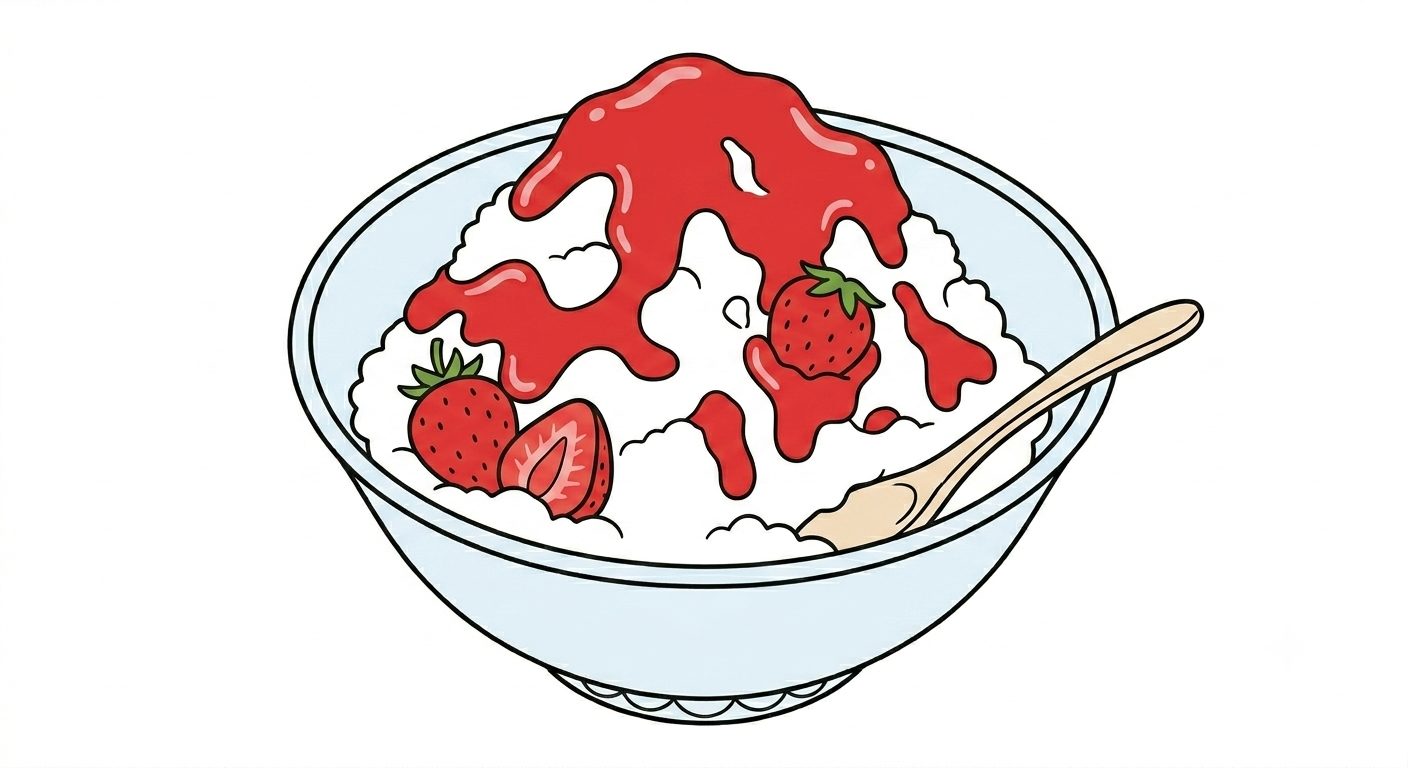
Kakigōri is shaved ice — a block of ice run against a blade until it comes off in fine, feathery layers that pile into a soft mound, then dressed with flavored syrup and, in many versions, a pour of sweetened condensed milk. The texture is what separates it from crushed ice or snow cones. Done correctly, the shaving produces something closer to fresh snow than to ice — light enough that it melts on contact with the tongue rather than requiring chewing, cold without being abrasive. The difference between well-made kakigōri and the generic shaved ice sold at festivals elsewhere in the world is significant and immediately apparent.
The first written record of kakigōri appears in the Makura no Sōshi — the Pillow Book — written by Sei Shōnagon, a lady in the Heian Imperial Court, around the year 1000. She describes shaved ice served with sweet syrup in a metal bowl and considers it a mark of elegance. The detail of the metal bowl is specific enough to suggest this was a practiced thing, not a novelty. Ice was harvested from mountains in winter and stored in underground icehouses called himuro, insulated with straw and earth, and the ice that survived into summer was precious enough to be reserved for the imperial court and aristocracy. A dessert made from it was, by definition, a luxury object.
That status held for most of kakigōri’s history. Through the Edo period it remained expensive and relatively inaccessible, available to those who could afford summer ice and no one else. The Meiji period changed the economics. Ice production and shaving machines arrived. Import ice from the United States — the so-called Boston Ice that had previously crossed the Pacific in ship holds — became commercially available. By 1869 the first kakigōri shop had opened in Yokohama, and within a generation the dessert had moved from imperial privilege to street food. July 25 is now Kakigōri Day in Japan, which is the kind of institutional recognition that only happens to foods that have genuinely entered the national fabric.
The syrup flavors that define contemporary kakigōri — strawberry, melon, blue Hawaii, matcha, lemon — are mostly Meiji-era and later additions, products of the same period that brought Western ingredients and food colorings into contact with Japanese street food culture. The traditional sweetener was a plant-based sap, not syrup, and the original versions were considerably plainer. Modern high-end kakigōri has gone in the opposite direction from the convenience store version — specialty shops age their ice blocks for months, source natural mountain ice, and build multi-layered flavor constructions with fresh fruit, housemade syrups, and milk from specific dairies. The result can cost several times what a standard kakigōri costs and requires standing in a line that forms before the shop opens.
Both versions — the festival stand cup and the artisan bowl — are kakigōri. The thousand years of history belongs to both of them equally.
This content was created with the assistance of AI. Sources are currently being reviewed.