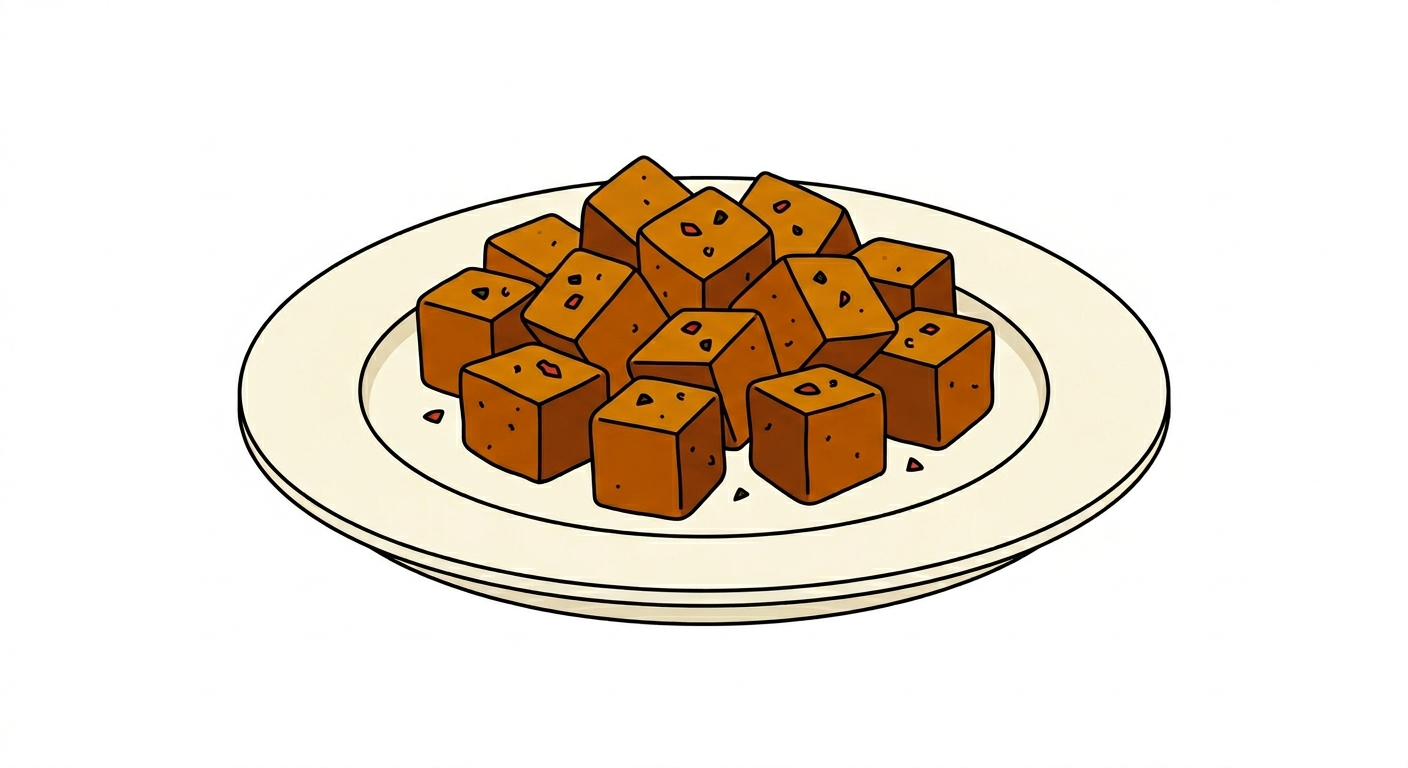
Kelewele is ripe plantain — cut into chunks, coated in a paste of ginger, garlic, onion, cayenne or kpakpo shito pepper, cloves or nutmeg, and salt, then fried in groundnut oil until the exterior is deeply caramelized and crunchy and the interior is soft and sweet. The spice paste does not just flavor the surface. It penetrates the plantain during frying, so each piece carries heat and warmth all the way through. The result is simultaneously sweet from the ripe fruit, savory from the spice, and sharp from the ginger — a combination that is more specific and more interesting than the ingredient list suggests it should be.
It is night food. In Accra and across Ghana’s urban areas, kelewele vendors set up at lorry stations, roadside stalls, and night markets after dark, frying in large pans over open flame, the smell carrying far enough to find customers before they can see the stall. The transaction is quick — a cone of newspaper, a pile of hot kelewele, eaten standing or walking, sometimes with roasted peanuts pressed into the same hand. By the middle of the 20th century it was a fixture of urban Ghanaian street life in that specific nocturnal form, sold cheaply and eaten immediately.
The plantain is the foundation and the thing that requires the most judgment. Kelewele demands a ripe plantain — yellow with significant black spotting, soft enough that the sugars have fully developed and the flesh will caramelize in the oil rather than simply frying dry. An underripe plantain produces something starchy and flat. An overripe one falls apart. The window between those two states is the correct moment, and experienced vendors know it by touch and color without measuring anything.
The spice blend varies by cook and by region. Ginger and hot pepper are the constants — present in every version, the baseline without which the dish is not kelewele. Garlic, onion, cloves, nutmeg, and anise appear in different combinations depending on who is frying. Some vendors have a specific ratio that regulars come back for specifically. The recipe is not written down. It is held in the hands and the memory of whoever is making it, adjusted by smell and taste each time, which is how most of the best street food works.
Kelewele is served alongside red red — the Ghanaian black-eyed pea stew — where the sweetness of the plantain cuts through the earthiness of the beans in a combination that is considered a complete meal. It also appears at celebrations, family gatherings, and chop bars as a side or a snack. But its truest identity is the night market version — fried to order, eaten from paper, standing on a street in Accra that smells like caramelized plantain and groundnut oil, which is a smell specific enough to that place and that time of day that people who grew up with it describe it before they describe anything else.
This content was created with the assistance of AI. Sources are currently being reviewed.