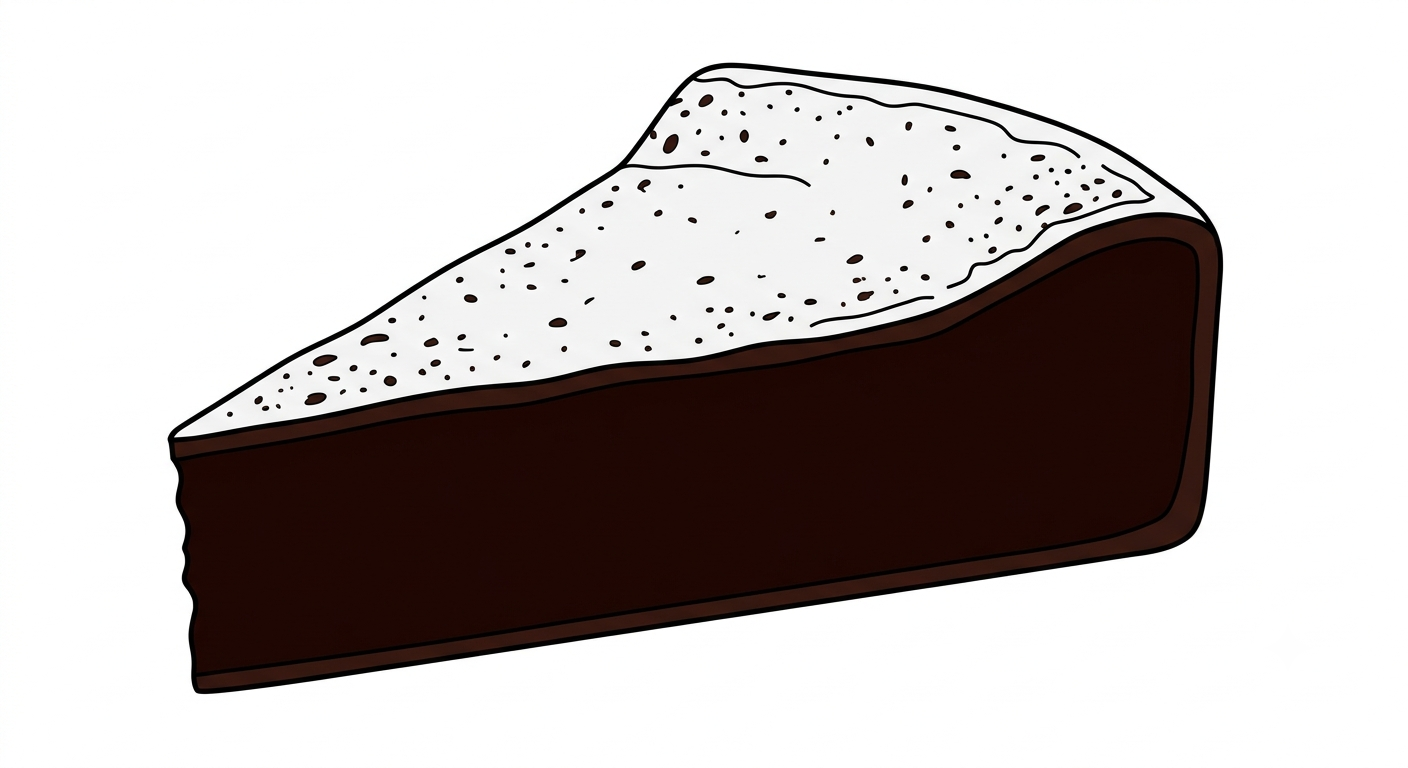
Kladdkaka is a Swedish chocolate cake that is intentionally, defiantly underbaked — a thin layer of crisp, crackled crust on top giving way to a dense, fudgy, almost molten interior that holds its shape just barely when sliced. The name means “sticky cake” or “gooey cake,” which is accurate and also the entire point. It is made from butter, sugar, eggs, cocoa, flour, and vanilla, mixed together in one bowl without any leavening, and baked at a moderate temperature for just long enough that the edges set while the center remains soft. The margin between perfectly kladdkaka and merely undercooked chocolate cake is narrow, and experienced Swedish bakers navigate it by feel and by the slight resistance of the crust when the pan is gently shaken.
Kladdkaka is a relatively recent addition to the Swedish baking canon — the first documented recipe appears in a Swedish newspaper in the 1980s, which makes it a newcomer by the standards of a baking tradition that includes centuries-old recipes for crispbreads and spiced cookies. Its rise to ubiquity was rapid. Within a generation it had become one of the most made cakes in Swedish home kitchens, appearing at every fika table, every school bake sale, every casual gathering where something sweet was needed and time was short. It requires no special equipment, no unusual ingredients, and produces reliably excellent results — qualities that explain its dominance in a culture that takes everyday baking seriously.
Fika is the Swedish concept most relevant to understanding kladdkaka’s place in the culture — a deliberate pause in the day for coffee and something sweet, taken alone or with others, at home or at work. It is not a formal meal and not a casual snack; it is its own category of social ritual, and it has its own baking tradition built around it. Kladdkaka fits the fika context perfectly: it is rich enough to feel like an occasion, simple enough to make on a weekday afternoon, and good enough at room temperature that it doesn’t require any particular timing or ceremony.
It is typically served with a spoonful of whipped cream or a scoop of vanilla ice cream, both of which provide the cool, neutral counterpoint that the intensity of the cake requires. Some versions add a layer of raspberries or a pinch of flaky sea salt on top, both of which are improvements. Most versions don’t need anything beyond what the recipe already contains.
This content was created with the assistance of AI. Sources are currently being reviewed.