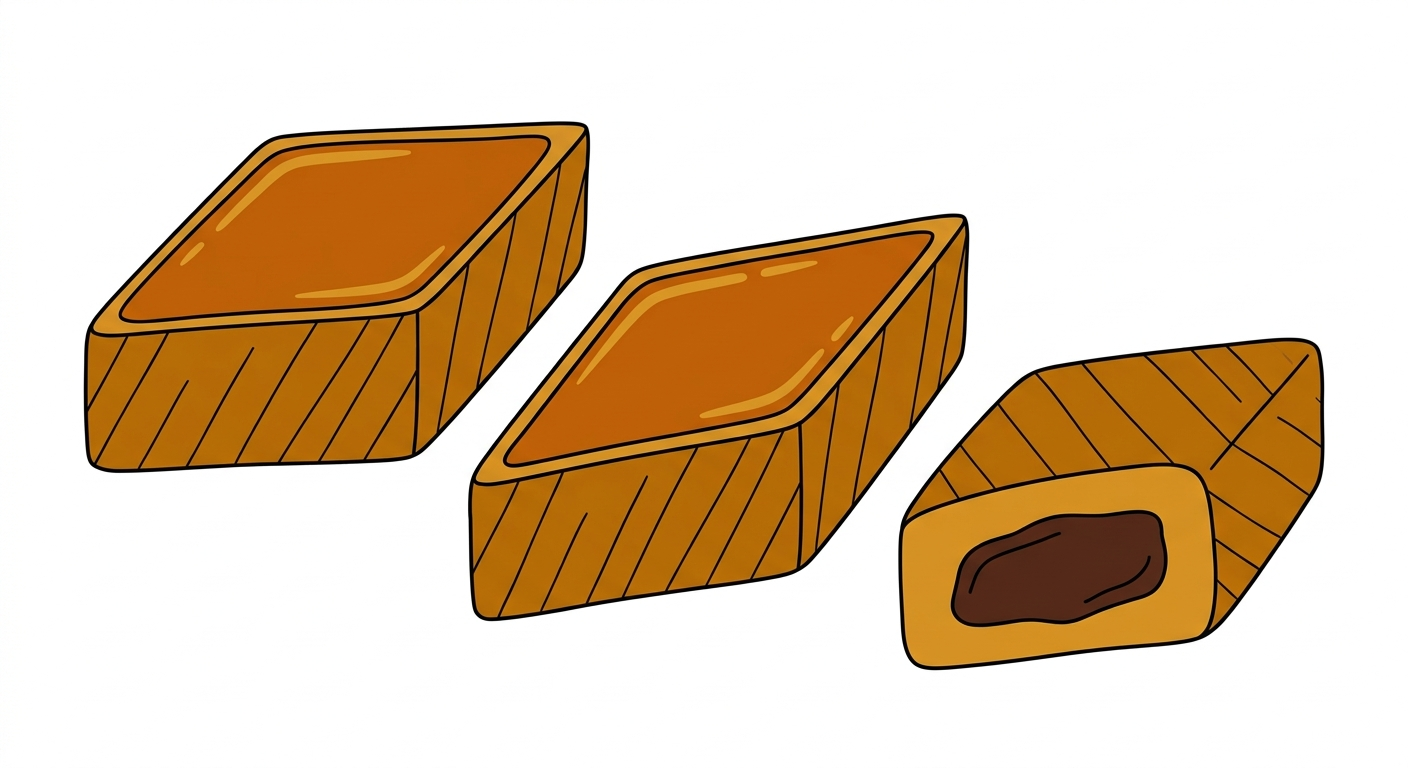
Makroudh is a semolina pastry — a dough of coarse semolina, butter or olive oil, and orange blossom water, pressed flat, filled with a paste of dates spiced with cinnamon and fennel, rolled into a log, cut on the diagonal into diamond shapes, fried or baked until golden, and then submerged immediately in honey or sugar syrup scented with orange blossom water. The syrup soaks into the hot pastry completely. The result is dense, very sweet, and deeply fragrant — a pastry that is more saturated than layered, the honey running through the semolina crumb the way olive oil runs through bread. The name means diamond in Arabic, which describes the shape. The shape describes the pastry before you need to say anything else about it.
The city of Kairouan in central Tunisia holds the strongest historical claim to makroudh’s origin. Kairouan was founded in 670 CE as one of the first major Islamic cities in North Africa and served for centuries as the spiritual and administrative capital of the Maghreb — a city of mosques, scholars, and trade that sat at the intersection of routes moving goods and ideas across the region. Local oral tradition places makroudh in Kairouan since at least the 9th century, during the Aghlabid dynasty, when the city was at the height of its cultural and economic significance. The first national makroudh festival was held there in 2008, a recognition that the city’s association with the pastry runs deep enough to be worth formalizing.
The semolina base is what gives makroudh its particular texture — grainier and denser than a wheat flour pastry, with a slight roughness that absorbs the honey syrup more completely than a finer dough would. Semolina has been the foundational grain of North African baking for centuries, present in everything from couscous to flatbreads, and its use in makroudh is not a choice so much as a given — the Maghreb bakes with semolina the way northern Europe bakes with wheat flour. The date filling reflects the same logic. Dates are a desert crop, abundant across the Saharan regions that feed into Maghrebi food culture, and date paste sweetened with cinnamon and fennel is a filling that requires nothing imported or expensive.
The honey finish is the part that makes makroudh what it is rather than simply what it contains. The pastry comes out of the oil or the oven hot, and the syrup goes on immediately — the heat draws the liquid in, and by the time the makroudh cools it has absorbed enough honey to be sticky all the way through rather than just coated on the surface. Letting them cool in the syrup rather than draining them quickly is the difference between a makroudh that is correctly saturated and one that is merely glazed.
Algeria and Tunisia both claim makroudh as their own and both are right — the pastry belongs to the Maghreb as a region rather than to any single country, and the variations between Algerian and Tunisian versions reflect local preferences rather than fundamental differences. The Algerian version is more often baked. The Tunisian version, particularly from Kairouan, is more typically fried and uses fresh dates. Both are finished in honey syrup. Both are made for Eid, for Ramadan, for weddings, for any occasion where hospitality requires something presented with care and eaten with tea.
This content was created with the assistance of AI. Sources are currently being reviewed.