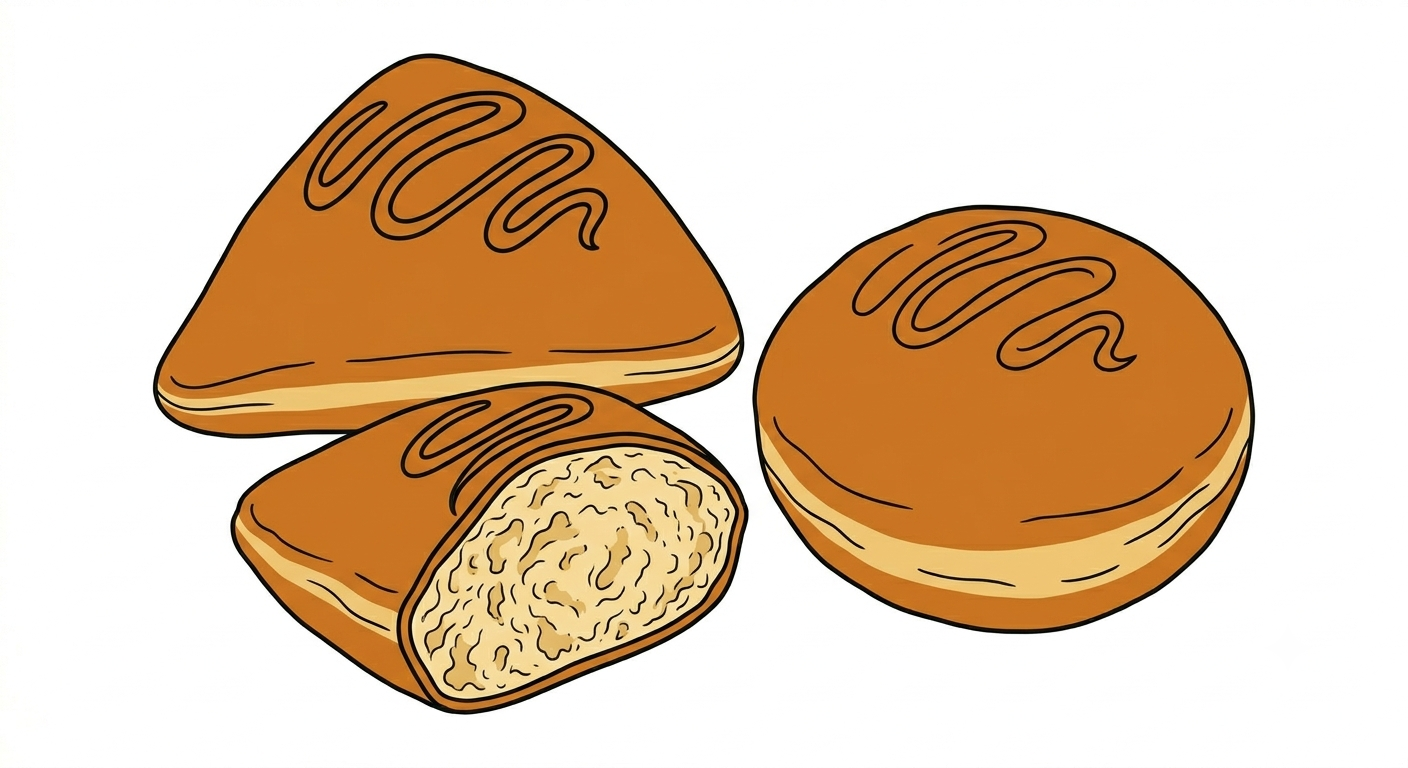
Mandazi are triangular fried dough — a yeasted dough of wheat flour, coconut milk, sugar, cardamom, and sometimes a little egg, cut into triangles or half-moon shapes and fried until puffed and golden. The outside is lightly crisp. The interior is soft and airy, with the cardamom running through the crumb and the coconut milk giving the whole thing a richness that water-based dough doesn’t have. They are less sweet than a Western doughnut and more aromatic than a Western bread roll, sitting somewhere between the two in a category that is entirely their own. They are eaten with chai — strong, spiced tea with milk — and the combination of cardamom in the dough and cardamom in the tea is one of those pairings that seems redundant until you try it, at which point it is obvious.
Mandazi originate on the Swahili coast, the long stretch of East African shoreline — from Somalia through Kenya, Tanzania, and Mozambique — that has been one of the most active trading zones in the Indian Ocean world for over a thousand years. The same currents that brought Arab and Indian merchants to the coast, the same trade networks that shaped kaimati and mahamri and the broader category of Swahili coastal cooking, also shaped mandazi. Cardamom is not native to East Africa. It is a South Asian spice that arrived via the Indian Ocean trade, and its presence in mandazi — so thoroughly integrated that the spice now reads as essential rather than foreign — is one of the clearest markers of that long history of exchange. Wheat flour and refined sugar arrived through the same routes.
The base dough is simple enough that variations accumulate quickly. In Kenya, coconut milk is standard. In Tanzania, the cardamom tends to be heavier. Uganda’s version sometimes incorporates ripe banana into the dough. Zanzibar’s mahamri — the coconut-rich variation made with coconut milk rather than water — is technically a distinct preparation but shares the same lineage. In Burundi, a smaller, denser version called half-cake mandazi exists, made without a resting period. Every region along the East African interior that received the recipe through migration from the coast adapted it to local preferences and available ingredients, which is how a coastal food becomes a continental staple.
Mandazi are breakfast food and snack food and celebration food simultaneously. In the morning they appear alongside chai at roadside stalls and in home kitchens across Kenya and Tanzania, dunked into the tea until soft at the edges. At Eid they are made in large batches for communal sharing. At markets they are sold by vendors who fry them to order, handing them over warm in paper. The triangular shape is the most common, though the form varies — some vendors make them round, some cut them into squares, and the Zanzibari mahamri comes as a thick circle cut into quarters. The shape does not change what they are. What they are is the Swahili coast’s foundational fried bread, which turns out to cover a significant amount of territory.
This content was created with the assistance of AI. Sources are currently being reviewed.