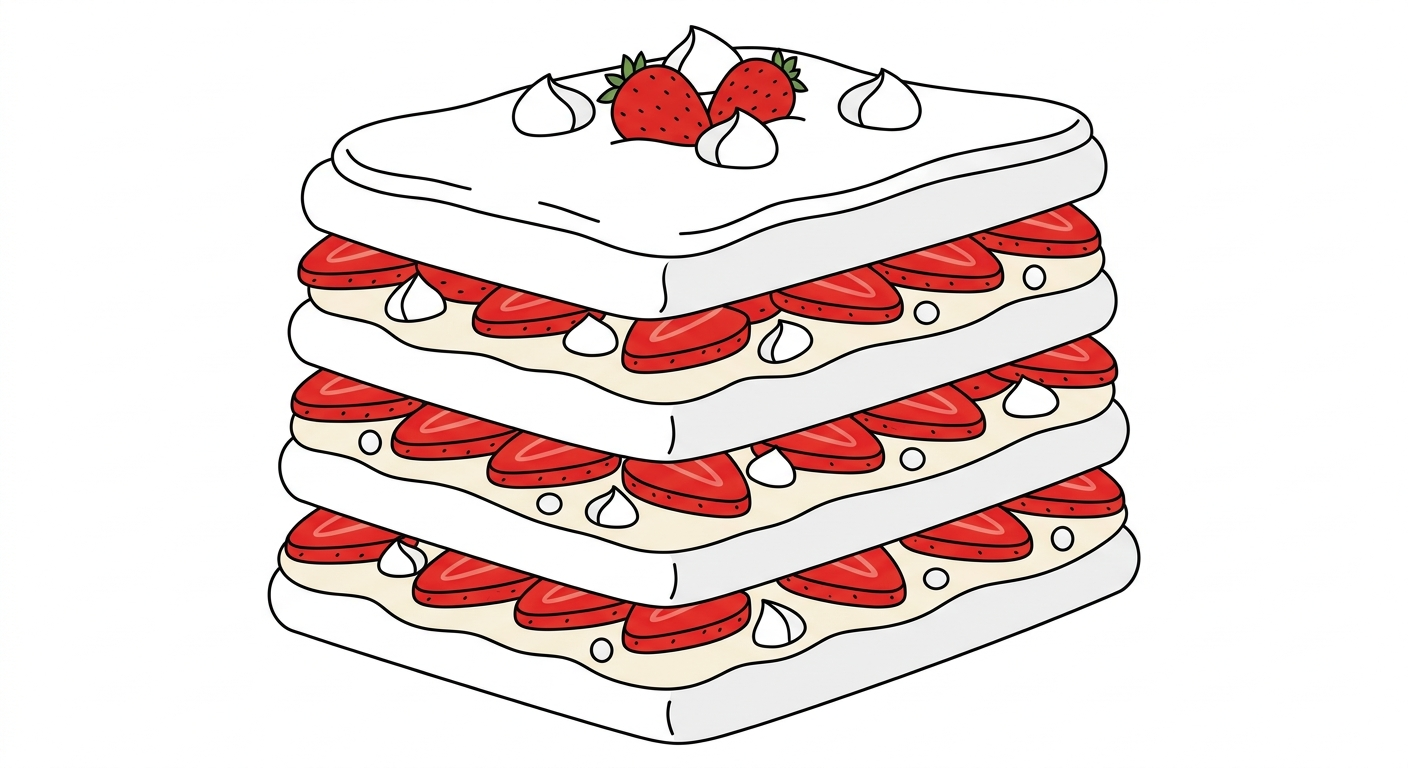
Merengón is a Colombian layered dessert built from crisp meringue, whipped cream, and fresh fruit—assembled in cups for street service or stacked in layers for celebration tables. The meringue components are often referred to as suspiros and are baked until the exterior is firm and dry while the interior retains a slight chew, producing the structural contrast that defines the dessert. Whipped cream is spread between the layers and fresh fruit—strawberries, mango, peaches, or guanábana—is folded in or layered on top. Guanábana, also called soursop, is the iconic flavor choice for this dish; its white fibrous flesh and sharp, acidic flavor cut against the sweetness of the meringue and cream.
In Colombia, merengón is a definitive part of street food culture, particularly through the carritos de merengón found on roadsides and highways during weekend excursions. Vendors assemble the dessert to order in clear plastic cups so the layers are visible, which serves as a form of street advertising. Some regional variations add a drizzle of arequipe—the Colombian version of dulce de leche—between the layers for added depth and a secondary caramel flavor.
The comparison to pavlova is useful but imprecise. Both use baked meringue as a base with cream and fruit on top, but the pavlova is a single large disc with a marshmallowy center. Merengón uses smaller meringue pieces or shattered discs stacked vertically, producing a taller construction with a more distributed meringue-to-cream ratio in every bite. This vertical construction prevents the dessert from collapsing as easily as a pavlova when eaten with a spoon from a cup.
Merengón is not a difficult dessert to make, though the meringue requires a dry environment to set; humidity is the enemy of crisp meringue. Its presence at both street level and celebration tables reflects a dessert that scales easily from casual to formal without changing its essential character. It remains a hallmark of Colombian sweets, showcasing the countrys diverse fruit and the local preference for the contrast between airy sugar and heavy cream.
This content was created with the assistance of AI. Sources are currently being reviewed.