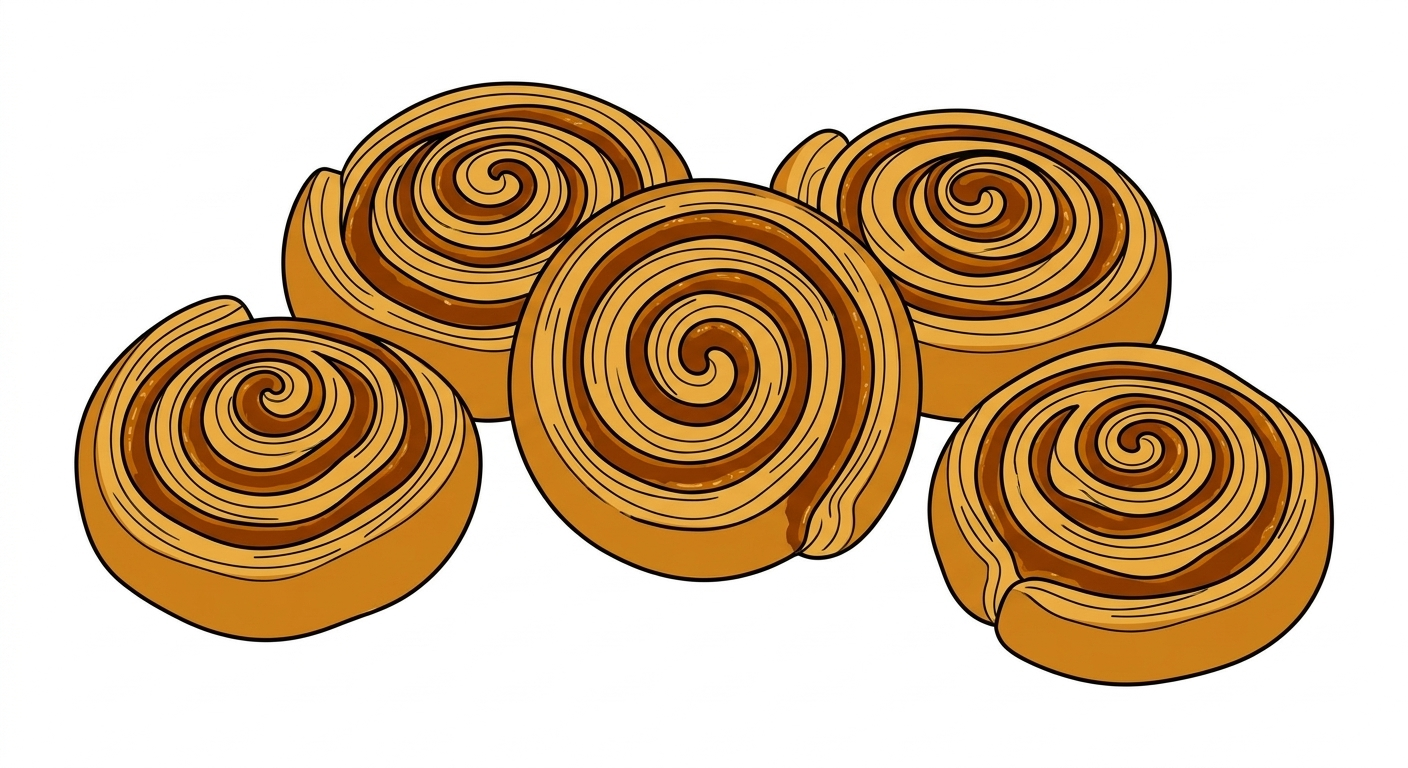
Pets de sœurs — “nun’s farts” in direct translation — are Québécois cinnamon-sugar spirals made from leftover pie dough. Unlike the French pet-de-nonne, which is a fried beignet, the Canadian version is a product of waste-nothing farmhouse and convent baking. When a pie is being made, the dough that would otherwise be discarded is rolled thin, spread with butter, brown sugar, and cinnamon, then rolled up and sliced into rounds before baking.
The technique is almost identical to making a cinnamon roll, but because the dough is a shortcrust rather than a yeasted bread, pets de sœurs have a flakier, crispier texture. Brown sugar is essential for the traditional “melted” interior. In many households, the rolls are submerged in a bath of maple syrup or heavy cream before baking, pushing them firmly into the category of “pudding-style” Québécois desserts like pouding chômeur.
They are rarely a commercial bakery item; instead, they are a staple of home kitchen economy. They are made quickly, eaten warm from the oven, and exist in that category of foods that are better than they have any right to be given their humble origins: leftover dough, pantry staples, and twenty minutes.
The convent baking tradition in Québec runs parallel to the religious confectionery traditions of Europe. French Catholic orders in Canada developed a repertoire of practical, ingredient-thrifty sweets that passed into domestic cooking over generations. Pets de sœurs—sometimes irreverently called nombrils de sœurs (nun’s bellybuttons)—remain one of the most direct survivals of that practical, thrifty heritage.
This content was created with the assistance of AI. Sources are currently being reviewed.