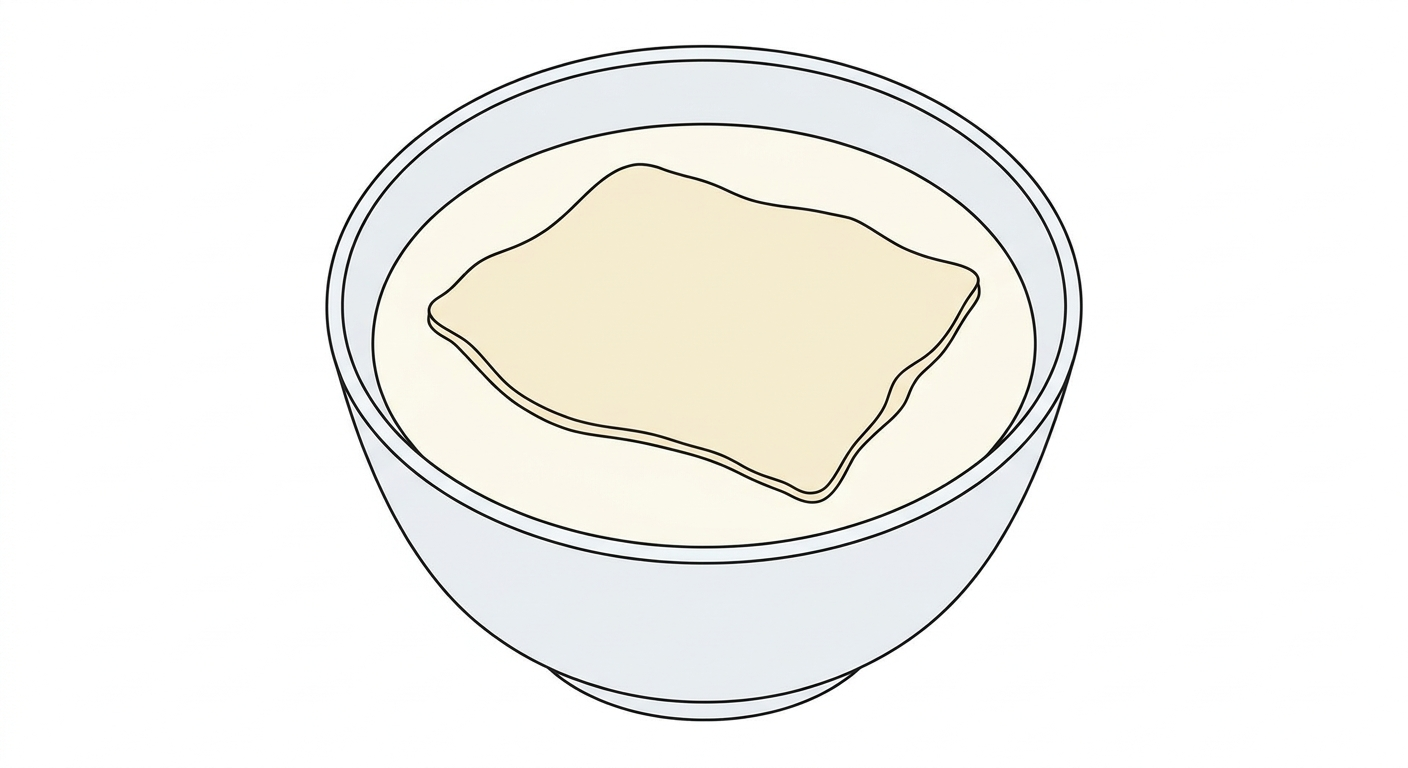
Shuāng pí nǎi is a steamed milk custard — buffalo milk heated to just below boiling, poured into a bowl and left to cool until a thin, silky skin forms across the surface. That skin is gently lifted at the edge, the milk poured back out into a separate bowl where it is mixed with egg white and sugar, then carefully poured back into the original bowl so the first skin floats back to the bottom. The bowl is covered and steamed until the mixture sets and a second skin forms on top. The result is a custard with two distinct skins — one at the surface, one beneath — surrounding a smooth, trembling interior that is neither liquid nor solid but exactly between the two. The name means double skin milk, which is the most precise possible description of what it is.
The technique is the entire argument for the dessert’s existence. Three ingredients — milk, egg white, sugar — produce something that requires neither starch nor gelatin to set, relying instead on the natural proteins in the milk and egg white coagulating under exact thermal conditions. Too hot and the texture becomes grainy. Too cool and the custard never sets. The window between those two failures is measured in degrees and seconds, and the consistency of a well-made shuāngpí nǎi is the evidence that whoever made it understands the physics of what they are doing. The Cantonese culinary tradition has a particular reverence for this kind of precision — the technique that produces something extraordinary from something simple, through understanding rather than complexity.
The dessert originated in Daliang, a town in Shunde district of Guangdong province, during the late Qing Dynasty in the mid-19th century. The most consistent origin account describes a local cattle farmer who boiled excess buffalo milk to preserve it and discovered that a creamy skin formed on top as it cooled — something his family found delicious. The double skin method developed from that observation, the second skin added through the egg white technique that transformed a dairy curiosity into a structured dessert. Minxin Dairy, founded in 1923 in Daliang, is credited with formalizing the preparation and commercializing it, establishing double skin milk as a regional specialty from a household technique.
Buffalo milk is the traditional and correct ingredient. Its fat content — roughly double that of cow’s milk — produces a richer, more pronounced skin and a creamier custard than cow’s milk can manage. The shift to cow’s milk in contemporary versions is a practical accommodation that changes the flavor profile in ways that Shunde people notice and care about. The original version, made with buffalo milk, has a depth and fragrance that the cow’s milk version approximates but does not replicate.
The dessert traveled from Shunde to Hong Kong, Macau, and Southeast Asia partly through the Shunde women known as Majie — female domestic workers from Shunde who migrated to Hong Kong and Macau in large numbers in the early 20th century and brought their food culture with them. They worked in wealthy households and in teahouses, and the dishes they made became part of the Hong Kong Cantonese dessert vocabulary. The Australian Dairy Company in Jordan, Hong Kong — which has been serving shuāngpí nǎi since the 1970s and maintains a permanent line outside its door — is the most visible contemporary carrier of that tradition, a shop that has turned a Qing Dynasty preservation technique into one of the most recognized dessert stops in the city.
This content was created with the assistance of AI. Sources are currently being reviewed.