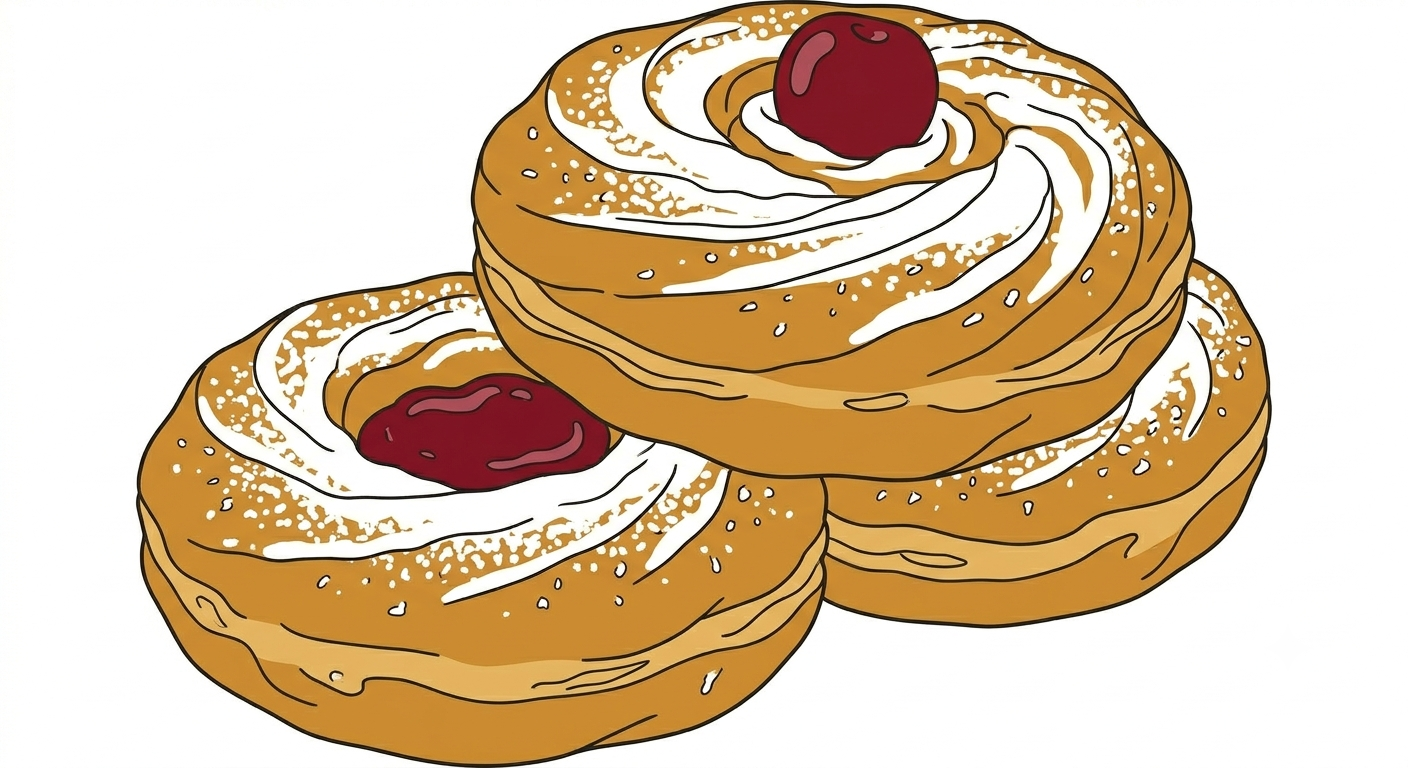
Zeppole are Italian fried dough pastries — rounds of choux or yeasted dough, deep-fried until puffed and golden, and finished with powdered sugar, pastry cream, or both. The texture depends on the dough: choux-based zeppole are light and hollow, crisping at the edges and collapsing slightly when you bite in; yeasted versions are denser, chewier, and more bread-like. Both are eaten hot, and both are better for it. They are generous, unfussy pastries — the kind of thing that exists entirely for pleasure and makes no pretense of restraint.
Zeppole are most closely associated with the Feast of Saint Joseph — La Festa di San Giuseppe — celebrated on March 19th, which is also Father’s Day in Italy. The connection between Saint Joseph and fried dough goes back centuries and is rooted in the tradition of charitable frying — street vendors and religious organizations would set up open-air fryers and distribute zeppole to the poor in honor of the feast day. In Naples and across southern Italy, the Festa di San Giuseppe is still marked by the appearance of zeppole in every pasticceria and street market, and the pastry cream-filled version — zeppola di San Giuseppe, piped with a rosette of cream and topped with an amarena cherry — is the form most associated with the holiday.
The Neapolitan version is the most formally defined, but zeppole exist in variations across Italy and the Italian diaspora. In Rome they tend to be simpler — plain fried dough with sugar, no filling. In Sicily they appear filled with ricotta. In the United States, particularly in the Italian-American communities of New York and New Jersey, zeppole are a fixture of street fairs and feasts — smaller, plainer, rolled in powdered sugar and eaten from a paper bag while standing on a sidewalk. The street fair version has its own legitimacy, even if it’s a long way from the pastry cream original.
The Feast of Saint Joseph carries particular weight in southern Italian culture as a day of gratitude and generosity, and the act of frying and sharing food in public is bound up in that meaning. Zeppole are not just a seasonal treat — they are an expression of a specific cultural ritual that has survived emigration and modernization and continues to mark the calendar in communities wherever southern Italians settled.
This content was created with the assistance of AI. Sources are currently being reviewed.