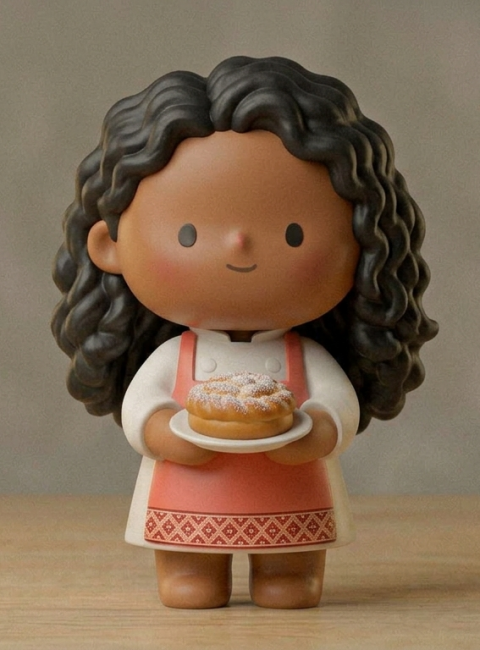
Aunty Kaimana Lilikoi grew up in Hawaiʻi where the dessert table at any gathering reflected the islands’ layered food history — haupia set firm and cut into squares, malasadas from the Portuguese tradition fried hot and rolled in sugar, butter mochi chewy and golden from Japanese influence, and lilikoi bars tart and bright made with local passionfruit. Local Hawaiʻi food is not one tradition. It is the result of generations of Japanese, Portuguese, Filipino, Chinese, and Native Hawaiian cooks working alongside each other and producing something that belongs entirely to the islands.
Her work centers on local Hawaiʻi sweets — lilikoi bars made with fresh passionfruit curd on a buttery shortbread base, haupia the traditional coconut pudding made correctly with pia or cornstarch and served cold and firm, and butter mochi made with mochiko rice flour and coconut milk in the way it has been made at potlucks and bake sales across the islands for decades. Kaimana understands that these desserts are not fancy — they are the food of school fundraisers, church potlucks, and family gatherings where the dessert table is always full and nothing lasts long.
In Universo da Doçura, Aunty Kaimana represents a food culture shaped by the specific multicultural history of Hawaiʻi — distinct from the mainland United States, distinct from any single immigrant tradition, and entirely its own. Her lilikoi bars are always made with fresh fruit. Her haupia is always properly set.
This content was created with the assistance of AI. Sources are currently being reviewed.