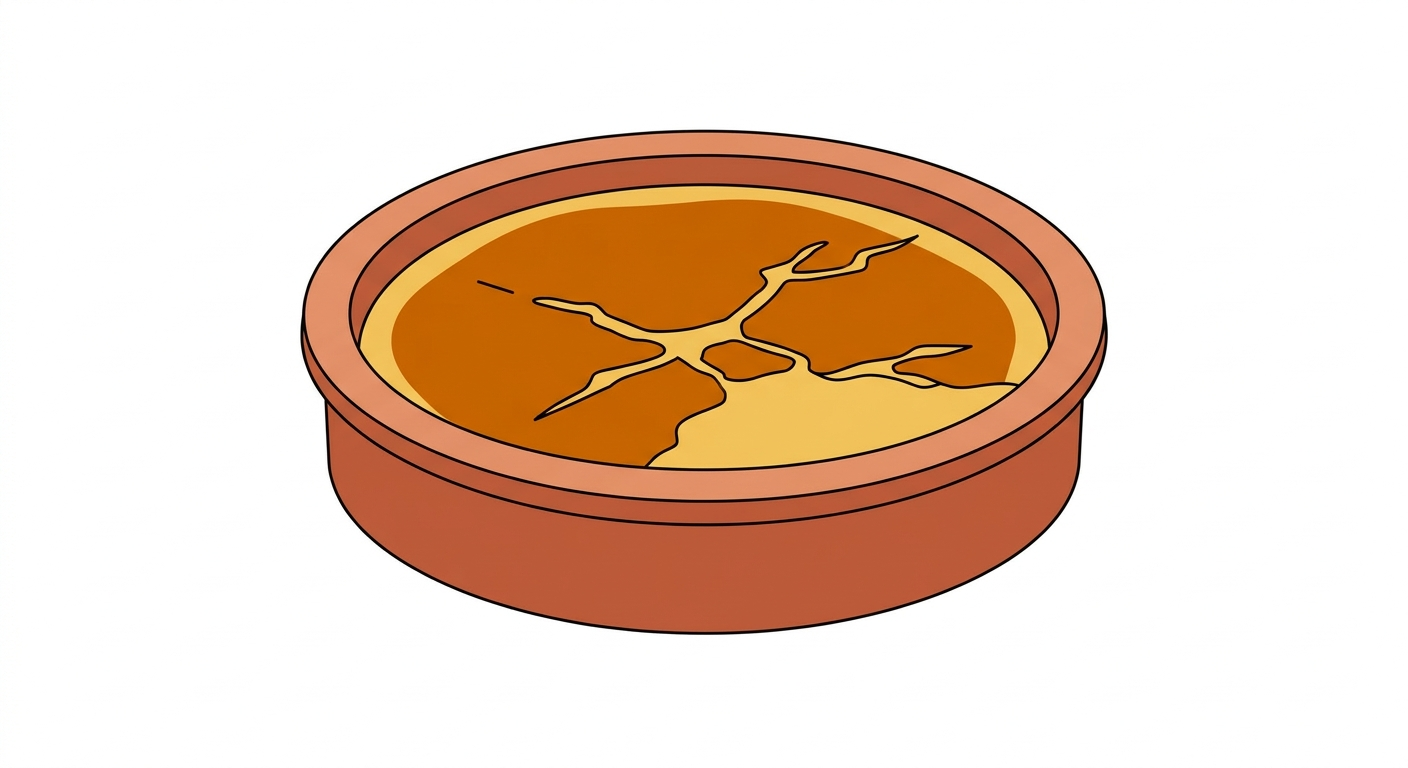
Crema Catalana is a chilled custard made from egg yolks, milk, sugar, and a flavoring of lemon zest and cinnamon, finished with a thin layer of sugar that is caramelized to a hard, glassy crust with a hot iron or a torch. It is served cold in a shallow earthenware dish, and the ritual of cracking through the caramel top with the back of a spoon is as much a part of the experience as the custard beneath. The flavor is distinctly its own — the citrus and cinnamon give it a warmth and brightness that separates it from the richer, more neutral vanilla of a French crème brûlée.
Crema Catalana is almost certainly the older of the two custards, and the French vs. Spanish priority debate has been going on long enough to qualify as a tradition in itself. The earliest documented recipe appears in a Catalan cookbook from the 14th century, making it one of the oldest recorded dessert recipes in Europe. The caramelized sugar top appears in the written record somewhat later, but the custard base is unambiguously Catalan in origin. Whether the French developed crème brûlée independently or borrowed and adapted the concept is a question that neither side is willing to concede.
In Catalonia, crema catalana is traditionally associated with the feast of Sant Josep — Saint Joseph’s Day — on March 19th, which is also Father’s Day in Spain. It was historically a spring dessert, made when milk was plentiful and eggs were abundant, and the association with the holiday has persisted even as the dessert became available year-round. It remains one of the defining dishes of Catalan cuisine, appearing on nearly every traditional restaurant menu in the region.
The use of milk rather than cream is one of the key technical distinctions from crème brûlée — it produces a lighter, less dense custard that sets differently and carries the citrus and spice notes more cleanly. It is a more delicate thing than its French counterpart, and arguably a more interesting one.s
This content was created with the assistance of AI. Sources are currently being reviewed.