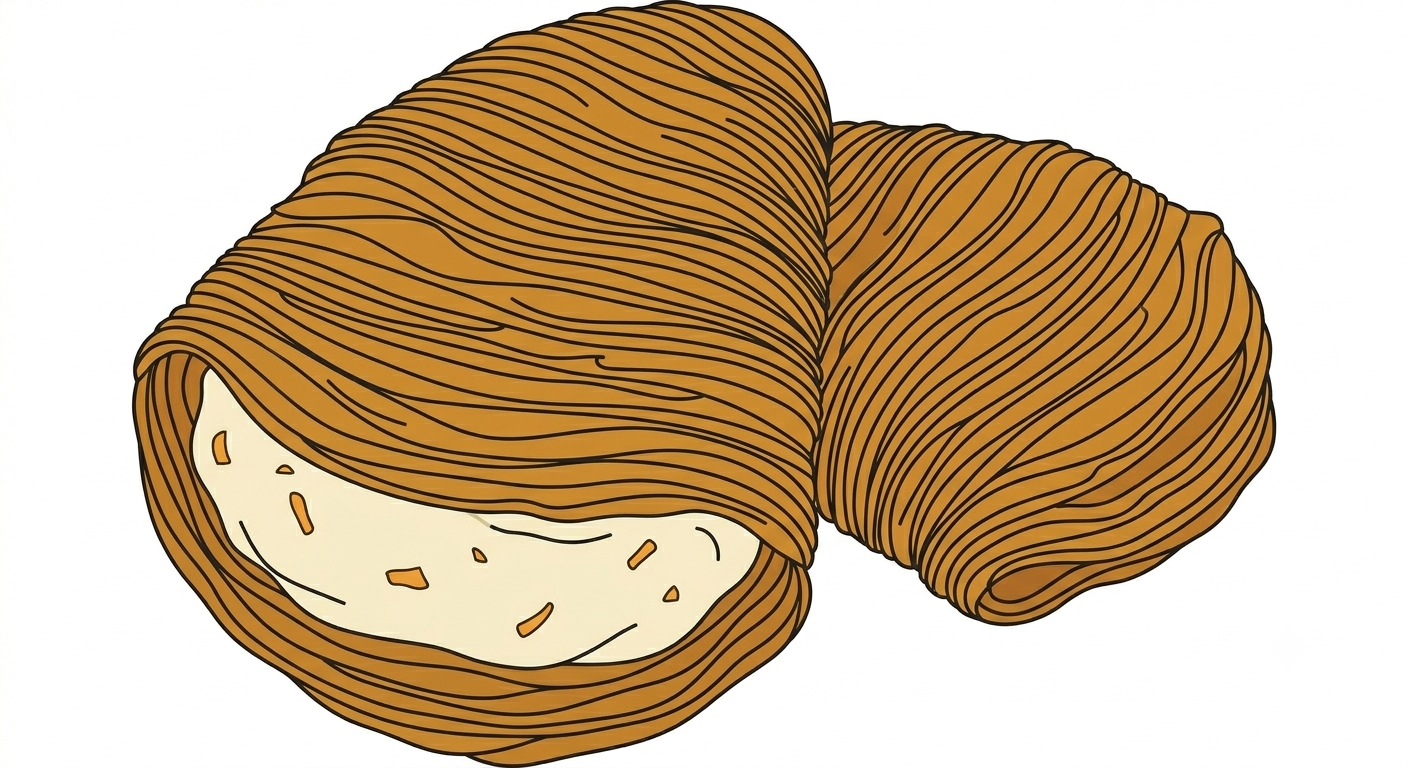
Sfogliatella is a Neapolitan pastry built from paper-thin layers of dough wrapped around a filling of ricotta, semolina, candied citrus peel, and cinnamon, shaped into a ridged shell or clam that fans open at the edges when baked. The exterior shatters when you bite into it — each layer distinct, dry, and crisp — before giving way to the filling, which is dense, slightly grainy from the semolina, fragrant with orange and cinnamon, and just sweet enough. It is one of the great textural achievements in Italian baking, and it is also one of the more technically demanding pastries in the canon. The dough must be rolled to near-translucency, stretched over a dowel, coated in lard, and wound into a log before being sliced into rounds and shaped by hand. There are no shortcuts that produce the same result.
The sfogliatella originates in the monasteries of the Amalfi Coast. The most widely cited account traces it to the convent of Santa Rosa in Conca dei Marini, where nuns in the 17th century developed a filled pastry using semolina, dried fruit, and liqueur — a shape described as resembling a monk’s hood rather than the shell form that would come later. The recipe made its way to Naples in the early 19th century, where pastry chef Pasquale Pintauro acquired it, refined it, and began selling it from his shop on Via Toledo. The shell shape, the ricotta filling, and the name sfogliatella — from sfoglia, meaning leaf or layer — are associated with that Neapolitan refinement.
There are two main forms: sfogliatella riccia, the ridged, shell-shaped version made from the layered dough, which is the one most people mean when they say sfogliatella; and sfogliatella frolla, made from a simpler shortcrust pastry with the same filling, which is softer, more forgiving, and considerably easier to produce. The riccia is the one worth seeking out. The frolla is what you eat when you can’t find the riccia and you need something to hold you over.
In Naples, sfogliatelle are eaten in the morning, warm from the oven, standing at a bar with a small coffee. They do not improve with time. They are a pastry of the immediate — best in the first ten minutes, acceptable for another hour after that, and not worth eating cold. This is not a criticism. It is a description of something that is exactly right under the right conditions.
This content was created with the assistance of AI. Sources are currently being reviewed.