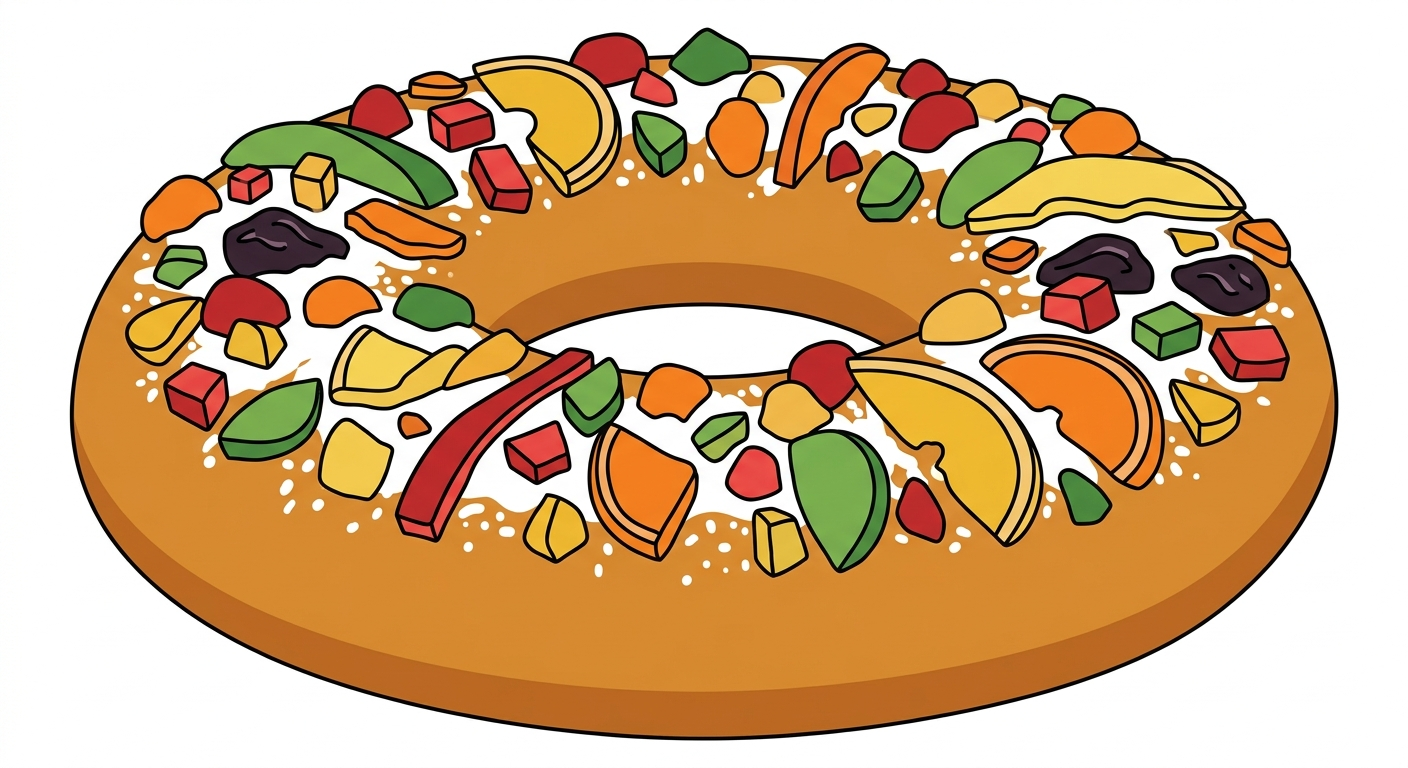
Bolo rei is a ring-shaped enriched bread — soft, yeasted, slightly sweet — studded with candied and dried fruits and nuts, and finished with a sugar glaze and more fruit arranged on top. The shape is intentional: the ring represents a crown, and the candied fruit and nuts stand in for precious stones and gold. It is eaten throughout the Christmas season in Portugal and reaches its ceremonial peak on Dia de Reis, January 6th, the Feast of the Epiphany. Traditionally, a dry fava bean and a small figurine were baked inside — whoever found the bean was obligated to buy next year’s cake; whoever found the figurine received good luck. The figurine tradition has largely disappeared, replaced in modern versions by a small plastic charm.
The form arrived in Portugal from France. The French gâteau des rois — cake of the kings — was a festive crown cake associated with Epiphany and the arrival of the Three Wise Men, itself traceable to Roman Saturnalia traditions involving ring-shaped cakes with hidden objects. Confeitaria Nacional in Lisbon introduced bolo rei to Portugal in 1869, adapting the French model into the fruit-and-nut-laden brioche form that became the Portuguese standard. The cake spread quickly and became so embedded in Christmas tradition that when the Portuguese Republic was established in 1910 and the monarchy abolished, the new government attempted to rename it — “bolo presidente” and “bolo republicano” were both floated. Neither name took hold. The bolo rei stayed the bolo rei.
A companion cake, bolo rainha — queen cake — emerged as a variation for those who dislike candied fruit, replacing it with a more generous quantity of nuts: almonds, pine nuts, walnuts, and cashews. It is now sold alongside the original in most Portuguese bakeries through the holiday season. Both cakes are made in large formats for sharing, typically cut into slices at the table, with the understanding that regular customers and family members have their preferred pieces — some prefer the orange peel, others the cherries — and it is considered polite to remember who likes what.
This content was created with the assistance of AI. Sources are currently being reviewed.