Nigeria is the most populous country in Africa with over 200 million people and more than 250 ethnic groups, and its food culture reflects that scale. There is no single Nigerian dessert tradition — there are Yoruba, Igbo, Hausa, and dozens of other regional traditions that share some ingredients and techniques while diverging significantly in others. Any treatment of Nigerian sweets that ignores this is flattening a country of enormous internal variation.
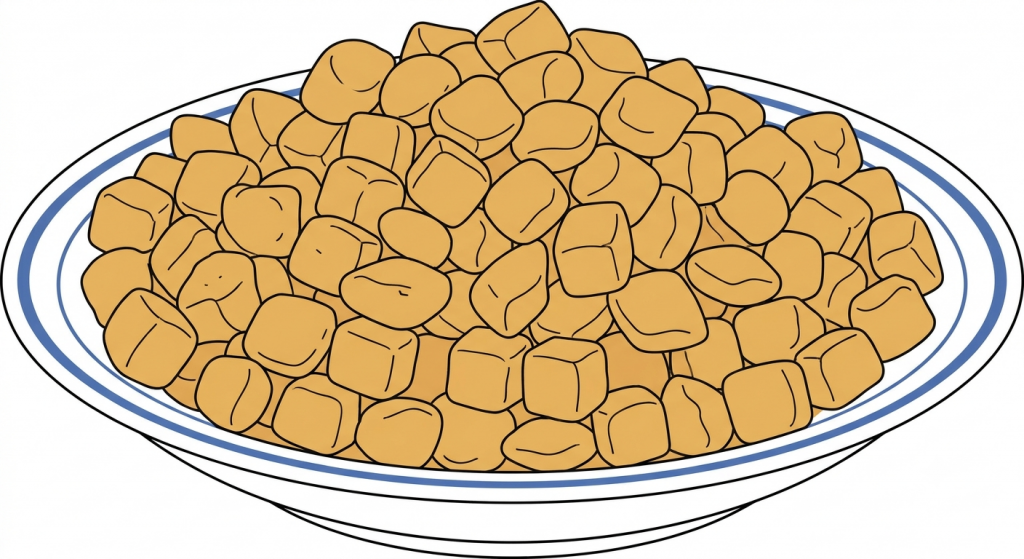
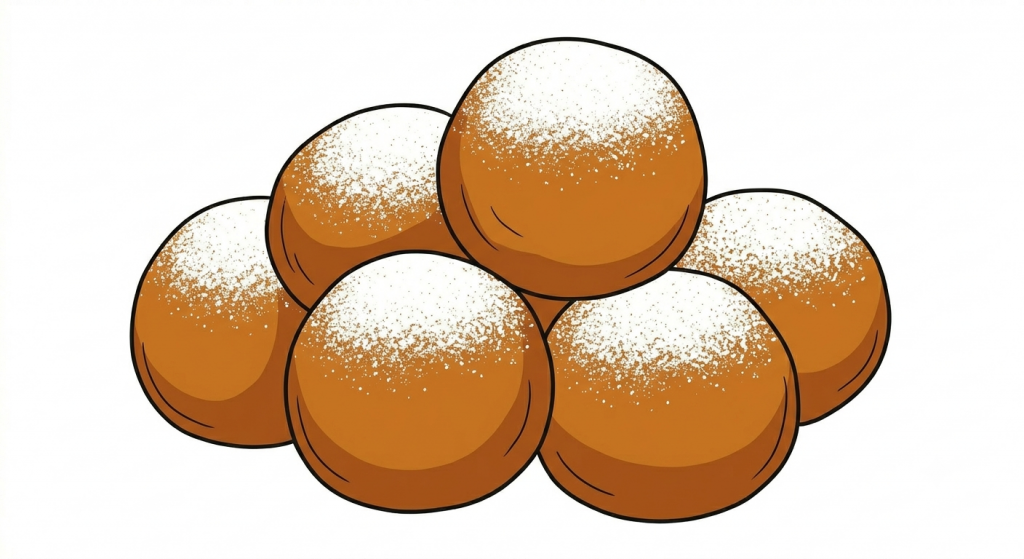
Puff puff — deep-fried yeasted dough balls, lightly sweetened and spiced — are the most universally recognized Nigerian sweet, sold at roadside stalls and made in bulk for celebrations across ethnic and religious lines. Chin chin, a crunchy fried dough snack flavored with nutmeg and sometimes coconut, is made in large batches for Christmas and Eid and stored in tins for weeks. Both are Nigerian in the broadest sense and cross regional boundaries.
Kulikuli is a Hausa specialty — spiced groundnut cake made by extracting the oil from groundnut paste, seasoning the remaining solid with ginger and pepper, then frying it into dense, crunchy sticks or rings. It is one of the most regionally specific Nigerian confections and has no close equivalent elsewhere in West Africa. Donkwa, another northern Nigerian groundnut preparation, is made with toasted groundnuts and millet flour rolled into balls, with no cooking required.
Coconut candy — fresh coconut cooked down with sugar into a firm, chewy sweet — is common across southern Nigeria. Groundnut candy, similar in structure to peanut brittle, appears at markets and roadside stalls throughout the country. Sweet ogi, a fermented corn porridge sweetened with sugar or honey, is a staple across multiple regions and functions as both breakfast food and celebration sweet.
Nigerian sweetness is regional, occasion-driven, and produced at scale — these are sweets built for community, not individual portions.
This content was created with the assistance of AI. Sources are currently being reviewed.