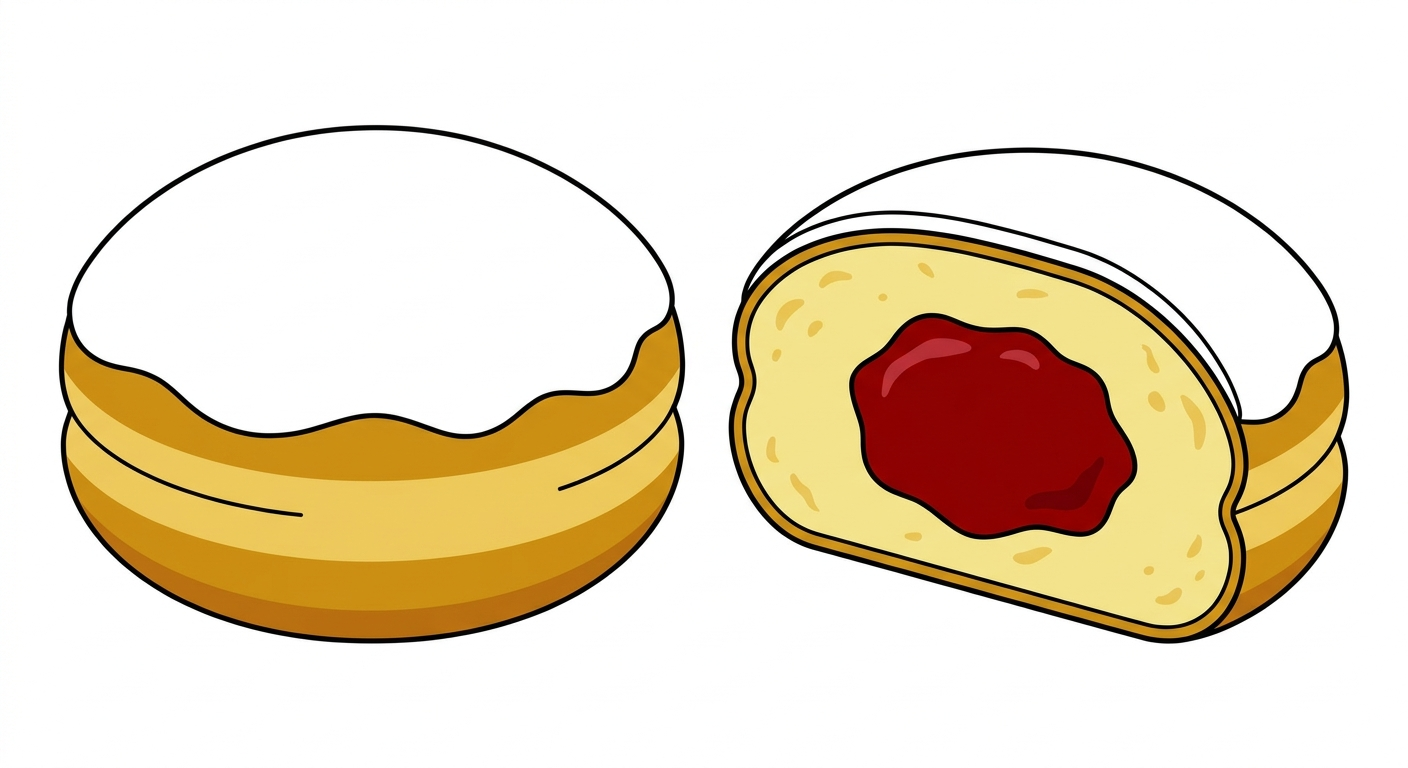
Pączki are Poland’s answer to the doughnut — round, deeply fried, and stuffed with rose hip jam, prunes, or custard before being glazed with sugar icing and finished with a strip of candied orange peel. They are richer than any doughnut has a right to be, the dough made with egg yolks, butter, and sometimes a splash of grain alcohol to keep them from absorbing too much oil during frying. They belong to Fat Thursday — the last Thursday before Lent — when Poles eat them by the millions in a single day, a nationwide act of delicious preemptive mourning before the fast begins.
The numbers are documented and worth stating plainly: approximately 100 million pączki are consumed in Poland on Fat Thursday alone. Bakeries open before dawn. Lines form. Offices receive deliveries. Eating at least one is considered not just customary but obligatory — skipping pączki on Fat Thursday is genuinely considered bad luck in Polish folk tradition, a belief that the year will bring financial misfortune to those who abstain.
The tradition travels. Chicago, home to one of the largest Polish diaspora communities outside Warsaw, treats Fat Thursday as a civic event. Polish bakeries in the city’s historically Polish neighborhoods — Avondale, Jefferson Park — sell out days in advance. Hamtramck, Michigan, another center of Polish-American life, holds Fat Thursday celebrations that draw people from across the region. For the diaspora, pączki are not just a pastry — they are a calendar marker, a connection to home, and an annual argument about whose bakery makes them best.
Rose hip jam remains the most traditional filling, but contemporary Polish bakeries now produce pączki filled with everything from dulce de leche to pistachio cream. The purists object. The lines are still long regardless.
This content was created with the assistance of AI. Sources are currently being reviewed.