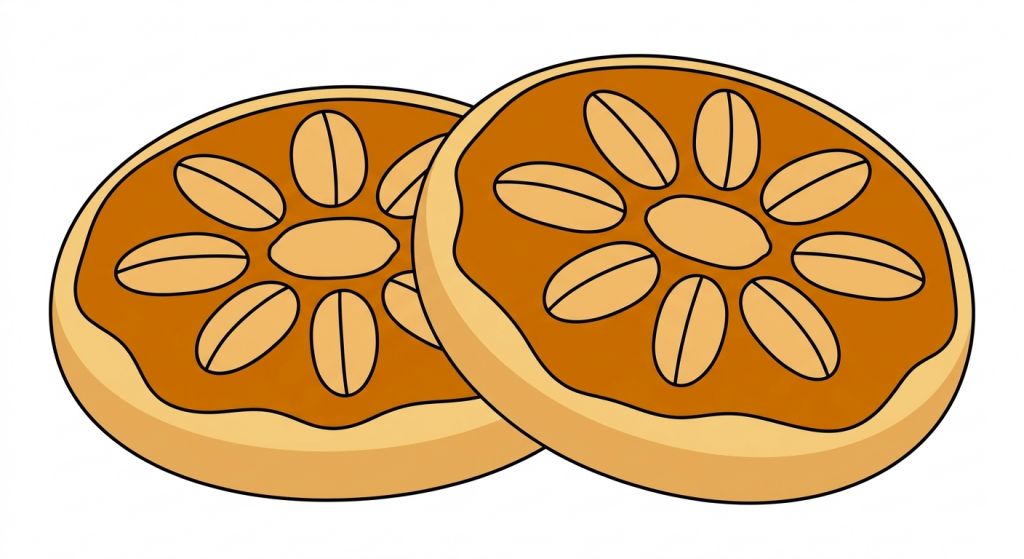
Senegal’s dessert culture sits at the intersection of West African staple crops, Islamic dietary traditions, and French colonial baking infrastructure — three influences that are clearly legible in what gets made, when, and for whom. Dakar, as the former capital of French West Africa, has a more developed patisserie culture than most West African cities, with boulangeries and bakeries that adapted French techniques to local ingredients. Outside Dakar, sweets are more directly tied to staple crops and religious calendars.
Millet is the primary grain in Senegalese sweets. Thiakry is a chilled dessert made from millet couscous mixed with sweetened yogurt or soured milk, flavored with nutmeg, vanilla, or coconut — served at celebrations and family gatherings and one of the most distinctly Senegalese preparations in the national repertoire. Ngalakh is a ceremonial sweet made from millet, peanut paste, and baobab fruit pulp, prepared specifically for Easter and distributed across Muslim and Christian households alike. Its cross-community exchange is one of the most documented examples of interfaith food sharing in West African culture and is worth understanding on those terms rather than as a generic symbol of harmony.
Peanuts — Senegal is one of the world’s major groundnut producers — appear throughout the sweet landscape in brittles, pastes, and confections. Baobab pulp, with its sharp citric tang, functions as a souring agent and flavor in sweets and drinks. Bissap, made from dried hibiscus flowers, produces a deep red syrup used in drinks, jams, and sweet preparations throughout the country.
Cinq centimes are small fried fritters sold at markets and schoolyards, historically for a few coins — simple, lightly sweet, and crunchy. French influence appears in beignets and baguette-based puddings found in urban bakeries, always adjusted with local spicing and sweeteners.
Senegalese sweetness is millet-anchored, community-oriented, and shaped by a food calendar that follows both the Islamic year and local harvest cycles.
This content was created with the assistance of AI. Sources are currently being reviewed.