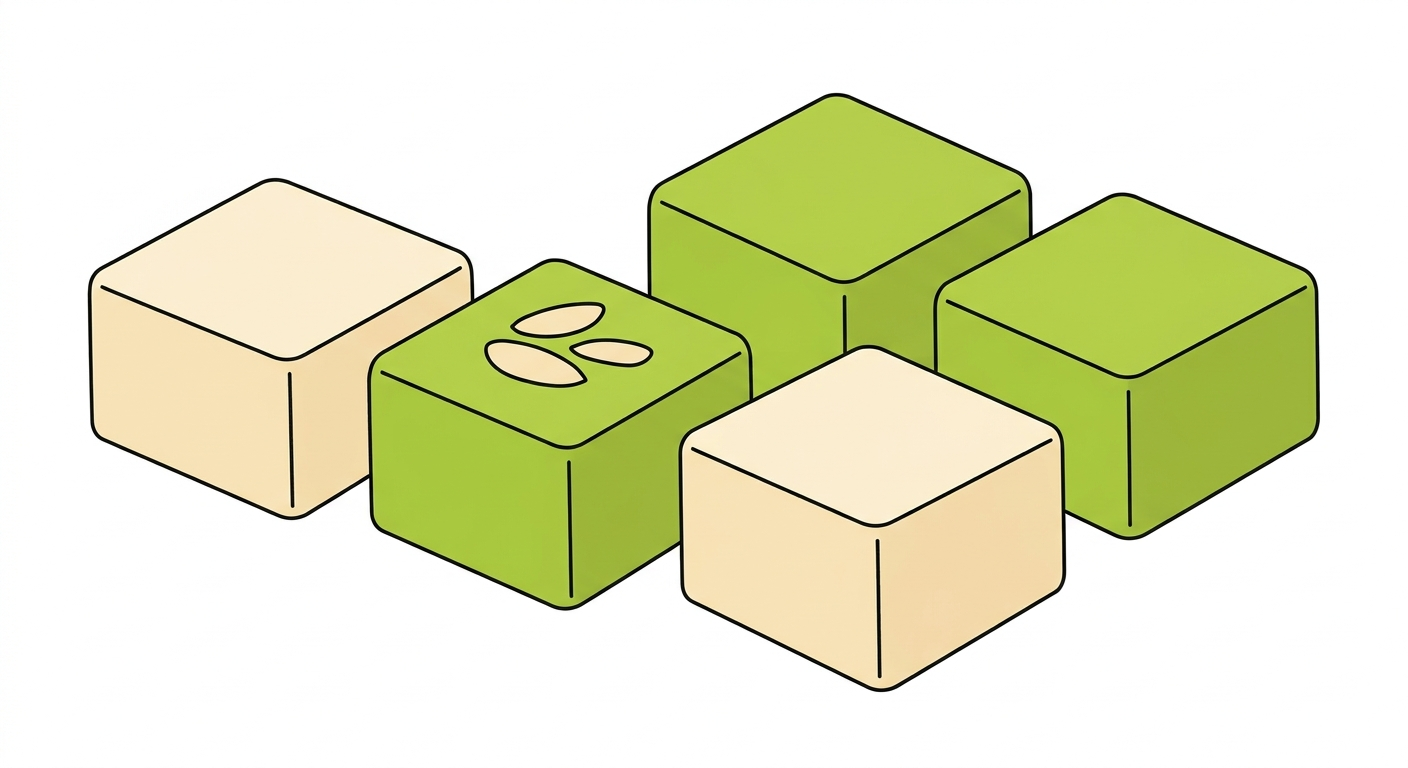
Barfi is a milk fudge — khoa, the dense milk solids made by reducing full-fat milk over low heat until it thickens into a firm paste, cooked with sugar and ghee until the mixture pulls away from the sides of the pan, then pressed into a flat layer, cut into squares, cubes or, diamonds, and often garnished with a sheet of edible silver leaf that catches the light and signals celebration. The base texture is dense and slightly grainy from the milk solids, sweet but not aggressively so, with a faint ghee richness that runs through everything. Left plain, it tastes of milk and sugar with a depth that comes from the slow reduction. Flavored with cardamom, saffron, pistachio, cashew, or rose, it becomes something more specific — each variation producing a different color, a different fragrance, a different reason to reach for another piece.
The name comes from the Persian word barf, meaning snow or ice — a reference to the plain milk barfi’s white color and smooth, cool surface, which in the context of a Mughal court dessert would have carried specific associations with luxury and refinement. Ice was expensive and difficult to obtain in the subcontinent’s heat, and a sweet that evoked it in name was a sweet that understood its own occasion. Barfi originated in Persia and arrived in India through the Mughal Empire in the 16th century, the same culinary conduit that brought kulfi, falooda, and the broader tradition of milk-based desserts flavored with saffron, cardamom, and rose water into the Indian sweet-making vocabulary.
What India did with it was characteristically expansive. The base technique — reducing milk solids, adding sugar, pressing into a slab — turned out to be one of the most adaptable frameworks in the Indian mithai tradition. Kaju barfi is made with ground cashews and is one of the most recognizable Indian sweets globally, its diamond shape and silver foil coating as visually specific as any confection anywhere. Pista barfi uses pistachios and is pale green. Coconut barfi incorporates fresh or desiccated coconut and is common in coastal regions. Besan barfi uses gram flour roasted in ghee. Moong dal barfi uses split mung beans. Each regional variation reflects local ingredients and local preferences layered onto a Persian-origin framework that absorbed them all without losing its essential character.
Barfi is present at every celebration that matters in North Indian Hindu and Sikh life — Diwali, Holi, weddings, births, religious festivals. It is temple prasad, the sacred food distributed to devotees, because ghee, milk, and sugar are understood as offerings beloved of the gods, particularly Krishna. It is the sweet brought to a neighbor’s house when something good happens, the thing shared at the office when there is news worth marking. The mithai shop — the halwai — exists primarily to produce barfi and its relatives, and a good halwai’s kaju barfi or plain milk barfi is the measure of the shop’s skill in the way that a good croissant measures a French bakery.
The kaju barfi origin story involves the Mughal emperor Jahangir and the Sikh Guru Hargovind — the guru’s release from prison is said to have been celebrated with the first preparation of cashew barfi, made by a court chef who took inspiration from the Persian halwa-e-farsi and substituted cashews for almonds. Whether the story is precisely true matters less than what it reflects: that barfi’s development in India happened through the intersection of Mughal court culture, Sikh religious tradition, and the creative energy of the halwai, all of them working with the same basic material — reduced milk, sugar, ghee — toward different but related ends.
This content was created with the assistance of AI. Sources are currently being reviewed.