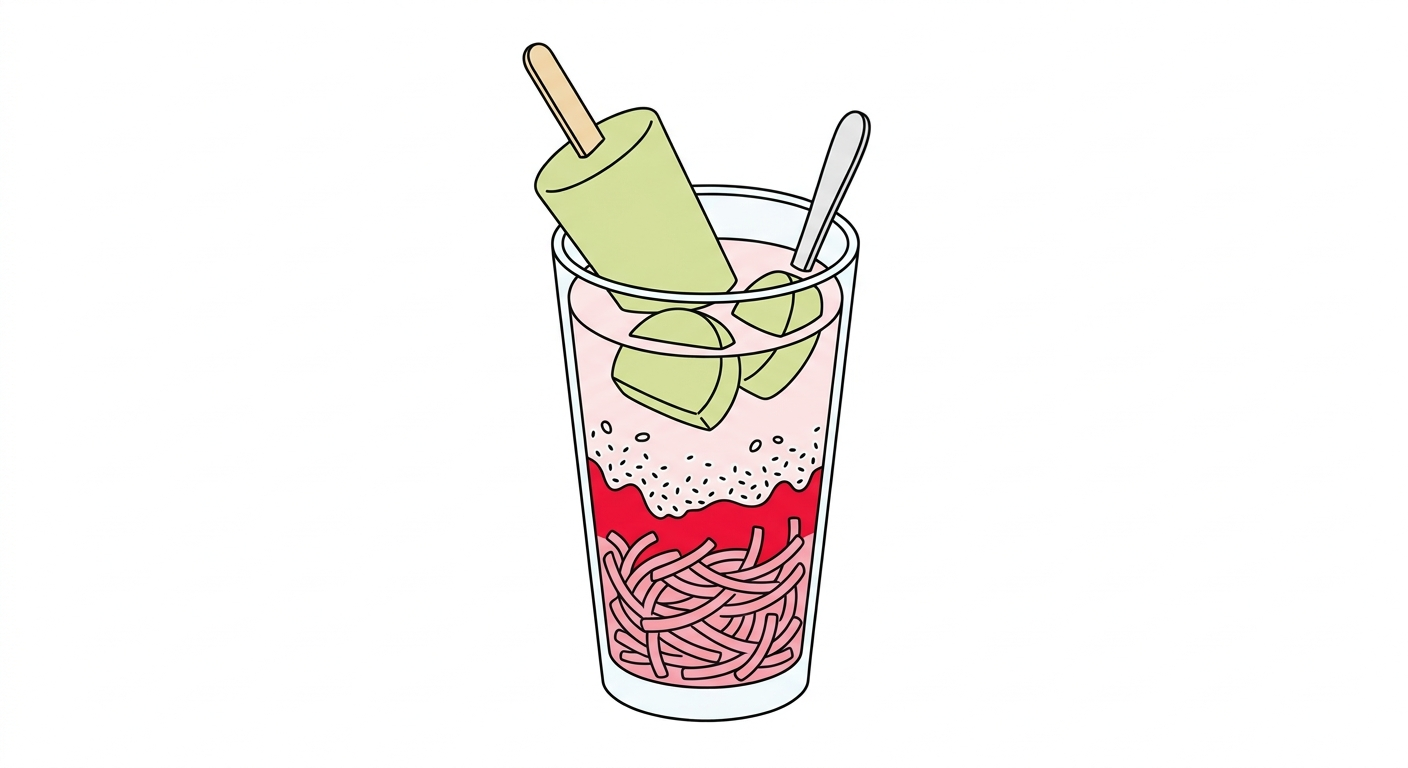
Kulfi falooda is a layered dessert — a tall glass or metal plate built from the bottom up with rose syrup, soaked basil seeds called sabja, thin vermicelli noodles called falooda sev, cold milk, and a wedge or scoop of kulfi on top, garnished with crushed pistachios and sometimes jelly cubes. The rose syrup bleeds pink through the milk. The sabja seeds swell into soft, translucent spheres with a slight gel around each one. The falooda sev is slippery and barely sweet. The kulfi — dense, slow-frozen, intensely flavored with cardamom, saffron, or pistachio — is the anchor, the thing everything else is built around. Eaten together in a single spoonful, the combination produces a range of textures — creamy, chewy, slippery, crunchy from the nuts — that no single element could achieve alone.
Kulfi and falooda arrived in India through the same channel but as separate things, and their combination is the work of the Mughal court. Kulfi originated in 16th-century Delhi during the Mughal era, developed in the royal kitchens from a technique of slow-cooking full-fat milk until it reduced and concentrated, then sweetening it and freezing it in metal molds packed in salt and ice. The result was denser and richer than any Western ice cream — not aerated, not churned, but frozen solid and intensely flavored. The technique drew on Persian court food culture, which the Mughals brought with them from Central Asia, and the flavoring with saffron, cardamom, rose, and pistachio reflects the Persianate aesthetic that ran through Mughal cuisine.
Falooda’s origin is more explicitly Persian. It descends directly from faloodeh — the Iranian chilled dessert of thin starch vermicelli, rose water, and semi-frozen syrup that is documented in Persian culinary history going back centuries and is still made in Iran today under that name. Faloodeh traveled to the Indian subcontinent with the Persianate dynasties that moved through the region from the 16th to 18th centuries, and in India it transformed — milk was added, basil seeds were introduced, ice cream eventually joined, and the layered glass format emerged as the presentation that made the dessert visually legible. By the time kulfi and falooda were combined, both had already been absorbed into Mughal court food culture and both carried the Persian sensibility for rose water, chilled dairy, and the combination of floral sweetness with the richness of reduced milk.
The kulfi falooda that appears on street carts and in sweet shops across India, Pakistan, and Bangladesh today is this synthesis formalized and democratized — the royal kitchen dessert that became a summer street food, sold from carts by vendors called kulfiwallas who carry the frozen molds in clay pots insulated with salt and ice, the same basic technology the Mughal kitchens used. The price dropped. The availability expanded. The flavor logic remained exactly what it was in the 16th century: dense frozen milk, floral syrup, and the cooling contrast of something cold against something sweet.
The rose syrup is the element that most people notice first, its pink color visible through the glass and its fragrance hitting before the first spoonful. Rose water is one of the oldest flavoring agents in Persian and Mughal cooking, present across sweets, drinks, and savory dishes, and its presence in kulfi falooda is not incidental — it is the thread that connects the glass in front of you to the kitchen tradition that produced both of its components. A dessert made from a frozen reduction of milk and a chilled Persian noodle, combined in a Mughal court and served on the streets of Delhi for five centuries, is as compact a piece of culinary history as anything in this project.
This content was created with the assistance of AI. Sources are currently being reviewed.