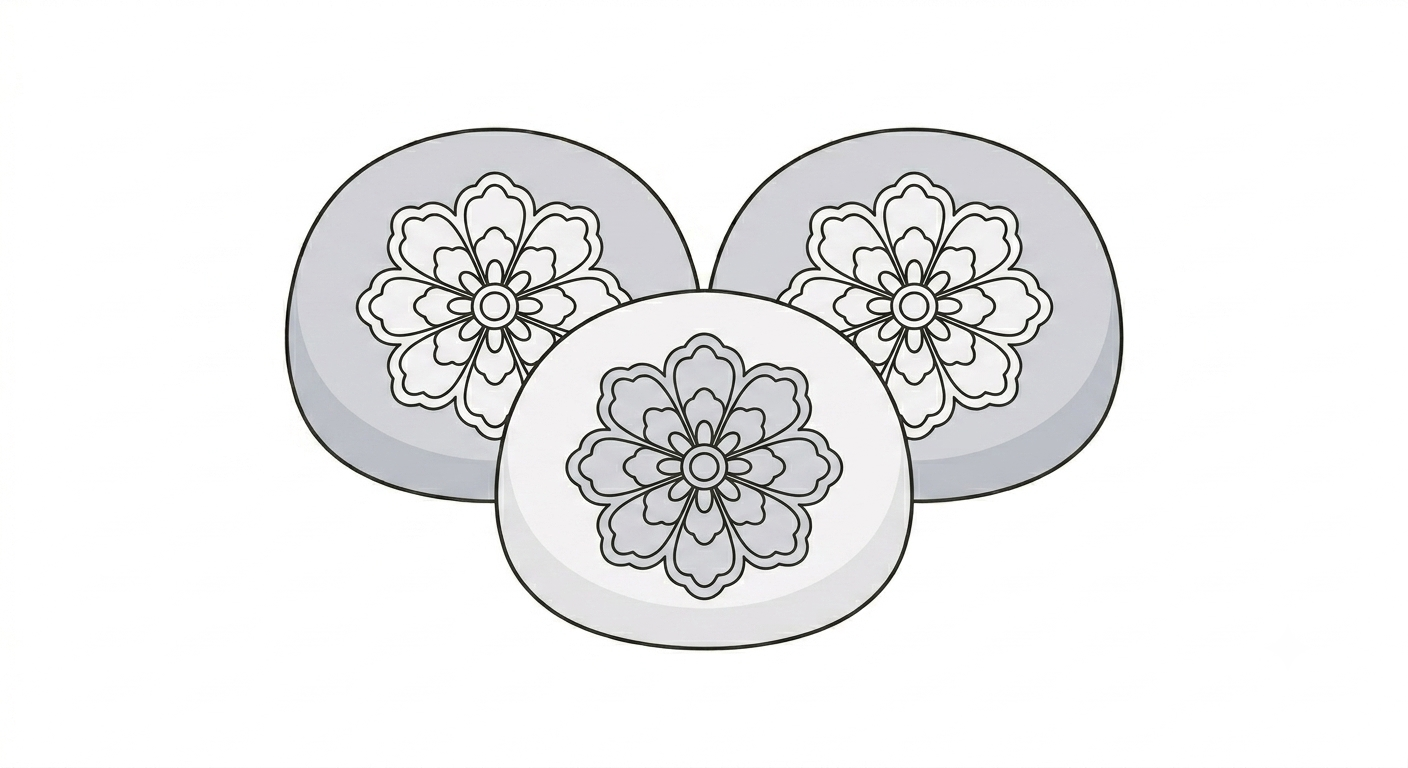
Jeolpyeon is a pounded rice cake — non-glutinous rice flour steamed, then beaten until the dough becomes smooth and elastic, divided into pieces, colored with natural plant pigments, and pressed with a carved wooden stamp called a tteoksal that leaves a pattern on the surface. The patterns vary: flowers, birds, geometric forms, vines. Each impression is deliberate. The result is a rice cake that looks like it was made by someone who cared about what it looked like, which is the point — jeolpyeon is a tteok made for occasions where the appearance of the food is part of what the food is communicating.
The colors come from plants. Mugwort produces green. Gardenia gives yellow. Omija berries, the five-flavor fruit, yield pink and red. Pine pollen turns things gold. These are not food colorings added for visual effect — they are ingredients with their own flavors and, in many cases, their own significance in Korean medicinal and folk tradition. The color of a jeolpyeon piece is information about what went into it, which means the patchwork arrangement of colors on a serving plate carries more meaning than it appears to at first glance.
The history of jeolpyeon runs back at least to the beginning of the Joseon Dynasty in 1392, where it appears as an offering at ancestral rites and religious ceremonies. The logic of using it this way is legible in the object itself — the labor involved in dyeing the dough, selecting the stamp, pressing each piece carefully is a visible demonstration of effort and intention. An offering that required this much care communicated respect. The patterned stamp added another layer: certain motifs carried specific meanings, and the selection of pattern was not arbitrary. The long line pressed across a piece of jeolpyeon was understood to symbolize an unbroken, continuous connection — longevity made tangible in rice dough.
From ancestral rites, jeolpyeon moved into weddings, tea ceremonies, and royal court presentations, where the combination of color, pattern, and the labor-intensive process of making it made it appropriate for formal, high-stakes occasions. It belongs to the category of Korean foods where the preparation is itself a form of respect — where the time and skill required to make the thing well is part of what makes it meaningful as a gift or offering.
Today jeolpyeon appears at weddings and tea ceremonies and is eaten at festivals, and also simply purchased from tteok shops without ceremony and eaten with honey, sesame oil, or soy sauce as a snack. Both uses are correct. A rice cake that was once a religious offering and is now eaten dunked in honey on an ordinary afternoon has not been diminished by that transition — it has simply accumulated uses, the way any food worth making for a thousand years eventually does.
This content was created with the assistance of AI. Sources are currently being reviewed.