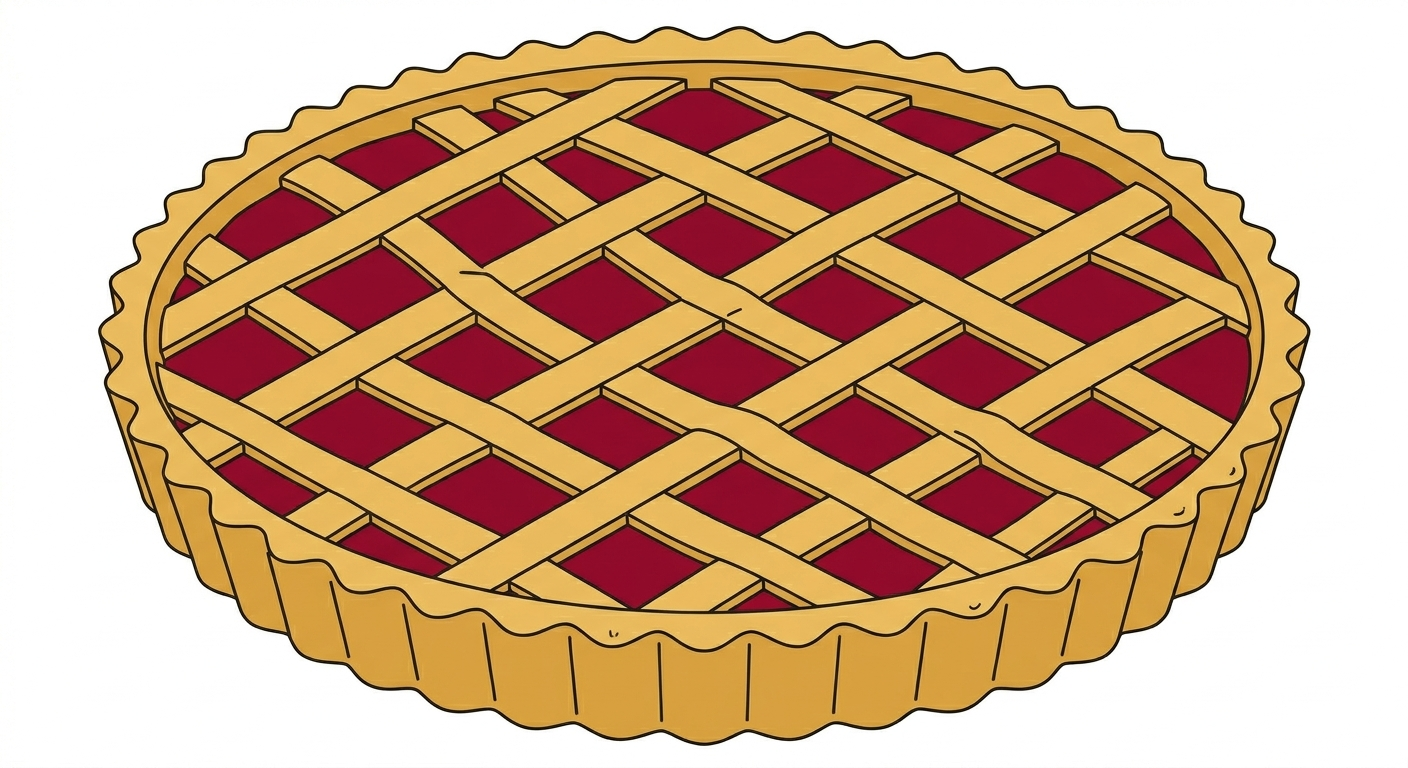
Pastafrola is the Argentine name for crostata — the Italian shortcrust lattice tart that arrived in Argentina with the massive wave of Italian immigration between 1880 and 1930. At its peak this migration brought over two million Italians to Argentina, making Italian the second most spoken language in the country for several decades and permanently shaping Argentine food culture. Pastafrola is one of the most direct survivals of that transfer — the name derives from pasta frolla, the Italian sweet shortcrust dough used as the base, and the technique is identical to the Italian original.
The dough is a sweetened shortcrust — flour, butter, sugar, eggs, and sometimes a small amount of leavening — rolled into a base, filled, then finished with a lattice of dough strips pressed across the top before baking. The lattice is the visual signature. A pastafrola without the lattice is not a pastafrola.
Quince paste — dulce de membrillo — is the traditional and most common filling, its dense, dark sweetness and slight tartness cutting through the buttery shortcrust. Sweet potato jam is the second most common filling. Dulce de leche is a more recent variation that has become standard in many bakeries. Argentines have preferences about which filling is correct and those preferences tend to be firm.
Pastafrola is sold at every Argentine panadería and appears at birthday celebrations, Sunday family meals, and mate gatherings — the informal afternoon mate sessions that are central to Argentine social life. It is sliced into wedges and eaten by hand alongside a gourd of mate, the slight bitterness of the drink balancing the sweetness of the tart. It is one of the most genuinely everyday Argentine baked goods — present constantly, made without occasion, eaten without ceremony.
This content was created with the assistance of AI. Sources are currently being reviewed.