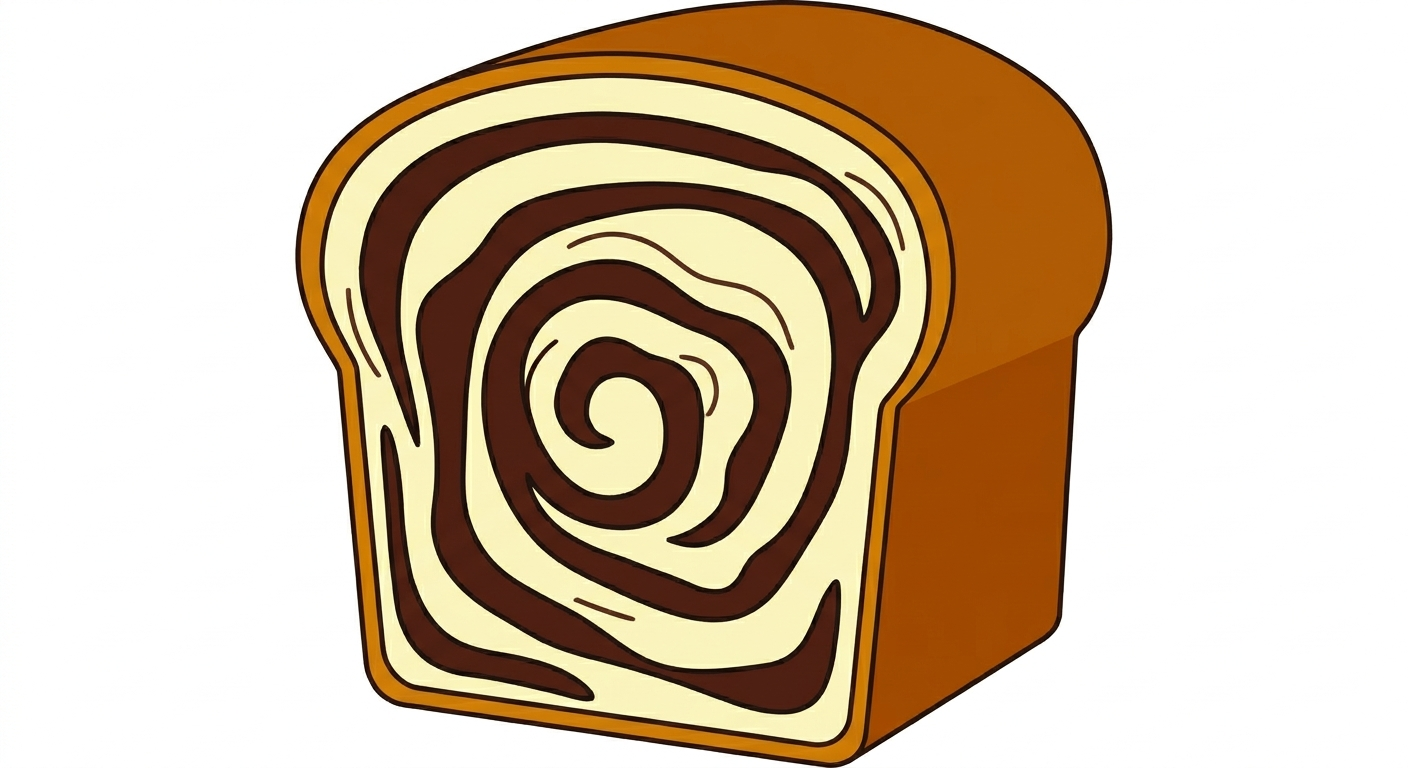
Babka is a tall, enriched dough loaf swirled with a generous ribbon of chocolate, cinnamon, or sometimes both — twisted before baking so every slice reveals a different pattern. It traces its roots to Jewish communities in Eastern Europe, where leftover challah dough was sweetened and spiraled with whatever filling was available. The syrup-drenched crust that finishes a properly made babka puts it technically in bread territory but functionally in cake territory, which is an argument bakers have been having for decades without resolution.
The Polish babka and the Israeli babka are related but distinct. Polish babka is traditionally a tall, cylindrical yeast cake baked in a fluted pan — closer to a kugelhopf in structure, lighter and more cakey, sometimes flavored with raisins and citrus. The Israeli babka, shaped into a loaf and twisted with chocolate or halva filling, is the version that spread globally through the Ashkenazi Jewish diaspora and became the international reference point for the word.
That spread accelerated sharply in New York in the 2010s. Breads Bakery, opened in Manhattan in 2013 by Israeli baker Uri Scheft, is widely credited with triggering the American babka boom — their chocolate babka generated lines down the block and extensive press coverage that introduced the bread to an audience with no prior connection to Ashkenazi Jewish baking. From there it entered mainstream American bakery culture rapidly, appearing in coffee shops and grocery stores within a few years.
The chocolate version now dominates internationally but the cinnamon version has its own devoted following and is considered by many to be the more technically demanding of the two — the filling distribution in a cinnamon babka requires more precision to achieve the right ratio of dough to spice in every bite.
Babka is currently one of the most adapted enriched breads in contemporary baking — stuffed with everything from cookie butter to za’atar to fruit preserves. The purists prefer chocolate or cinnamon. The lines are still long either way.
This content was created with the assistance of AI. Sources are currently being reviewed.