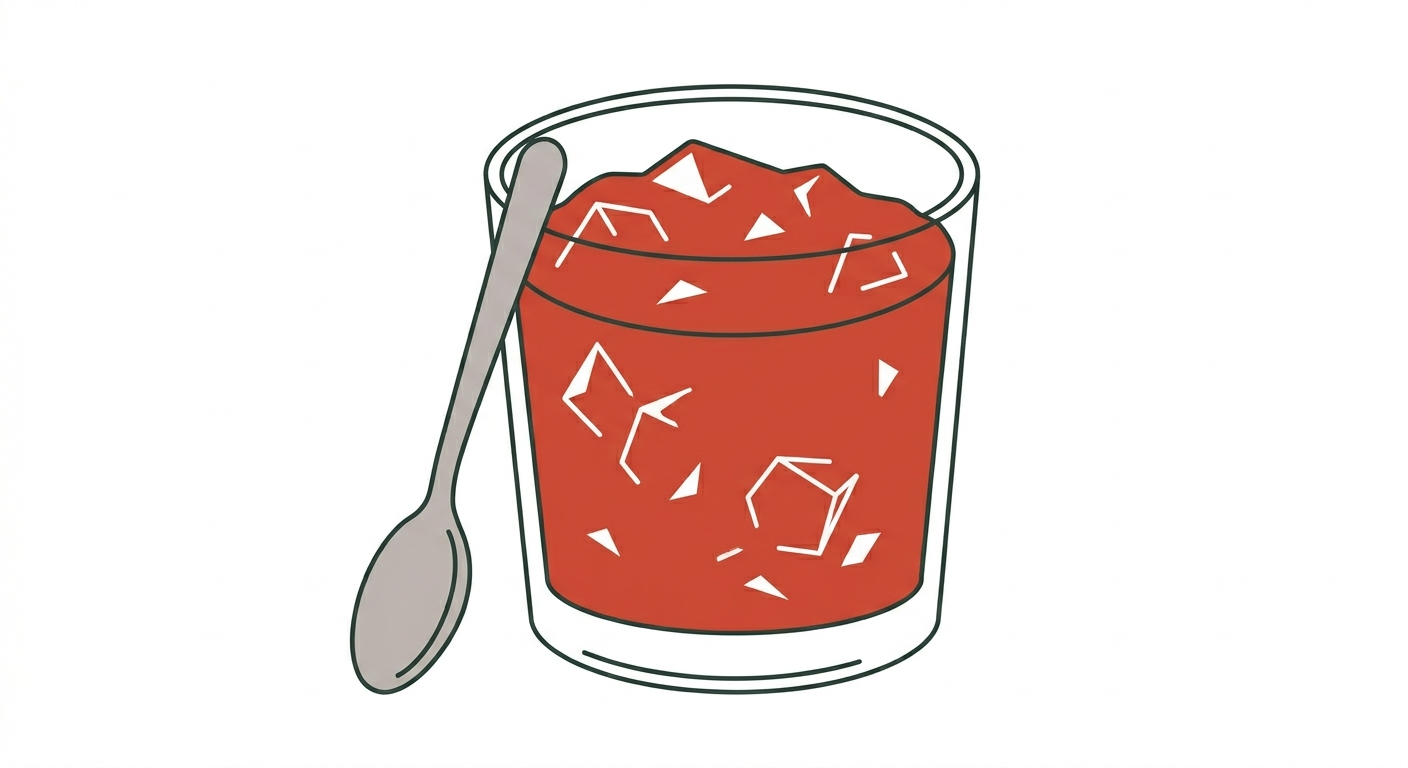
Granita is Sicily’s answer to the heat. It’s a coarse, crystalline frozen dessert made from little more than water, sugar, and whatever the island grows best: almonds, lemons, blood oranges, pistachios, mulberries. Unlike gelato, it has no fat, no dairy, no air churned in. Just pure flavor frozen slowly and scraped repeatedly until it reaches a texture somewhere between snow and slush. Texture varies by region: in western Sicily it can be icy and granular, while around Messina it is famously smoother, almost creamy despite containing no dairy. In Catania, Palermo, and Messina, it is eaten for breakfast with a brioche col tuppo, torn apart and dipped into the granita at a bar counter before 9am, which is either the most civilized thing you’ve ever heard or the most alarming, depending on where you’re from.
The origin is Arab. Sicily was under Arab rule from 827 to 1072 AD, and the sharbat tradition — fruit syrups mixed with snow or ice, the direct ancestor of sorbet and granita — arrived with that occupation and stayed long after it ended. The Arab agricultural revolution in Sicily also introduced sugar cane, citrus, almonds, and pistachios to the island, which are the exact ingredients that define Sicilian granita today. The dessert is a direct artifact of that period, still eaten daily a thousand years later.
The ice itself has its own history. Before refrigeration, snow was harvested from the upper slopes of Mount Etna and the Nebrodi mountains in winter, packed into insulated pits called niviere, and transported down to coastal cities and towns throughout the summer on the backs of mules. The trade in Etna snow was a significant commercial operation for centuries, and granita only exists as a Sicilian institution because that supply chain existed. When mechanical refrigeration arrived in the twentieth century it changed the logistics but not the product.
Flavor varies sharply by city and season. Catania is pistachio and almond territory, with nearby Bronte supplying the island’s most famous pistachios. Palermo leans toward lemon and coffee. Messina is known for a smoother, almost creamy style and for classic flavors like coffee, lemon, strawberry, and almond. Mulberry granita appears briefly in early summer when the fruit is ripe and disappears when it isn’t. Sicilians are specific about this and largely uninterested in compromise.
This content was created with the assistance of AI. Sources are currently being reviewed.