Moroccan desserts reflect the country’s position at the intersection of Amazigh Indigenous culture, Arab and Andalusian culinary tradition, Sub-Saharan African trade routes, and French and Spanish colonial influence during the Protectorate period from 1912 to 1956. Morocco has one of the most developed pastry traditions in North Africa, with distinct regional styles across Fez, Marrakech, Rabat, and the Souss region of the south.
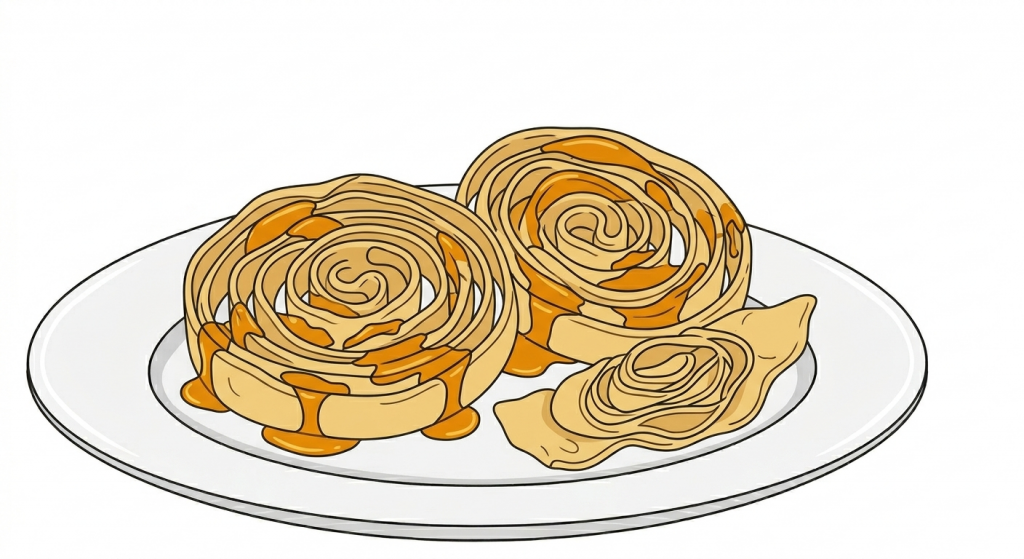
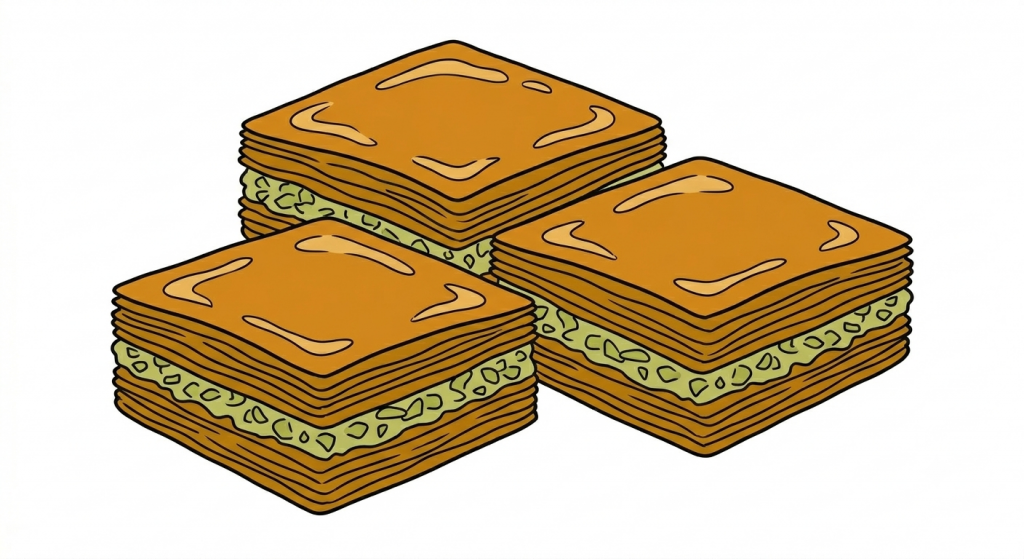
Kaab el ghzal — gazelle horns — are crescent-shaped pastry shells filled with almond paste flavored with orange blossom water and cinnamon, with a thin outer layer that shatters on contact. They are considered one of the most refined Moroccan pastries and are associated with Fez, historically Morocco’s cultural and intellectual capital. Chebakia are sesame and honey fried pastries twisted into flower shapes — labor-intensive to make and specifically associated with Ramadan, where they are produced in large quantities for iftar. Briouats are triangular or cylindrical phyllo pastries filled with almond paste or honey and fried, common at celebrations. Msemen are flaky griddle-cooked flatbreads eaten sweet with honey and butter or argan oil.
Argan oil — produced from the nuts of the argan tree which grows almost exclusively in Morocco’s Souss region — is used in amlou, a paste made from roasted almonds, argan oil, and honey eaten as a dip with bread. Argan oil has a protected geographical indication and its production is controlled primarily by women’s cooperatives in the Souss. It is one of Morocco’s most internationally recognized food products.
The French Protectorate introduced European patisserie technique and equipment to Morocco, and contemporary Moroccan bakeries in cities like Casablanca and Rabat produce both traditional preparations and French-influenced pastries. Moroccan diaspora communities in France — among the largest immigrant communities in the country — have maintained Moroccan pastry traditions in French cities, where Moroccan patisseries operate alongside traditional preparations sold at Ramadan markets.
This content was created with the assistance of AI. Sources are currently being reviewed.